ZRG Strikes Gold
•
Telenor Microfinance Bank awards ZRG OneView Contact Center System
•
ZRG Receives 5th Consecutive Achievement Gold Award from FPCCI
•
Al Baraka Bank Chooses ZRG OneView CMS Software
•
PSO Awards Contact Center Tender To ZRG
•
ZRG Strikes Gold
•
Telenor Microfinance Bank awards ZRG OneView Contact Center System
•
ZRG Receives 5th Consecutive Achievement Gold Award from FPCCI
•
Al Baraka Bank Chooses ZRG OneView CMS Software
•
PSO Awards Contact Center Tender To ZRG
•
ZRG Strikes Gold
•
Telenor Microfinance Bank awards ZRG OneView Contact Center System
•
ZRG Receives 5th Consecutive Achievement Gold Award from FPCCI
•
Al Baraka Bank Chooses ZRG OneView CMS Software
•
PSO Awards Contact Center Tender To ZRG
•
ZRG Strikes Gold
•
Telenor Microfinance Bank awards ZRG OneView Contact Center System
•
ZRG Receives 5th Consecutive Achievement Gold Award from FPCCI
•
Al Baraka Bank Chooses ZRG OneView CMS Software
•
PSO Awards Contact Center Tender To ZRG
•
Companion to Episode 5 of the Immersion Travel Italy Podcast – Italy’s Masterpiece Series
Ferrara is one of Italy’s most remarkable Renaissance cities, yet it remains one of the country’s best kept secrets. While Florence, Venice, and Rome attract millions of visitors each year, Ferrara quietly rewards those willing to venture just a little farther.
For me, visiting Ferrara was especially meaningful. Having carried the family name Ferrara my entire life, finally walking through the streets of the city felt like reconnecting with a small part of my own story. Whether my ancestors came from here or not, exploring the castle, admiring the cathedral, cycling along the Renaissance walls, and enjoying lunch in the shadow of Castello Estense created memories I’ll never forget.
Unlike many Italian cities, Ferrara’s greatest masterpiece isn’t a single church or palace.
It’s the city itself.
The House of Este transformed Ferrara into one of Europe’s first planned Renaissance cities, creating broad avenues, elegant palaces, public gardens, and harmonious neighborhoods centuries before modern urban planning became common.
If you love history, architecture, Renaissance art, and authentic Italian cities without overwhelming crowds, Ferrara deserves a place on your itinerary.
Castello Estense
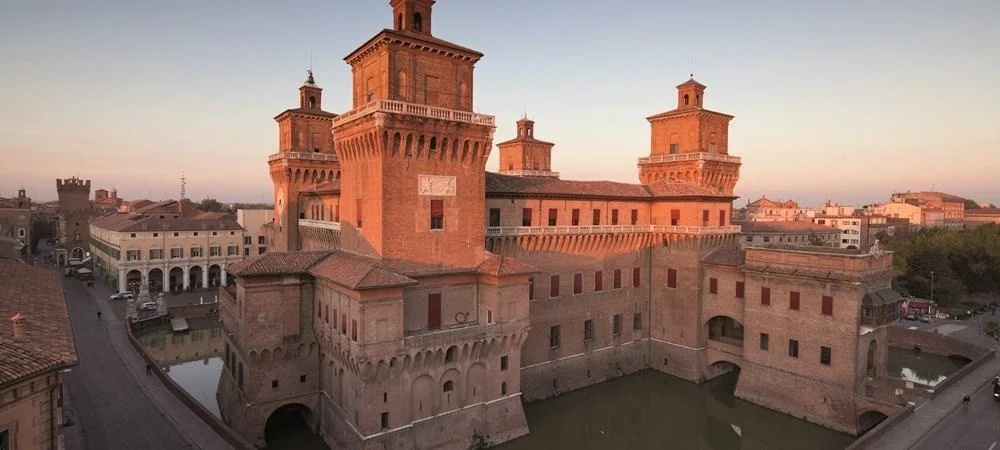
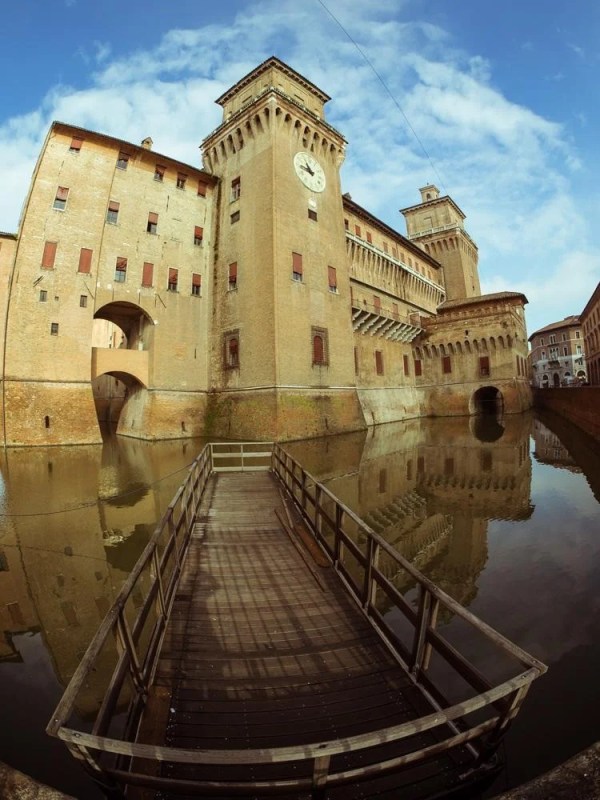
No landmark defines Ferrara more than Castello Estense.
Surrounded by a broad moat and anchored by four massive towers, it is one of the finest surviving Renaissance castles in Italy. Originally built in 1385 after a popular revolt against the Este family, the castle began as a military fortress before gradually evolving into an elegant ducal residence.
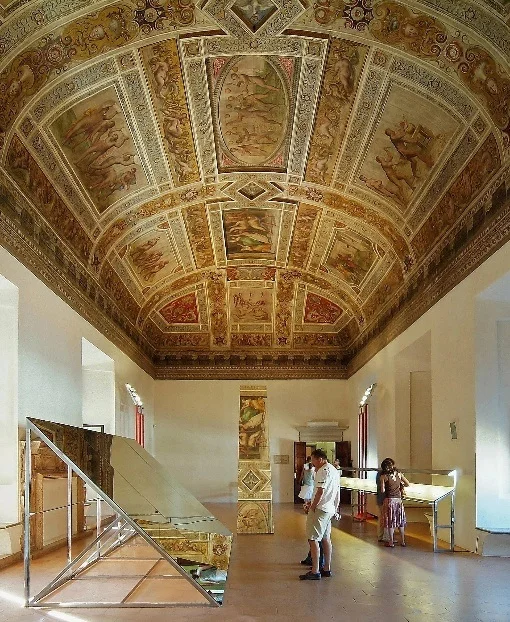
Inside you’ll discover beautifully decorated apartments, painted ceilings, Renaissance frescoes, grand reception halls, and panoramic views across Ferrara’s rooftops. The contrast between the elegant upper apartments and the somber prisons below tells the complete story of Renaissance power.
Allow at least two to three hours for your visit. If available, don’t miss climbing the Lion’s Tower for one of the best views of Ferrara.
The House of Este
The remarkable transformation of Ferrara began with the House of Este, one of Renaissance Italy’s greatest ruling dynasties.
For nearly four centuries the Este family welcomed artists, musicians, architects, scholars, and poets from across Europe while building one of the continent’s most sophisticated courts.
It was here that Isabella d’Este spent her childhood before becoming the celebrated Marchioness of Mantua.
It was here that Lucrezia Borgia became Duchess of Ferrara and successfully governed the city during wartime while her husband Alfonso I d’Este commanded the army.
Perhaps the Este family’s greatest achievement, however, was not simply patronizing great artists.
It was reimagining the city itself.
Under Duke Ercole I d’Este and architect Biagio Rossetti, Ferrara became one of history’s first modern planned Renaissance cities, influencing urban planning for centuries to come.
Cathedral of Saint George
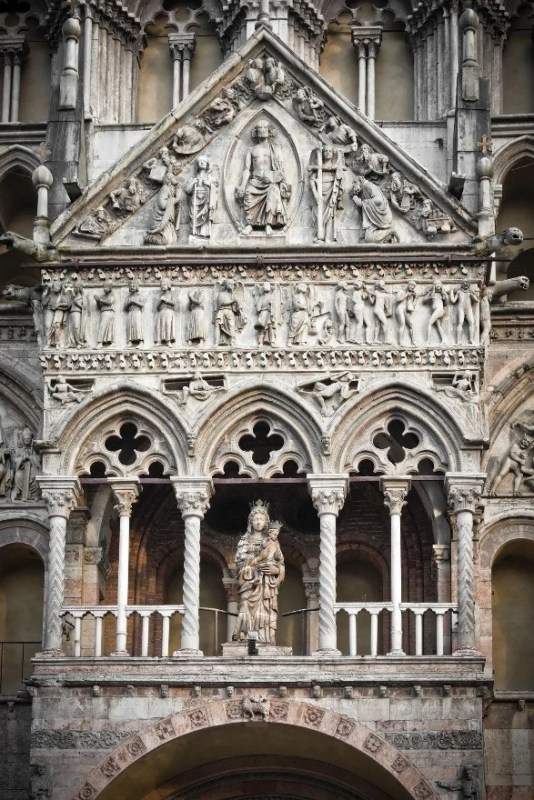
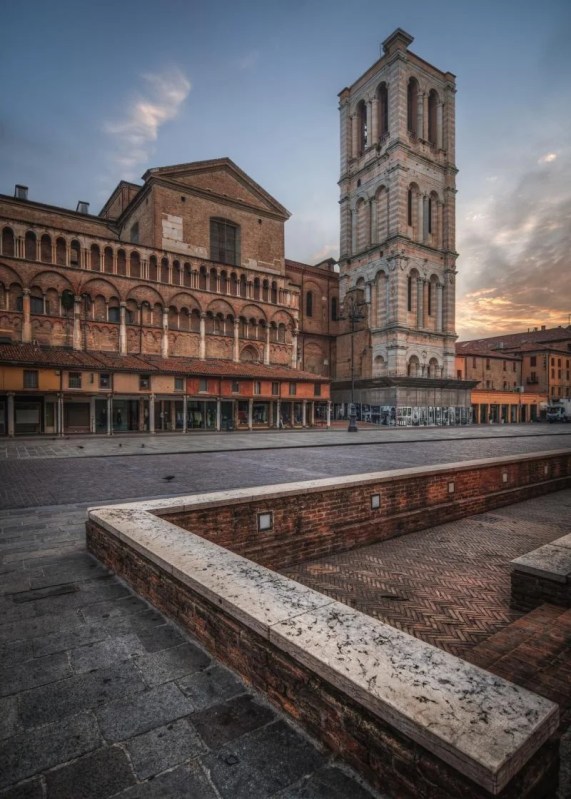
Construction of the Cathedral of Saint George began in 1135, creating one of Ferrara’s most recognizable landmarks.
Its façade beautifully combines Romanesque and Gothic architecture, rewarding visitors who take time to admire its intricate carvings and sculptures before stepping inside.
Following the devastating 2012 Emilia Romagna earthquake, the cathedral underwent years of restoration before finally reopening in March 2024, ensuring that this remarkable building can continue welcoming visitors for generations.
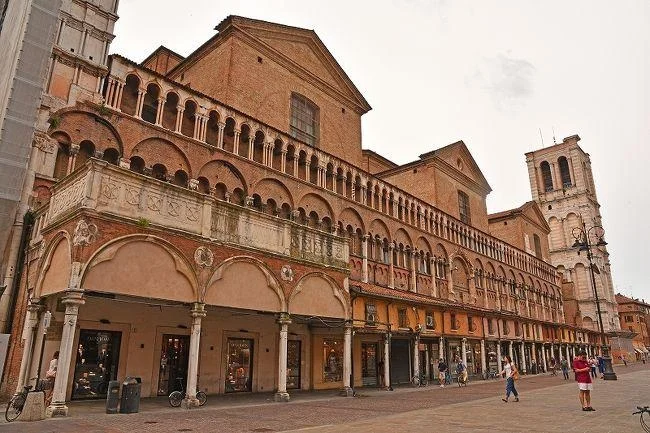
Piazza Trento e Trieste
For centuries, Piazza Trento e Trieste has been Ferrara’s marketplace and civic heart.
Today you’ll find elegant arcades, outdoor cafés, cyclists, and locals enjoying everyday life in one of Italy’s most relaxed historic centers.
Take time to enjoy a cappuccino beneath the Loggia dei Merciai, where merchants have conducted business for more than five hundred years.
Palazzo dei Diamanti
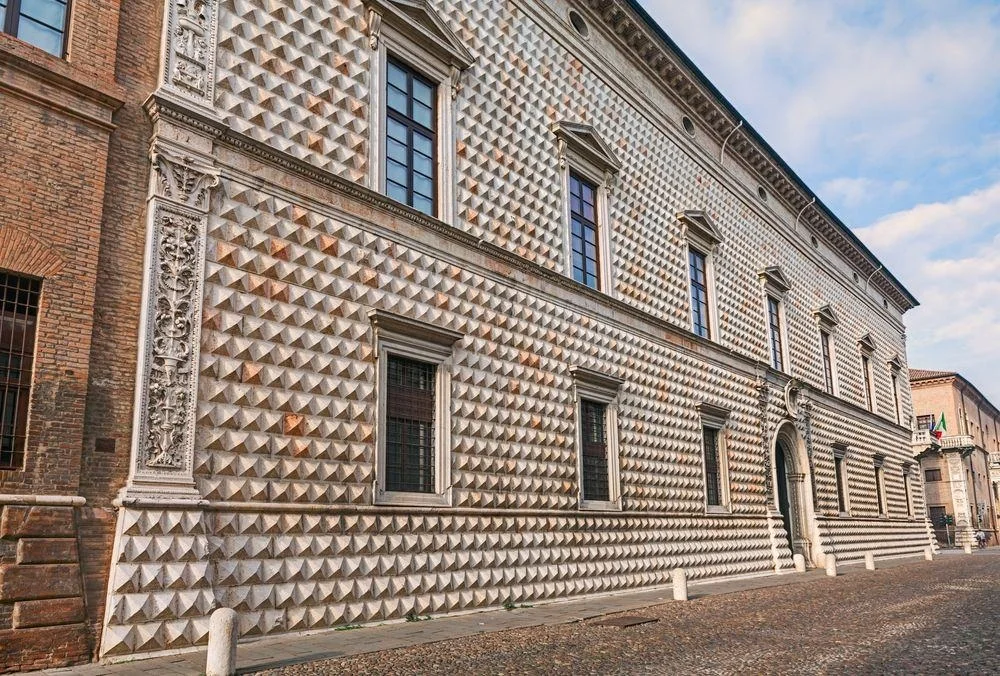
One of Ferrara’s most extraordinary buildings is Palazzo dei Diamanti.
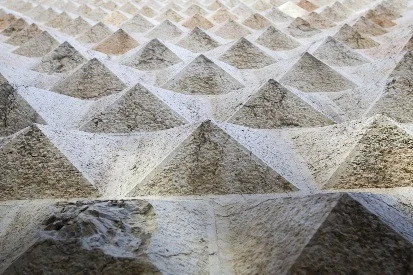
More than 8,500 blocks of white and pink marble, each carved into the shape of a diamond, cover the exterior. As the sun moves across the building throughout the day, the stones catch the light differently, creating a façade unlike any other in Italy.
Designed by Biagio Rossetti, the palace perfectly represents Ferrara’s Renaissance vision, where architecture became part of the larger masterpiece of the city itself.
Basilica of Santa Maria in Vado
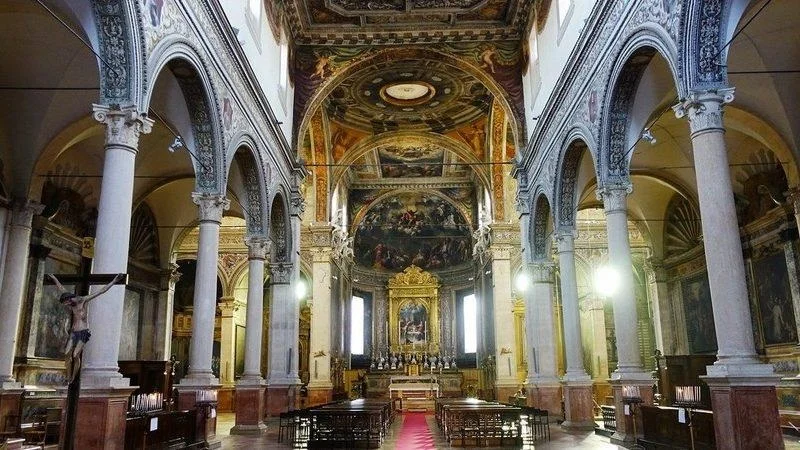
Just outside the busiest streets stands the Basilica of Santa Maria in Vado, home to one of the Catholic Church’s oldest reported Eucharistic miracles.
According to tradition, on Easter Sunday in 1171, blood flowed from the consecrated Host during Mass, transforming this church into an important pilgrimage destination that continues to welcome visitors today.
Ferrara’s Renaissance Walls
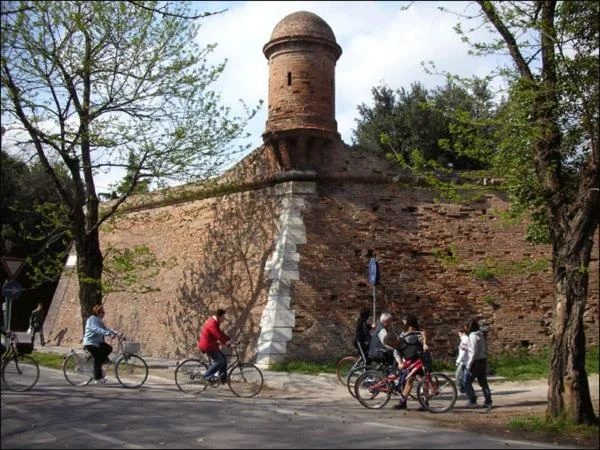
Stretching nearly 9 kilometers (5½ miles), Ferrara’s Renaissance walls are among the best preserved fortifications in Europe.
Originally expanded under the Este family to protect the city’s ambitious Renaissance growth, they survived wars, the transfer of Ferrara to the Papal States, the Napoleonic era, and modern development that claimed so many other European walls.
Today they form one of Italy’s most beautiful urban parks.
Rent a bicycle and enjoy the same tree lined paths used daily by local residents while taking in wonderful views of Ferrara’s rooftops and surrounding countryside.
Benvenuto Tisi, Il Garofalo: My Favorite Artist of Ferrara
Of all the artists associated with Ferrara, Benvenuto Tisi, known as Il Garofalo, is my personal favorite. Born around 1481, Garofalo became one of the leading painters of the Ferrarese Renaissance, working during the remarkable period when the Este court made Ferrara one of Italy’s great centers of art and culture.
His paintings are filled with the qualities I love about Renaissance art: rich reds and blues, graceful figures, beautiful fabrics, architectural details, and landscapes that seem to continue far into the distance. Garofalo was particularly influenced by Raphael and the artistic world of Rome, but he developed a style that became distinctly his own.
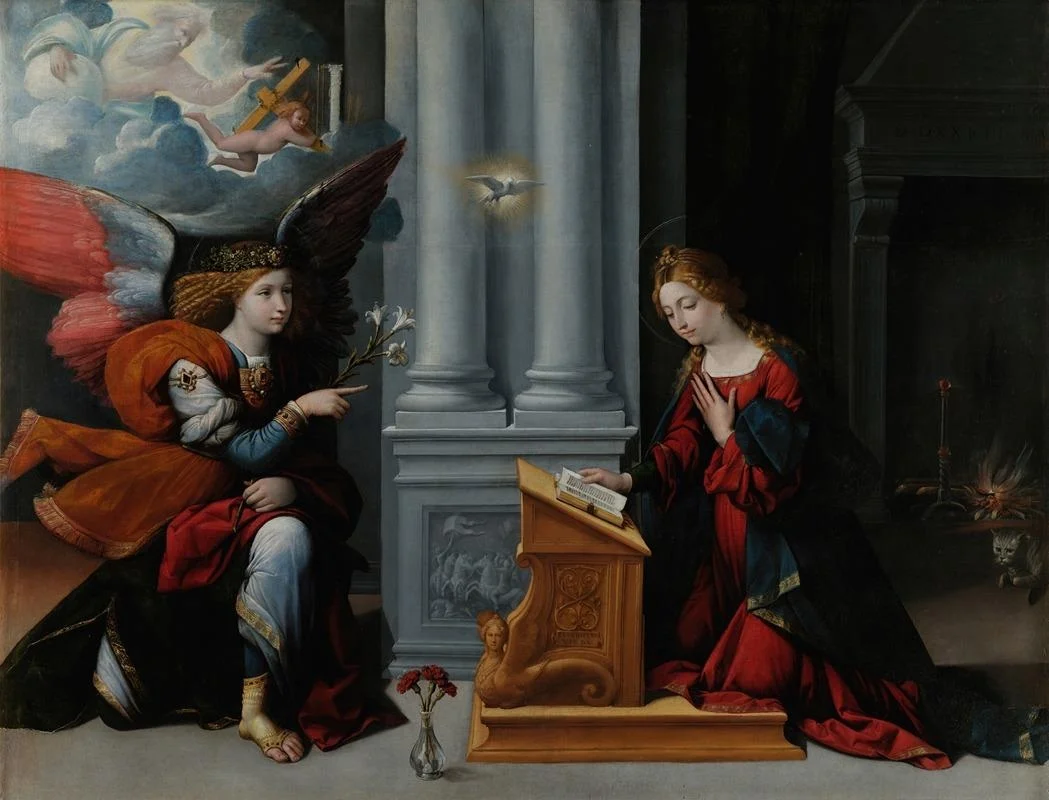
Above: The Annunciation by Il Garofalo. One of my favorite details associated with the artist is hidden in his paintings. The Italian word garofano means carnation, and Garofalo sometimes incorporated carnations into his work as a playful visual reference to his name. In his 1528 Annunciation, for example, three carnations appear in the foreground.
Finding Garofalo in Ferrara
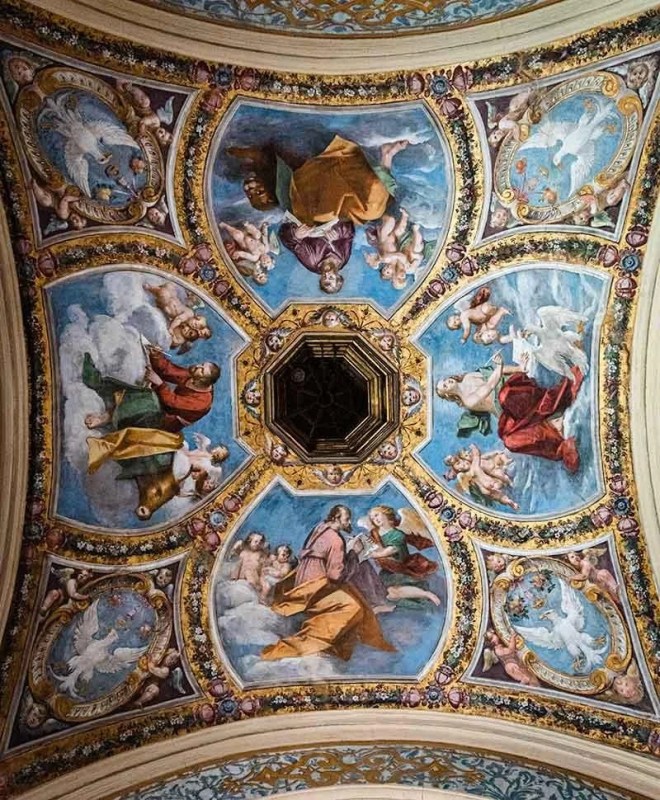
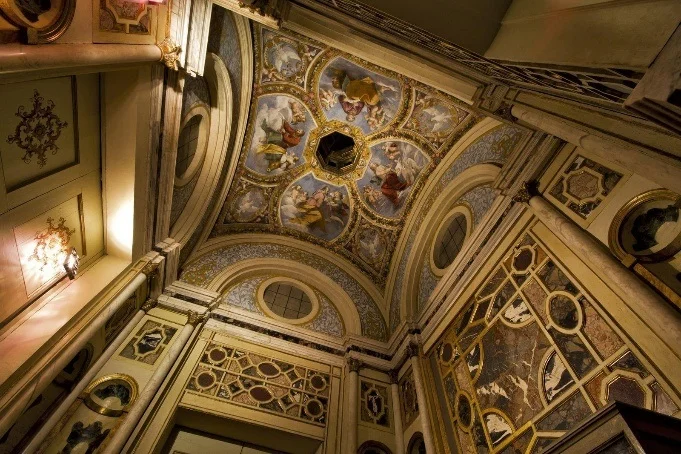
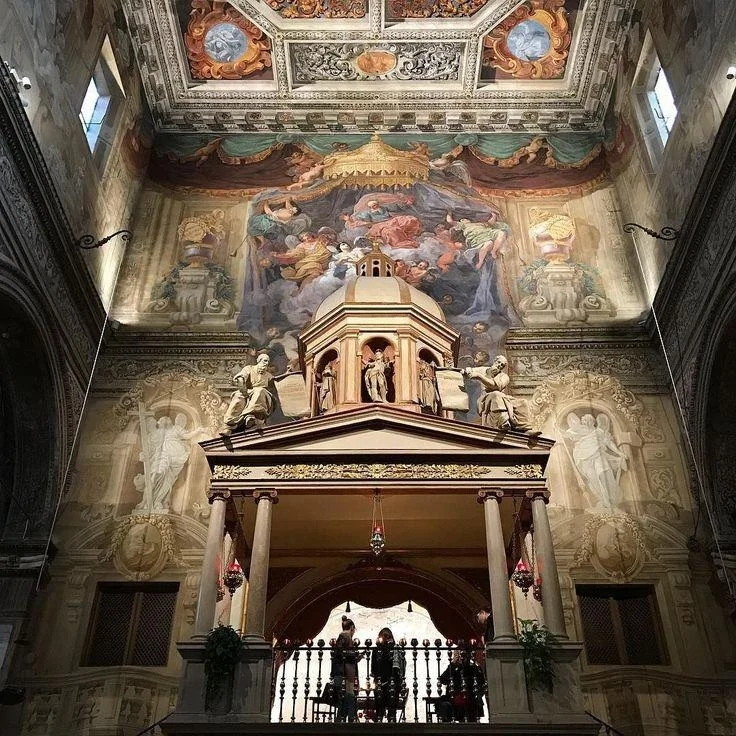
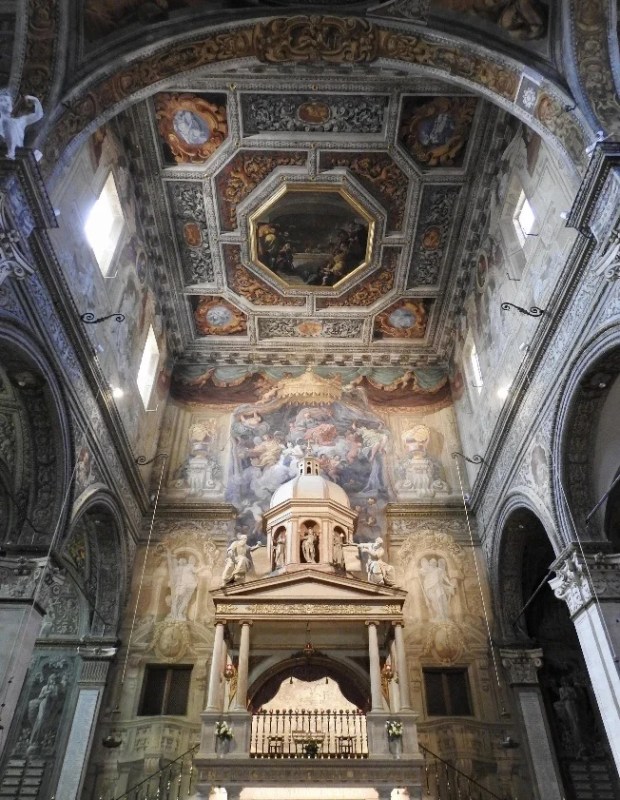
One of the most memorable places to encounter Garofalo in Ferrara is Palazzo Costabili, today home to the National Archaeological Museum. In the magnificent Sala del Tesoro, or Treasure Room, look upward. Garofalo’s early sixteenth century fresco decoration uses perspective to seemingly open the ceiling, with figures appearing along a painted balustrade beneath an expanse of blue sky.
Garofalo’s connection to Ferrara went much deeper than a single palace. He spent much of his career here and created paintings and altarpieces for the city’s churches and religious institutions. Today his work forms an important part of the story of the Ferrarese school of Renaissance painting.
From Ferrara to New York
Part of what makes Garofalo especially meaningful to me is that I have encountered his art not only in Ferrara, but also at The Metropolitan Museum of Art in New York.
Above: Saint Nicholas of Tolentino Reviving the Birds, c. 1530, The Metropolitan Museum of Art, New York.
The connection back to Ferrara is fascinating. The Met’s Saint Nicholas of Tolentino Reviving the Birds and its companion painting, Saint Nicholas of Tolentino Reviving a Child, were originally part of the predella beneath an altarpiece in the Muzzarelli Chapel of the Church of Sant’Andrea in Ferrara. Today both paintings are displayed at the Met.
I love thinking about that journey. You can stand in New York City looking at paintings created almost five hundred years ago for a chapel here in Ferrara. Once you have explored Ferrara and learned Garofalo’s name, encountering his work in another museum feels completely different.
His paintings can now be found in major collections throughout the world, including the Uffizi in Florence, the Galleria Borghese in Rome, and the National Gallery in London. But for me, Garofalo will always lead back to Ferrara.
This is one of the things I love most about travel. We don’t simply collect places. We begin making connections between them.
What to Eat in Ferrara
Ferrara offers some of Emilia Romagna’s most distinctive cuisine.
Don’t miss:
Cappellacci di Zucca IGP
Pasticcio Ferrarese
Coppia Ferrarese IGP
Salama da Sugo
For pastries and coffee, I recommend:
Carli Pasticceria
Bar Pasticceria Duca d’Este, directly across from Castello Estense
For traditional Ferrarese cuisine:
Ca’ d’ Frara Trattoria Moderna
I Piaceri di Lucrezia
Da Noemi
One of my favorite memories wasn’t a particular meal.
It was simply enjoying lunch beneath the walls of Castello Estense, surrounded by centuries of Renaissance history.
Ferrara’s Best Festivals
Ferrara celebrates its remarkable heritage throughout the year.
Palio di Ferrara (May)
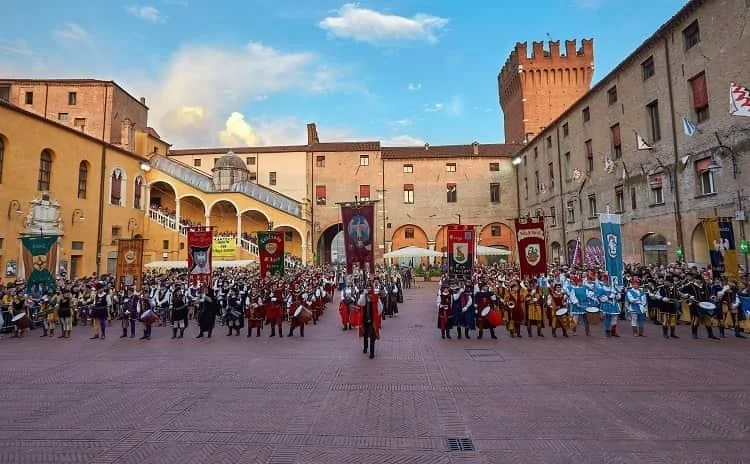
Officially established in 1279, it is considered the oldest Palio in Italy. Weeks of Renaissance parades, flag throwers, medieval competitions, and historical reenactments culminate in races between Ferrara’s eight historic contrade.
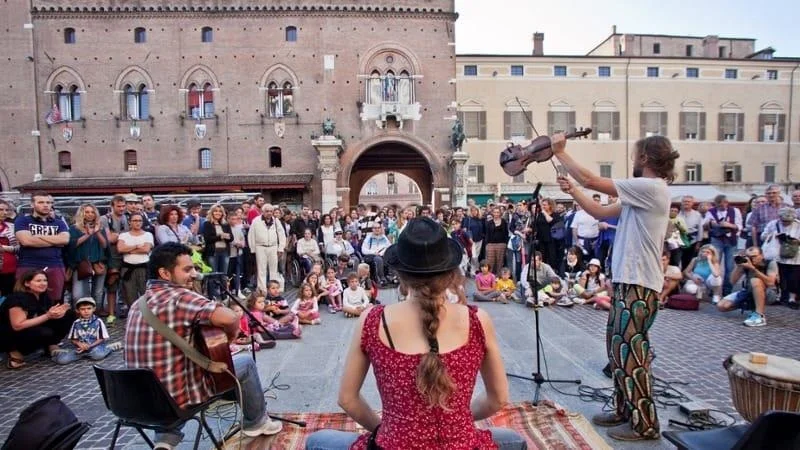
Ferrara Buskers Festival (Late August)
One of the world’s premier festivals dedicated to street performers, filling the city’s historic center with musicians, dancers, acrobats, and entertainers from around the globe.
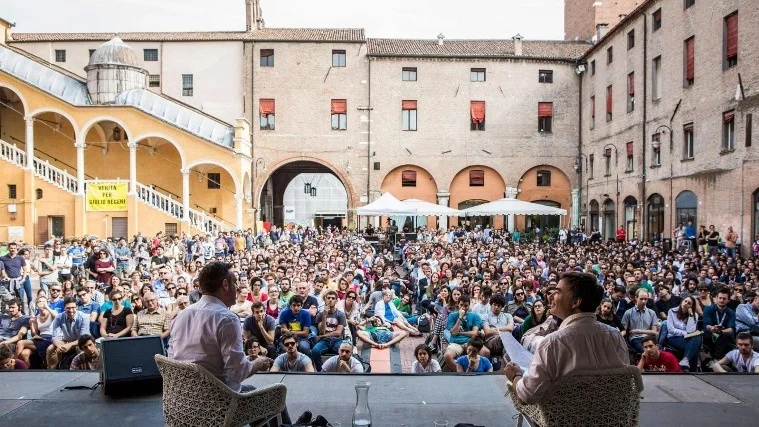
Internazionale a Ferrara (October)
An internationally recognized journalism festival bringing together writers, historians, photographers, journalists, and world leaders for discussions on current events and global affairs.
Planning Your Visit
Ferrara is an easy day trip from Bologna, Padua, Venice, and Ravenna, although I recommend spending at least one full day, or better yet an overnight stay.
Don’t rush.
Ferrara is a city meant to be experienced slowly.
Walk the streets.
Ride a bicycle.
Enjoy a leisurely meal.
Sit beneath the arcades with an espresso.
Like the Renaissance itself, Ferrara reveals its greatest treasures one discovery at a time.
🎙Listen to the Podcast
Episode 5 Ferrara: The Renaissance City That Changed Urban Planning
If you are planning a trip to Italy and want deeper cultural insight, festival traditions, and immersive travel experiences, these guides will help you explore Italy beyond the surface.
Sicilia in Festa: Experience the Magic of Sicily’s History, Art and Timeless Cultural Celebrations (English-Italian Dual Language Edition) https://amzn.to/4pUxBuP