ZRG Strikes Gold
•
Telenor Microfinance Bank awards ZRG OneView Contact Center System
•
ZRG Receives 5th Consecutive Achievement Gold Award from FPCCI
•
Al Baraka Bank Chooses ZRG OneView CMS Software
•
PSO Awards Contact Center Tender To ZRG
•
ZRG Strikes Gold
•
Telenor Microfinance Bank awards ZRG OneView Contact Center System
•
ZRG Receives 5th Consecutive Achievement Gold Award from FPCCI
•
Al Baraka Bank Chooses ZRG OneView CMS Software
•
PSO Awards Contact Center Tender To ZRG
•
ZRG Strikes Gold
•
Telenor Microfinance Bank awards ZRG OneView Contact Center System
•
ZRG Receives 5th Consecutive Achievement Gold Award from FPCCI
•
Al Baraka Bank Chooses ZRG OneView CMS Software
•
PSO Awards Contact Center Tender To ZRG
•
ZRG Strikes Gold
•
Telenor Microfinance Bank awards ZRG OneView Contact Center System
•
ZRG Receives 5th Consecutive Achievement Gold Award from FPCCI
•
Al Baraka Bank Chooses ZRG OneView CMS Software
•
PSO Awards Contact Center Tender To ZRG
•
Padua, or Padova, is one of those Italian cities that can easily be overshadowed by its famous neighbor, Venice. But long before travelers began rushing toward the lagoon, Padua was already one of the great intellectual, artistic, and religious centers of Europe.
This is the city of Saint Anthony, whose magnificent basilica has welcomed pilgrims for centuries. It is home to one of the world’s oldest universities, where Galileo once taught. And it is where Giotto created the extraordinary frescoes of the Scrovegni Chapel, paintings that helped change the course of Western art.
But Padua is much more than its famous names. Its historic center is filled with arcaded streets, medieval market squares, frescoed interiors, cafés, churches, and university courtyards. It is also a city where everyday life still unfolds within spaces that have been used for centuries.
A Little History of Padua
Padua’s story begins long before the Middle Ages. The Romans knew the city as Patavium, and it became one of the wealthiest cities of Roman northern Italy. The Roman historian Livy was born here in 59 BC.
But medieval Padua is the city that most fascinates me.
The University of Padua was founded in 1222, helping transform the city into an international center of learning. At almost the same time, Saint Anthony spent the final years of his life here. After his death in 1231, pilgrims began arriving to visit his tomb.
Padua became a city shaped by two powerful forces: knowledge and faith.
During the fourteenth century, the Carrara family created a sophisticated court that attracted artists and intellectuals, and Padua became one of Europe’s great centers of fresco painting
The Scrovegni Chapel: Giotto’s Masterpiece
If you see only one artistic masterpiece in Padua, make it the Scrovegni Chapel.
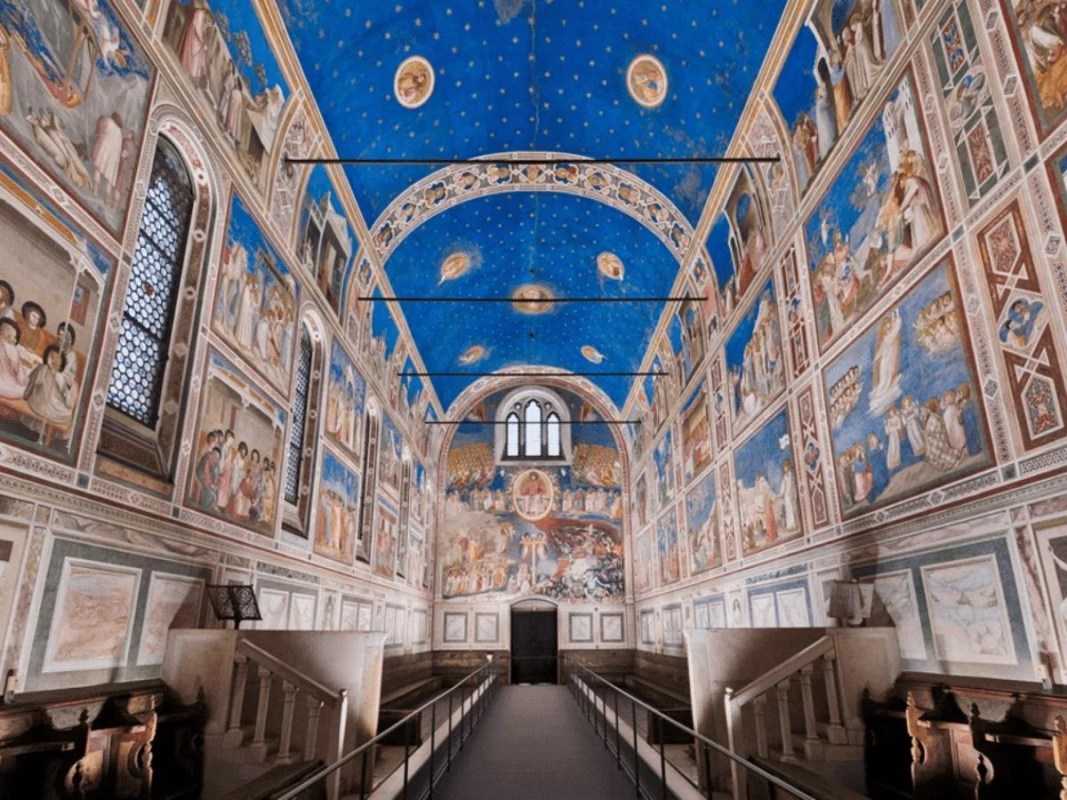
From the outside, the little brick chapel gives almost nothing away. Step inside and you are surrounded by Giotto.
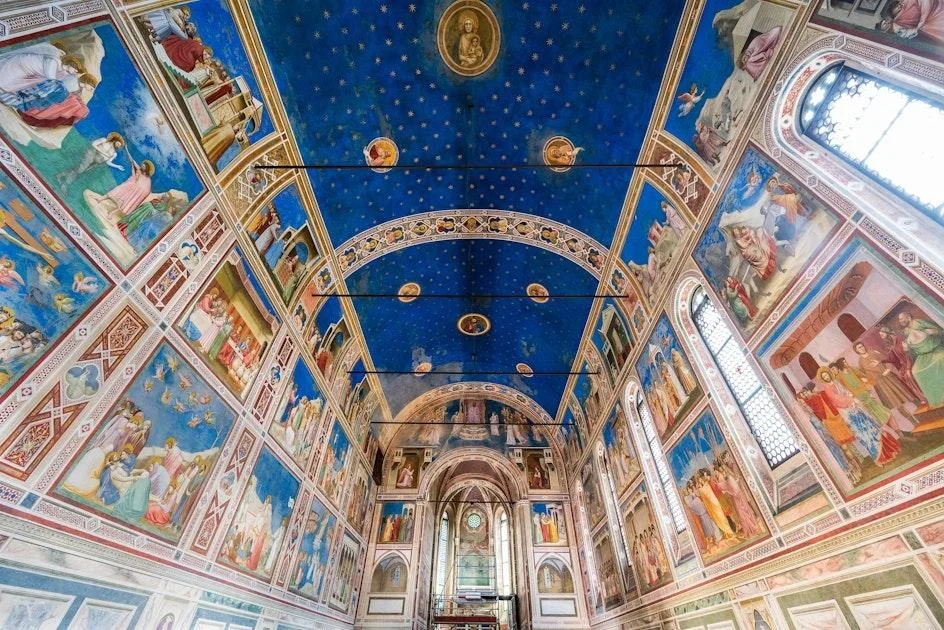
The brilliant blue ceiling is scattered with golden stars, while the walls unfold like an enormous illustrated book, telling stories from the lives of Mary and Christ.
Giotto painted the chapel between about 1303 and 1305. What makes these frescoes so important isn’t simply their beauty. His people have weight, movement, and recognizable human emotions.
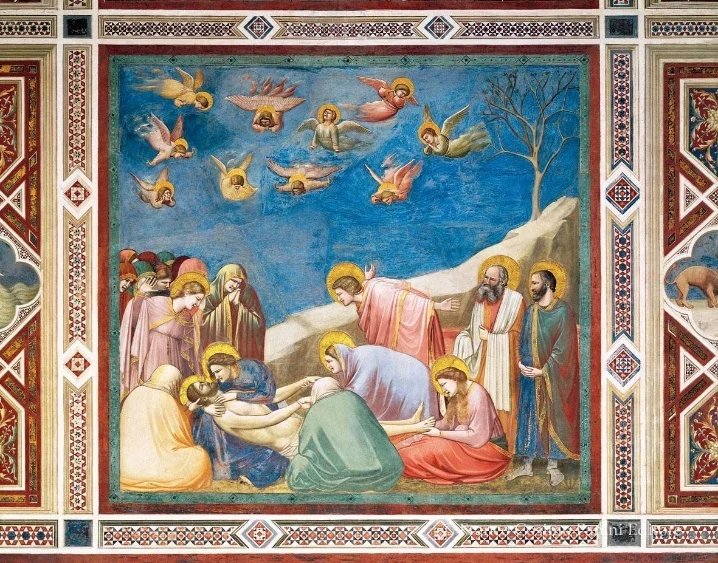
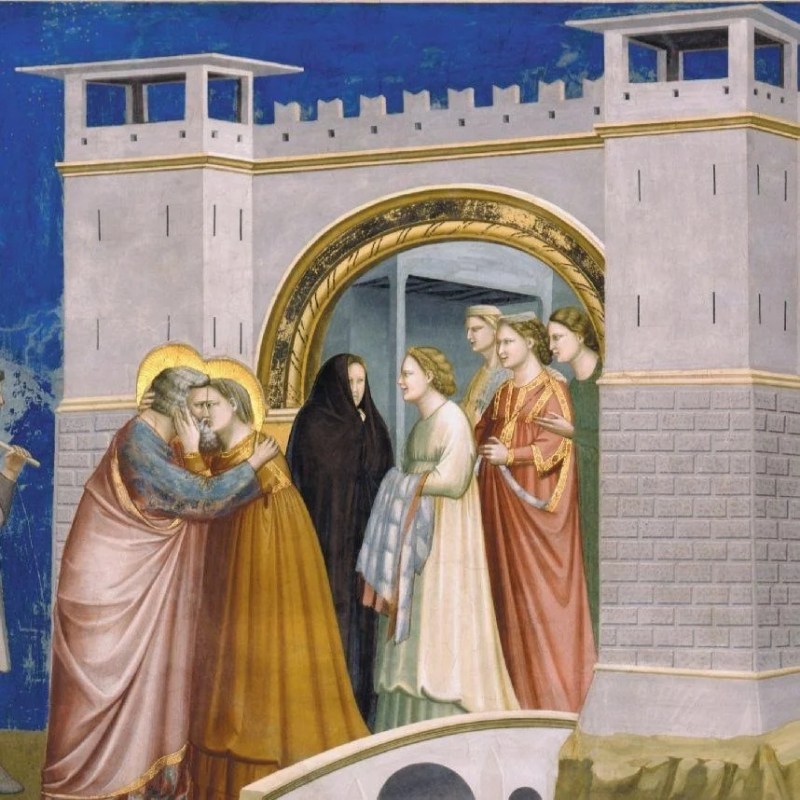
Look especially for the Meeting at the Golden Gate, where Joachim and Anne embrace, and the extraordinary Lamentation, where Mary holds the body of Christ while the figures around her collapse into grief.
When we visited, I was with my son August, and I was very happy to have him there. Thanks to years of Catholic schooling, he was helping me follow the biblical stories from one fresco to the next while I tried to absorb as much as possible during our very short visit.
Travel Tip: Reserve the Scrovegni Chapel well in advance. The standard visit inside is only about fifteen minutes, so familiarize yourself with the major frescoes beforehand and decide which scenes you especially want to see
The Eremitani and the Young Mantegna
Just steps from Scrovegni is the Church of the Eremitani, where a teenage Andrea Mantegna began working on the frescoes of the Ovetari Chapel.
If you’ve followed my Italian Masterpiece Series, you’ll remember Mantegna from Mantua, where we saw his famous Camera degli Sposi. Padua gives us the opportunity to see where that extraordinary career began.
Tragically, Allied bombs struck the church on March 11, 1944, shattering much of the fresco cycle into thousands of fragments. Researchers later used historic photographs, technology, and surviving fragments in an extraordinary effort to reconstruct portions of the decoration.
The experience here is very different from Scrovegni. Part of what you are seeing is survival.
Palazzo della Ragione and Medieval Padua
Continue into the historic center and you’ll reach one of my favorite parts of Padua.
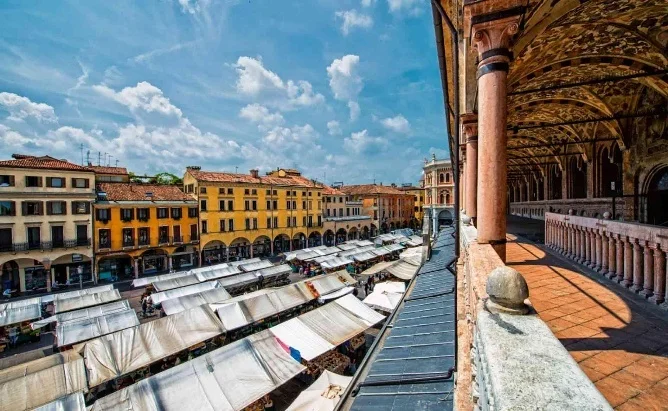
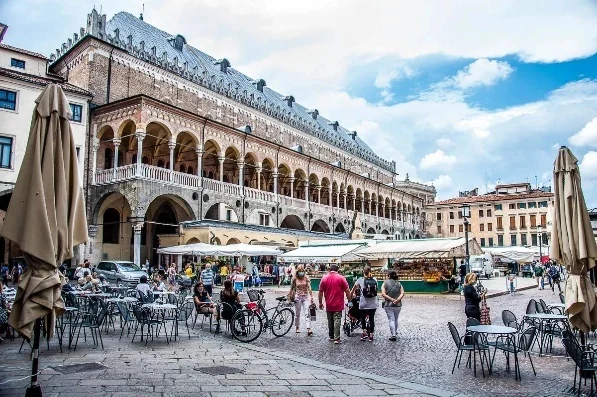
The enormous Palazzo della Ragione stands between Piazza delle Erbe and Piazza della Frutta, an area that has been the commercial and civic heart of the city for centuries.
Upstairs is the enormous Salone, one of Europe’s largest medieval halls without internal supporting columns. Its walls are covered with hundreds of images involving saints, animals, occupations, astrology, months, seasons, and the medieval understanding of the world.
And standing in the middle of it all is an enormous fifteenth century wooden horse.
Downstairs, don’t miss Sotto il Salone, the historic covered food market. I love the contrast. Above you is a monumental medieval hall where justice was once administered. Below, people are still buying cheese, pasta, bread, wine, and dinner.
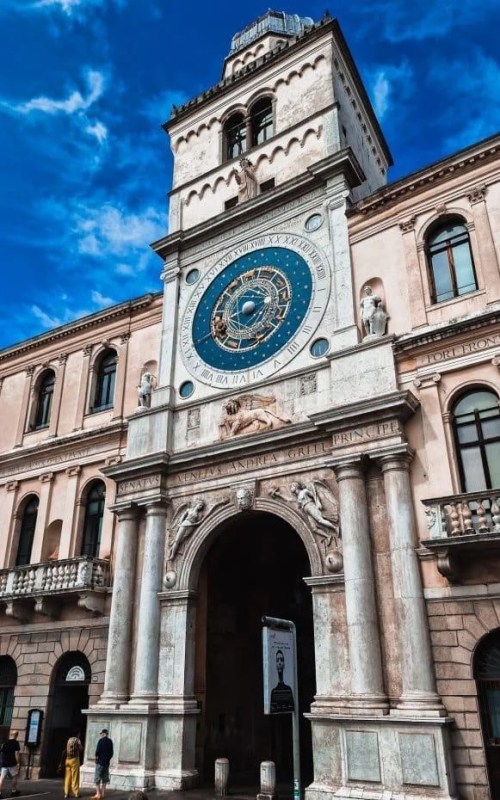
Nearby, walk through Piazza dei Signori and look up at the astronomical clock on the Torre dell’Orologio. See if you notice something unusual: Libra is missing from the zodiac.
Padua’s Cathedral Baptistery
The Cathedral itself is worth seeing, but the masterpiece is next door.
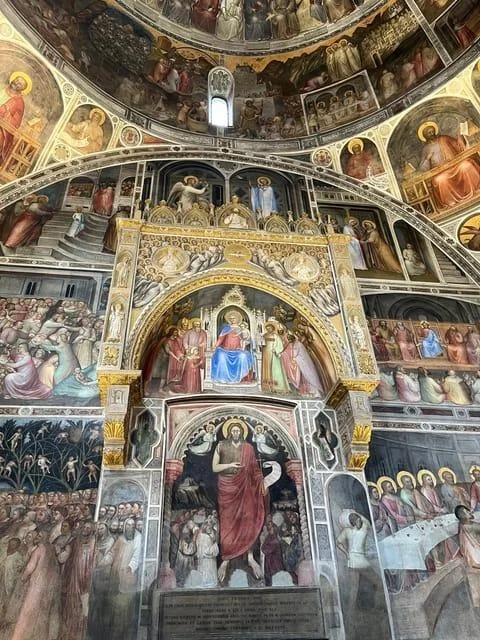
The simple brick exterior of the Baptistery of San Giovanni gives almost no indication of what is waiting inside.
Then you walk through the door.
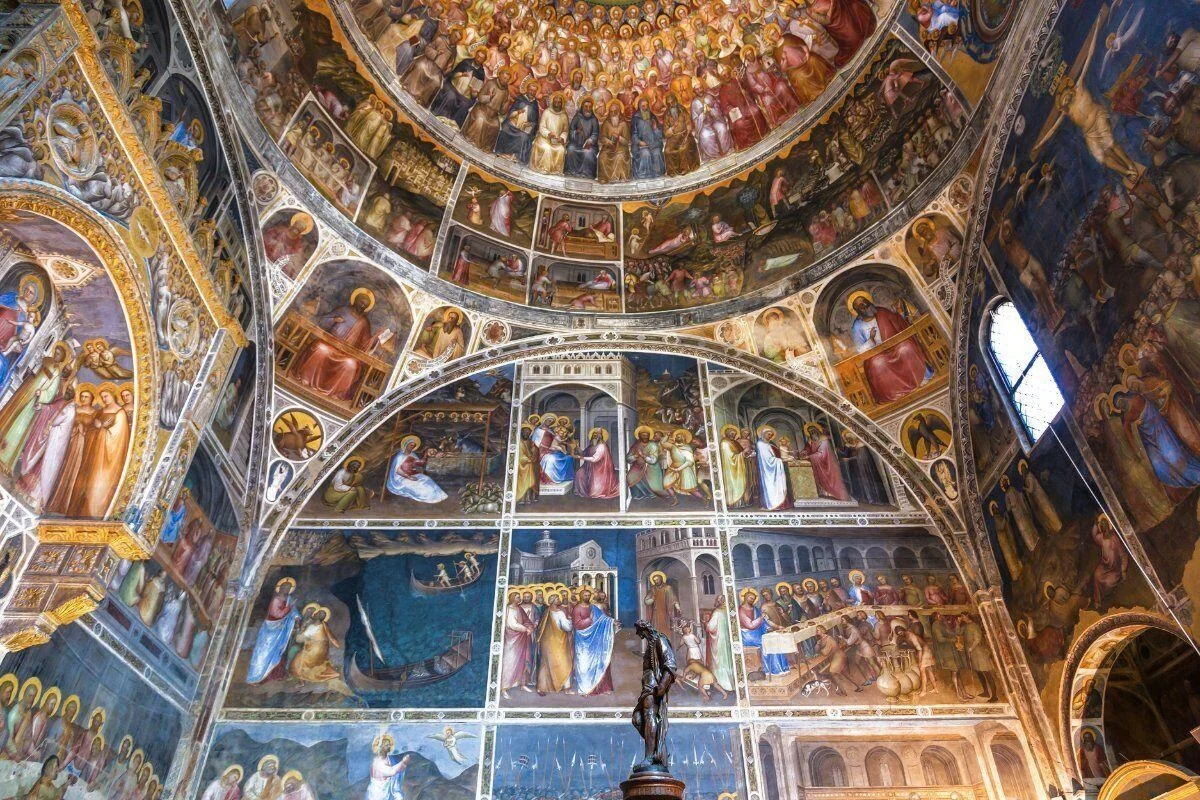
Almost every surface is covered with frescoes created in the 1370s by Giusto de’ Menabuoi.
Look straight up.
At the center of the dome is Christ Pantocrator, surrounded by the Virgin Mary and hundreds of saints, prophets, apostles, and angels arranged in great concentric circles.
The faces seem to radiate outward until the entire dome becomes an enormous vision of Paradise.
The Baptistery is one of the eight buildings included in the UNESCO World Heritage Site Padua’s Fourteenth Century Fresco Cycles.
After Giotto’s brilliant blue Scrovegni Chapel, this was the other painted ceiling in Padua that I would not miss.
The University of Padua and Palazzo Bo
Padua isn’t only a city of extraordinary art. It is a city of ideas.
Founded in 1222, the University of Padua became one of Europe’s great centers of learning.
Visit historic Palazzo Bo, where you can see the remarkable anatomical theater created in 1595, with six steep wooden galleries surrounding the table where dissections once took place.
Galileo Galilei taught mathematics in Padua for eighteen years. You can even see the wooden teaching podium traditionally associated with him.
Another extraordinary figure associated with the university is Elena Cornaro Piscopia, who in 1678 earned a doctorate in philosophy here, becoming the first woman known to receive a university degree.
My Favorite Stop: Caffè Pedrocchi
Just steps from Palazzo Bo is one of my favorite places in Padua, Caffè Pedrocchi.
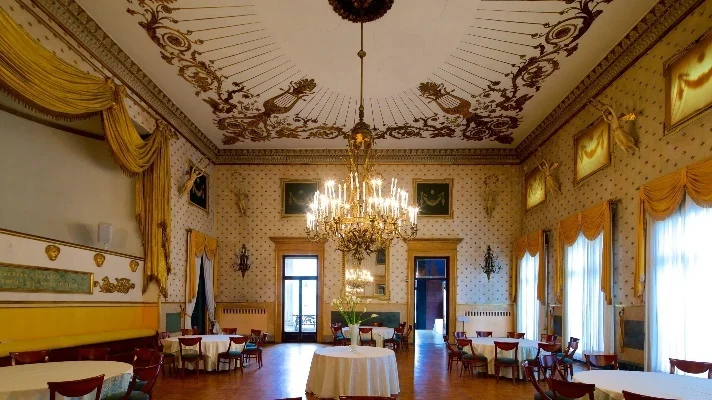
Opened in its present form in 1831, it became a gathering place for students, writers, intellectuals, and political figures and was once known as the “café without doors” because it remained open day and night.
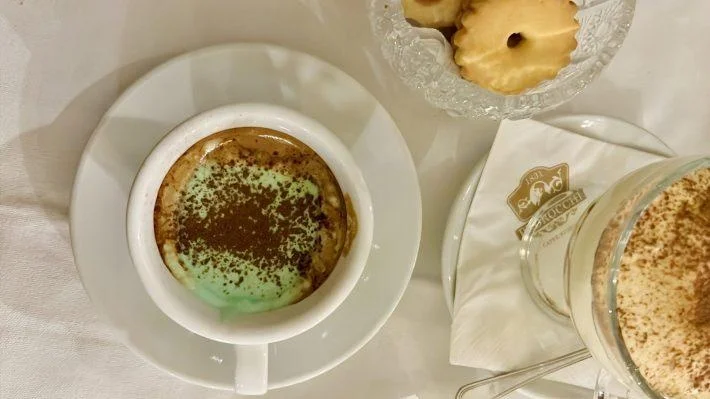
Order the famous Caffè Pedrocchi, espresso topped with a cool mint cream and cocoa. Traditionally, you don’t stir it or add sugar. Drink through the layers and enjoy the contrast between the hot coffee and cool mint.
And sit down. This is one historic café where I think it is worth taking your time and enjoying the beautiful rooms rather than simply having a quick coffee at the counter.
Saint Anthony of Padua
Saint Anthony is so closely connected with Padua that it is easy to assume he was born here.
He wasn’t.
Anthony was born in Lisbon around 1195 and eventually joined the Franciscans. After traveling and preaching through Europe, he developed a strong connection with Padua and spent the final period of his life here. He died in 1231 and was canonized less than a year later.
Many people also know Anthony as the saint invoked when something is lost. According to tradition, a novice took a precious book containing Anthony’s Psalms and teaching notes. Anthony prayed for its return; the book was brought back, and over time people began seeking his intercession for other things that had been lost.
The Basilica of Saint Anthony
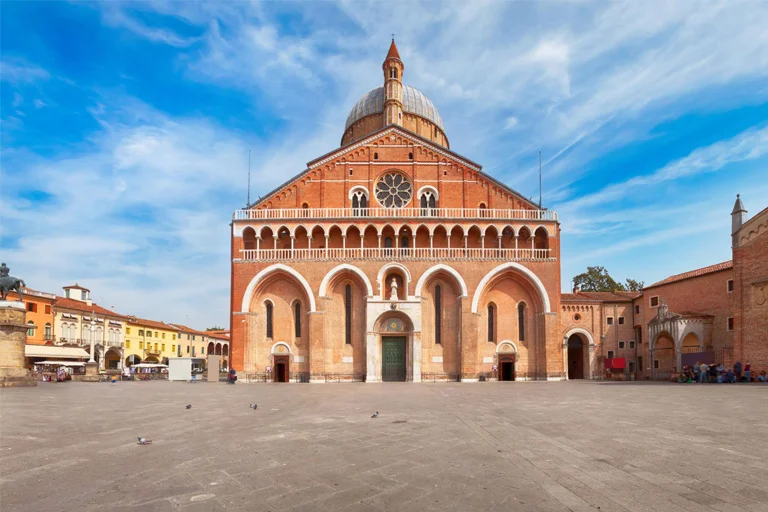
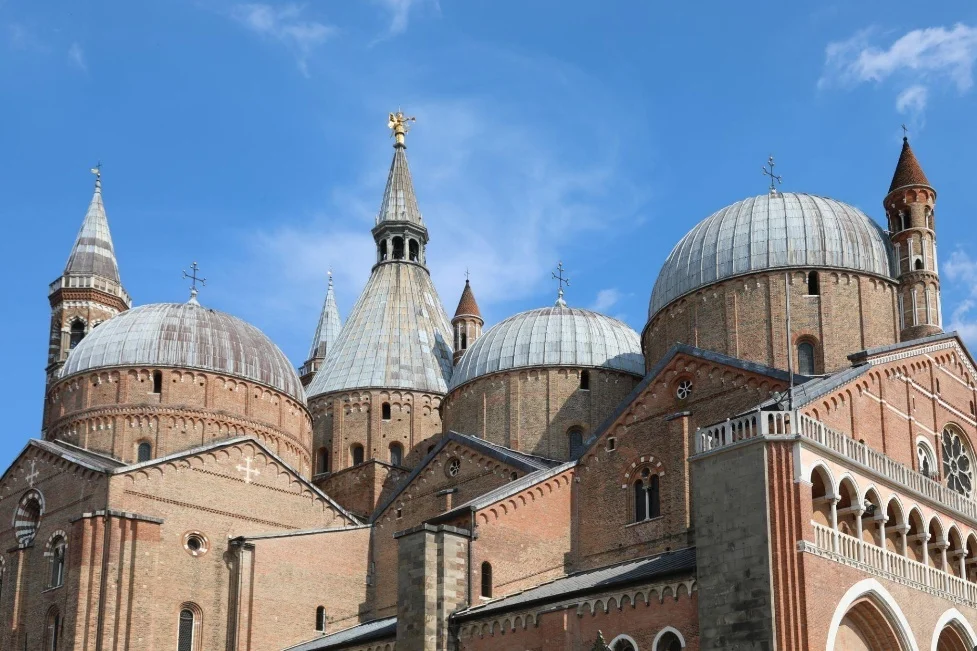
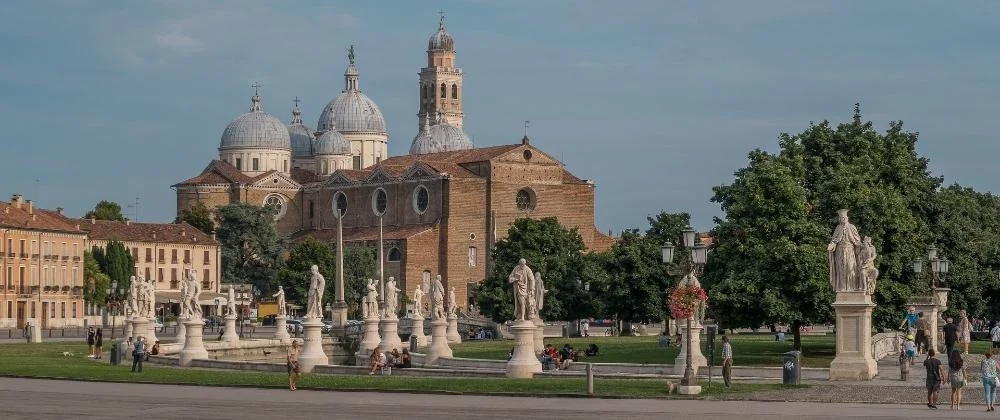
The Basilica di Sant’Antonio is one of the great pilgrimage churches of Italy, and it doesn’t look quite like any other major church in the country.
Its domes, towers, Gothic forms, Byzantine influences, and Romanesque elements create an extraordinary silhouette.
We loved our time here.
The church is magnificent, but what stayed with me most was how spiritual it felt. This isn’t simply an art-filled historic monument. People are still coming here to pray and to visit Anthony’s tomb, just as pilgrims have done for centuries.
Even if you aren’t Catholic, I think you can appreciate what happens here.
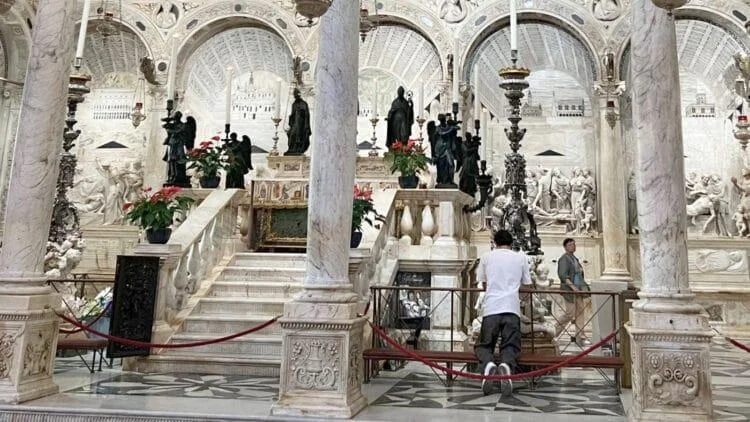
At the Tomb of Saint Anthony, pilgrims place their hands against the marble, pray quietly, and leave photographs and intentions for people they love.
Also visit the Chapel of the Relics, where Anthony’s tongue and jaw are preserved. His tongue was reportedly found unusually well preserved when his body was examined after his death, something considered especially significant because Anthony had been famous for his preaching.
Don’t Miss Donatello
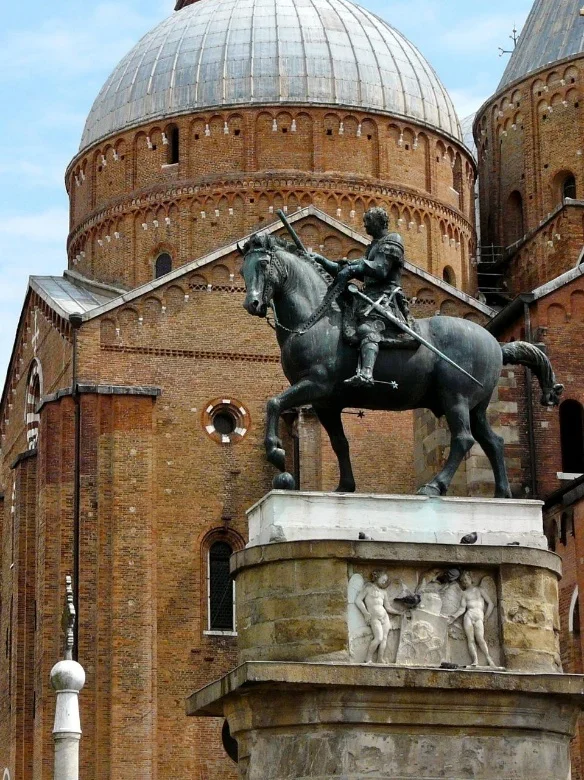
Outside the Basilica stands Donatello’s Gattamelata, his great bronze equestrian monument to the military commander Erasmo da Narni.
Then look for Donatello inside as well. His bronze sculptures for the high altar are among the Basilica’s great artistic treasures.
And Don’t Skip the Cloisters
This was one of our favorite parts of the visit.
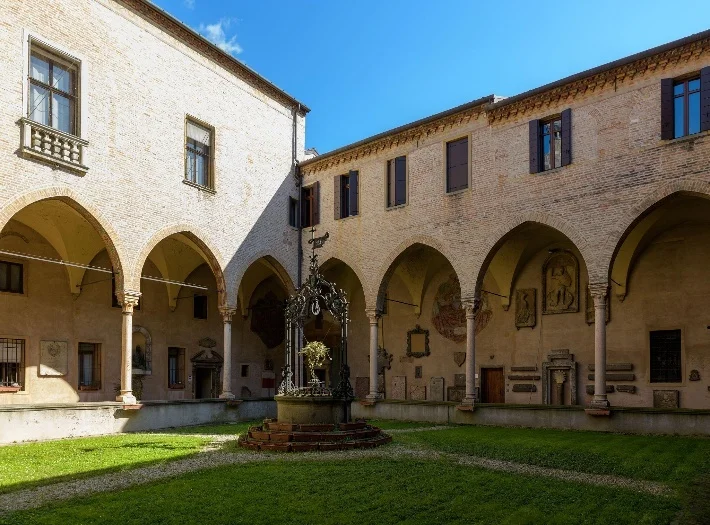
After the enormous Basilica and the emotion surrounding Anthony’s tomb, the cloisters feel wonderfully peaceful. Take some time to wander beneath the arcades and enjoy the quiet courtyards.
And I have to mention the bookstore and religious shop. It is one of the best I’ve encountered at a major pilgrimage site. I could have spent far too much time there.
Before leaving the Basilica area, look for the small Oratory of Saint George, filled with fourteenth-century frescoes by Altichiero da Zevio and his workshop and included among Padua’s UNESCO fresco sites.
Prato della Valle
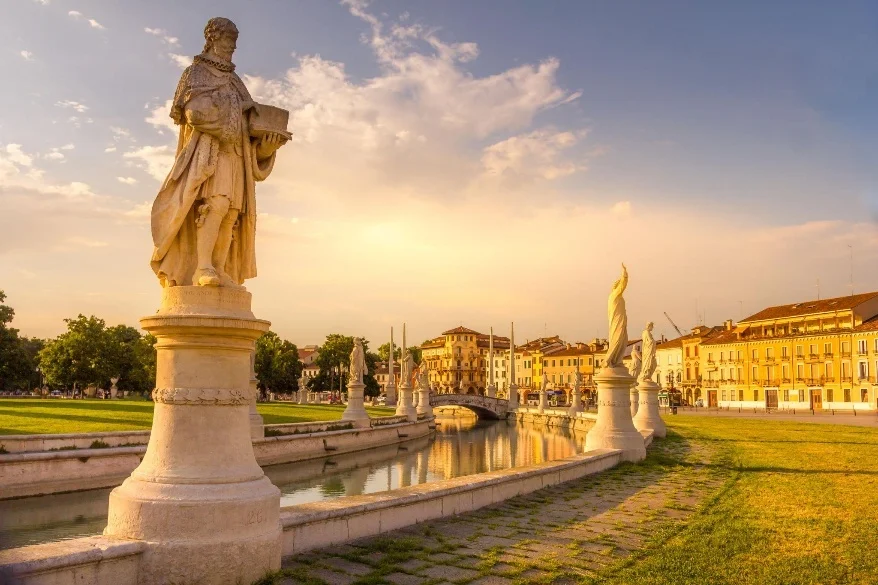
From Saint Anthony, continue toward Prato della Valle, one of the most recognizable public spaces in Padua.
The enormous elliptical piazza surrounds the green Isola Memmia with a canal and rows of statues. Much of its present form dates to the eighteenth century. (Italia.it)
This isn’t somewhere you need to study every monument. Walk around the canal, sit for a while, or simply enjoy the scale of the space.
At one end stands the enormous Basilica of Santa Giustina, associated with the burial of Saint Justina and traditionally also with the tomb of Saint Luke the Evangelist.
Festa di Sant’Antonio
If I could choose one festival for experiencing Padua, it would be the Festa di Sant’Antonio on June 13.
Pilgrims arrive from around the world, Masses are celebrated throughout the day, and a large procession carries relics and a statue of Saint Anthony through the streets.
I cover the festival in much greater detail in Chapter 11, FestaFusion Padua, of my Ultimate Festival and Travel Guide: Venice and the Veneto.
Planning Your Visit
Padua is very walkable, and many of its essential sights can be combined in a day. If time is limited, prioritize:
Scrovegni Chapel→Eremitani→Palazzo della Ragione and the market squares→Palazzo Bo→CaffèPedrocchi→Basilica of Saint Anthony→Prato della Valle.
If you have additional time, add the Cathedral Baptistery, Oratory of Saint George, and Santa Giustina.
Most importantly, reserve the Scrovegni Chapel in advance, and check the available tour times for Palazzo Bo before your visit.
Listen to the Padua Episode
Padua: The City of Saints, Scholars, and Giotto is part of my Italian Masterpiece Series, where we explore the cities that helped shape Italy through art, architecture, faith, politics, and culture.
Podcast:Immersion Travel Italy Video: Add YouTube episode link here once published.
Plan More of the Veneto With Me
Padua has an entire chapter in my Ultimate Festival and Travel Guide: Venice and the Veneto, including its history, sights, walking tours, restaurants, practical travel information, and festivals. The episode script specifically directs readers to Chapter 11, FestaFusion Padua.
My Italy Travel Guides: Available on Amazon by searching Katerina Ferrara, or through my website.
And if you enjoy discovering Italy through its history, festivals, art, and smaller cities, sign up for my monthly newsletter for new episodes, travel stories, festival ideas, and updates on my latest Italy travel guides.
Next in the Italian Masterpiece Series:Pistoia, as we continue exploring Medieval Italy: Faith, Pilgrimage, and Civic Life.