ZRG Strikes Gold
•
Telenor Microfinance Bank awards ZRG OneView Contact Center System
•
ZRG Receives 5th Consecutive Achievement Gold Award from FPCCI
•
Al Baraka Bank Chooses ZRG OneView CMS Software
•
PSO Awards Contact Center Tender To ZRG
•
ZRG Strikes Gold
•
Telenor Microfinance Bank awards ZRG OneView Contact Center System
•
ZRG Receives 5th Consecutive Achievement Gold Award from FPCCI
•
Al Baraka Bank Chooses ZRG OneView CMS Software
•
PSO Awards Contact Center Tender To ZRG
•
ZRG Strikes Gold
•
Telenor Microfinance Bank awards ZRG OneView Contact Center System
•
ZRG Receives 5th Consecutive Achievement Gold Award from FPCCI
•
Al Baraka Bank Chooses ZRG OneView CMS Software
•
PSO Awards Contact Center Tender To ZRG
•
ZRG Strikes Gold
•
Telenor Microfinance Bank awards ZRG OneView Contact Center System
•
ZRG Receives 5th Consecutive Achievement Gold Award from FPCCI
•
Al Baraka Bank Chooses ZRG OneView CMS Software
•
PSO Awards Contact Center Tender To ZRG
•
Pistoia is one of those Tuscan cities that makes you wonder why more travelers do not stop here.
Sitting on the railway between Florence and Lucca, Pistoia is easy to reach and wonderfully compact, yet its historic center contains an extraordinary collection of medieval architecture, pilgrimage history, Romanesque churches, Renaissance art, historic markets, and traditions that remain very much part of the city today. It is only about a fifteen minute walk from the train station to Piazza del Duomo, making it especially easy to explore on foot.
This visit is part of my Immersion Travel Italy: Italian Masterpiece Series, as we continue exploring Medieval Italy: Faith, Pilgrimage, and Civic Life.
Piazza del Duomo: Pistoia’s Medieval Masterpiece
If there is one place that explains why Pistoia belongs in the Italian Masterpiece Series, it is Piazza del Duomo.
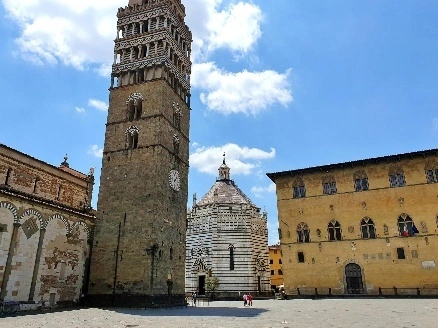
Rather than a single building being the masterpiece, it is the entire ensemble. The Cathedral of San Zeno, its soaring campanile, the striped marble Baptistery of San Giovanni in Corte, the Palazzo dei Vescovi, and the Palazzo Comunale surround the same historic public space. Together, they show us how religious and civic power existed side by side in a medieval Tuscan city.
This is also a piazza where you should resist the temptation to immediately start sightseeing. Stand in the center for a few minutes and simply look around.
Markets, religious celebrations, government, festivals, and public ceremonies have all been part of the life of this square for centuries, and Piazza del Duomo remains at the heart of Pistoia today. (Italia.it)
The Cathedral of San Zeno and the Campanile
The Cathedral of San Zeno is unmistakably Tuscan, with its Romanesque façade, rows of arches, and alternating bands of marble.
Before entering, look high on the façade for the statue of San Jacopo, or Saint James. During Pistoia’s summer celebrations, the statue is dressed in an enormous red cloak as part of the vestizione di San Jacopo.
Beside the cathedral rises the great campanile. The tower reaches 67 meters and visitors who climb its approximately 200 steps are rewarded with panoramic views across Pistoia and the surrounding landscape. (Pistoia Tourism)
But Pistoia’s greatest artistic surprise is waiting inside the cathedral.
The Silver Altar of San Jacopo
The magnificent Altare Argenteo di San Jacopo, or Silver Altar of Saint James, is one of the great treasures of medieval Pistoia.
The altar is covered with silver figures and narrative scenes depicting apostles, saints, biblical stories, and episodes connected with Saint James. It was not created by a single artist. Different artists and workshops contributed to it over generations, allowing us to see changing artistic styles within one extraordinary object.
And there is a wonderful surprise here.
A young Filippo Brunelleschi contributed to the altar around the beginning of the fifteenth century, while he was still working as a goldsmith and sculptor.
This is Brunelleschi before the dome.
Long before he transformed the skyline of Florence with the dome of Santa Maria del Fiore, he was working on this extraordinary altar in Pistoia.
San Jacopo and Pistoia’s Pilgrimage Story
The Silver Altar also takes us back to one of the most important chapters in Pistoia’s history.
In 1145, Pistoia received what tradition identifies as a fragment of the skull of Saint James the Apostle. In medieval Europe, possession of an important relic could transform the religious significance of a city.
Pilgrims came to venerate relics, but their journeys also connected cities economically and culturally. They needed food and shelter, visited churches, made donations, and moved along a vast network of pilgrimage routes across Europe.
Pistoia’s connection to Saint James became so significant that the city has sometimes been described as a kind of “Little Santiago,” linking this Tuscan city with the great pilgrimage destination of Santiago de Compostela.
The Baptistery of San Giovanni in Corte
Directly across the piazza, the Baptistery of San Giovanni in Corte immediately catches your attention.
Its octagonal exterior is wrapped in alternating bands of white and dark green marble, creating the striped appearance that we associate with some of Tuscany’s most beautiful medieval religious buildings.
Construction of the present baptistery began in the fourteenth century on the remains of an earlier church. Today it is considered an important example of Pistoian and Tuscan Gothic architecture. (Visit Tuscany)
Walk around it rather than viewing it from only one position. As you move through Piazza del Duomo, the relationships between the Baptistery, Cathedral, campanile, and surrounding palaces continually change.
Giovanni Pisano’s Masterpiece at Sant’Andrea
Beyond Piazza del Duomo, one of my priority stops is the Church of Sant’Andrea.
The reason is inside.
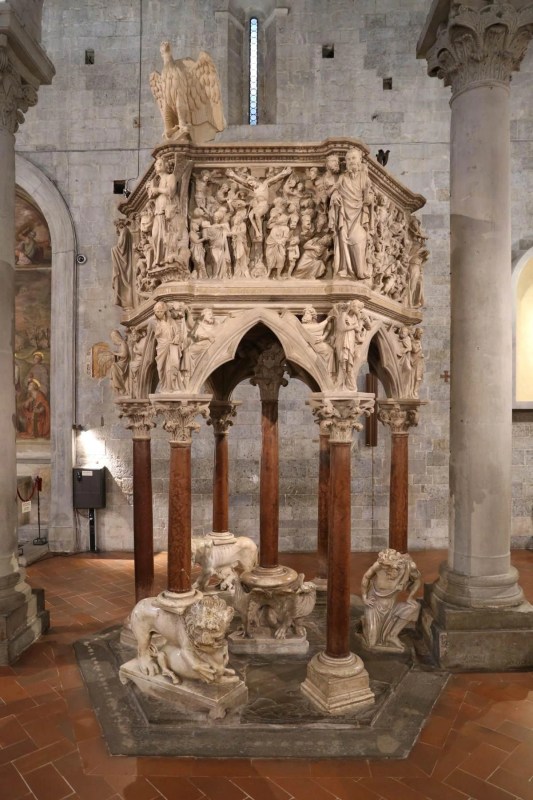
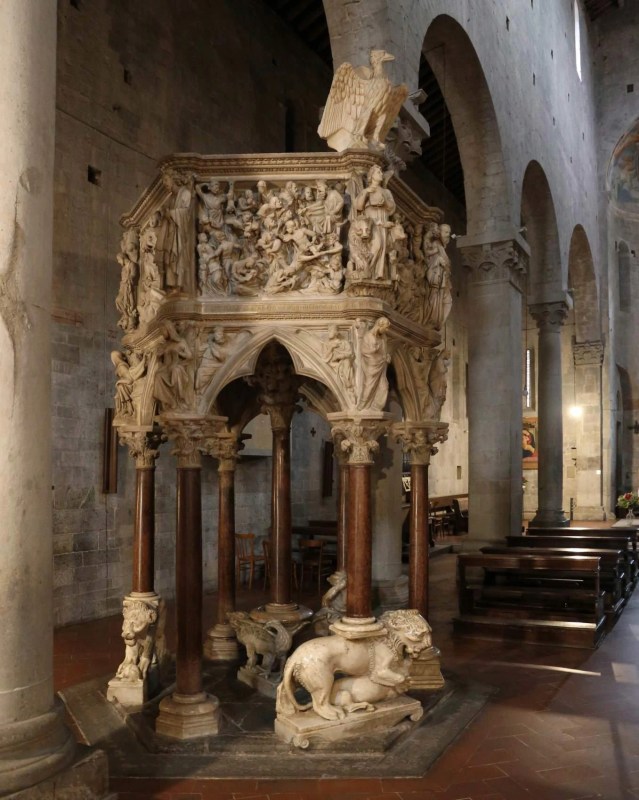
Around the beginning of the fourteenth century, Giovanni Pisano created an extraordinary marble pulpit here. Supported by slender columns, the pulpit is covered with biblical scenes filled with movement and emotion.
Pisano’s figures do not feel stiff or distant. They twist, react, crowd together, grieve, and respond to one another. It is one of Pistoia’s great medieval works of art and one I would absolutely make time to see.
San Giovanni Fuorcivitas
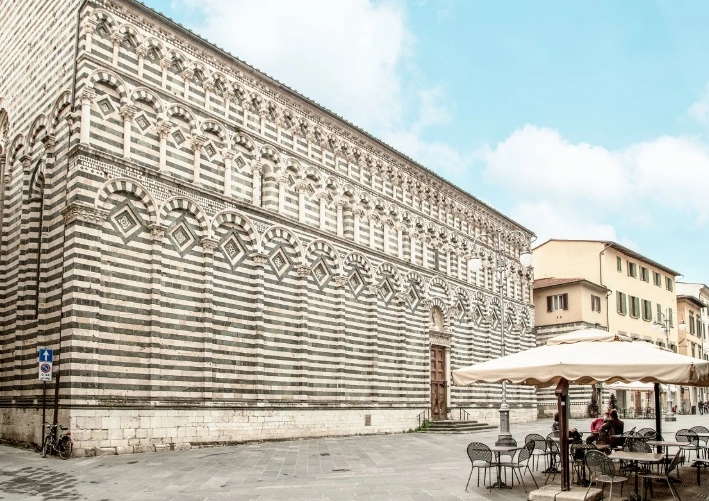
Continue to San Giovanni Fuorcivitas, another of Pistoia’s distinctive striped marble churches.
Its unusual name refers to Saint John being “outside the city,” because the original church stood beyond an early circuit of Pistoia’s walls.
Inside, look for the medieval pulpit by Fra Guglielmo da Pisa and the beautiful glazed terracotta Visitation by Luca della Robbia.
The Basilica of the Madonna dell’Umiltà
From San Giovanni Fuorcivitas, continue to the Basilica of the Madonna dell’Umiltà.
Its enormous dome rises prominently above Pistoia’s rooftops and gives us a Renaissance contrast to the medieval architecture we have been exploring. The dome was designed by Giorgio Vasari, another major name in Tuscan art and architectural history.
Piazza della Sala and the Markets of Pistoia
After the churches and museums, spend some time simply enjoying Pistoia.
Piazza della Sala and the streets surrounding it are among my favorite areas for doing exactly that. This old commercial heart of Pistoia is filled with food shops, cafés, restaurants, and market activity.
Pistoia’s compact size is part of its appeal. You can move from a major medieval masterpiece to a market, café, church, or restaurant in only a few minutes.
San Jacopo and the Giostra dell’Orso
If I could choose one time to experience Pistoia, it would be during the celebrations surrounding San Jacopo.
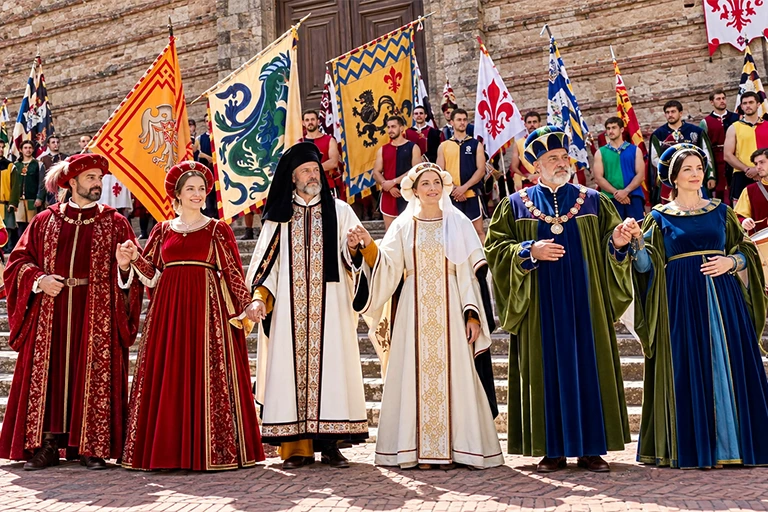
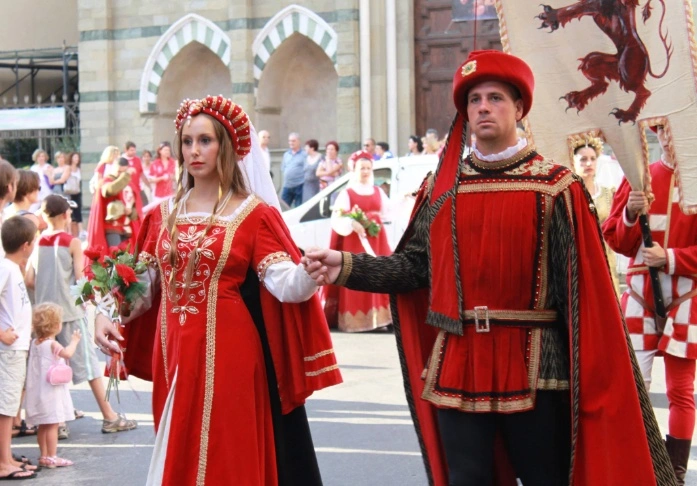
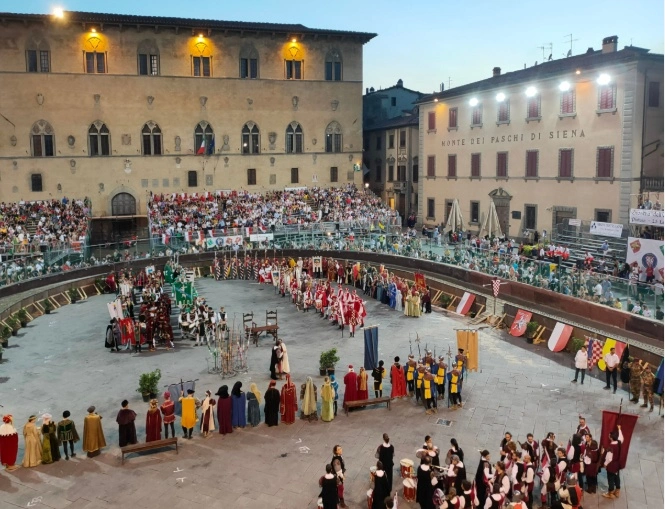
His feast day is July 25, when Piazza del Duomo becomes the setting for the Giostra dell’Orso, or Joust of the Bear.
Horsemen representing Pistoia’s four historic districts race through the piazza and attempt to strike bear shaped targets with their lances. The cathedral, baptistery, campanile, and medieval palaces form the backdrop.
This is one of the things I love most about Italian festivals. The historic center is not simply preserved as scenery. The piazza becomes a gathering place for the community again, connecting Pistoia’s medieval past with the city that exists today.
The Giostra dell’Orso and the celebrations of San Jacopo are also included in my new The Ultimate Festival and Travel Guide: Tuscany.
Coffee, Lunch and Gelato in Pistoia
Our day begins with coffee at Caffè Valiani 1831, one of Pistoia’s historic cafés. It is set inside a former oratory near San Giovanni Fuorcivitas and makes a wonderful first stop as you walk from the train station toward the historic center.
For lunch, we stop at La Nicchia sulla Sala, beside Piazza della Sala. After a morning filled with churches, sculpture, and medieval architecture, this is where I want to sit down and enjoy a proper Tuscan lunch in the old market district.
And there is always room for gelato.
Our final stop is Una Mole di Gelato on Via Roma, only steps from Piazza del Duomo. From there, I like the idea of taking one final walk through the piazza before returning to the station.
Planning Your Visit to Pistoia
Pistoia works beautifully as a day trip. It is roughly 35 minutes by train from Florence, and on our visit we came from Pescia, only about 20 minutes away.
Once you arrive at Pistoia Centrale, it is about a 15 minute walk to Piazza del Duomo, and virtually everything in this itinerary can be explored on foot.
That makes Pistoia particularly appealing if you want to experience another side of Tuscany without spending your day worrying about a rental car or complicated transportation.
Continue Exploring Tuscany With Me
Pistoia is exactly the kind of place I wanted to include in The Ultimate Festival and Travel Guide: Tuscany: a city filled with extraordinary art and history that many international travelers still pass by.
You can find the companion Immersion Travel Italy podcast and video, my travel guides, additional blogs, and more Italy travel planning at KaterinaFerrara.com.
Join the Immersion Travel Italy Newsletter
My free monthly newsletter includes new podcast episodes, Italian festivals, travel ideas, regional discoveries, and updates about new books in the Travel Italy Series.
Sicily in Celebration / Sicilia in Festa View the book
Coming next: We continue Medieval Italy: Faith, Pilgrimage, and Civic Life in Pisa, going beyond the Leaning Tower to explore the powerful medieval maritime republic and the extraordinary Piazza dei Miracoli.