ZRG Strikes Gold
•
Telenor Microfinance Bank awards ZRG OneView Contact Center System
•
ZRG Receives 5th Consecutive Achievement Gold Award from FPCCI
•
Al Baraka Bank Chooses ZRG OneView CMS Software
•
PSO Awards Contact Center Tender To ZRG
•
ZRG Strikes Gold
•
Telenor Microfinance Bank awards ZRG OneView Contact Center System
•
ZRG Receives 5th Consecutive Achievement Gold Award from FPCCI
•
Al Baraka Bank Chooses ZRG OneView CMS Software
•
PSO Awards Contact Center Tender To ZRG
•
ZRG Strikes Gold
•
Telenor Microfinance Bank awards ZRG OneView Contact Center System
•
ZRG Receives 5th Consecutive Achievement Gold Award from FPCCI
•
Al Baraka Bank Chooses ZRG OneView CMS Software
•
PSO Awards Contact Center Tender To ZRG
•
ZRG Strikes Gold
•
Telenor Microfinance Bank awards ZRG OneView Contact Center System
•
ZRG Receives 5th Consecutive Achievement Gold Award from FPCCI
•
Al Baraka Bank Chooses ZRG OneView CMS Software
•
PSO Awards Contact Center Tender To ZRG
•
Palermo, the bustling capital of Sicily, is a city rich in history, culture, and religious significance. Over the centuries, it has been influenced by a variety of cultures, including the Phoenicians, Greeks, Romans, Arabs, Normans, and Spanish. Nowhere is this eclectic history more evident than in the city’s incredible churches and cathedrals. From intricate mosaics to grand Baroque facades, Palermo’s religious architecture is an unmissable part of its cultural landscape. In this blog post, we’ll explore the top five most important churches and cathedrals in Palermo that you simply cannot miss.
Palermo Cathedral (Cattedrale di Palermo)
At the heart of Palermo, the city’s Cattedrale di Palermo is a magnificent blend of architectural styles that reflects Sicily’s tumultuous history. Originally built in 1185 by the Normans, the cathedral has undergone multiple restorations and expansions over the centuries, resulting in a fascinating mix of Arab-Norman, Gothic, Renaissance, and Baroque elements.
Key Highlights:
Exterior Architecture: The façade of the cathedral is a stunning example of Norman architecture, with its pointed arches and intricate stonework. The grand towers and cupola were added during the later Renaissance and Baroque periods, creating a visually striking structure.
Royal Tombs: Inside, the cathedral houses the tombs of several Sicilian kings, including Emperor Frederick II, known as one of the most powerful rulers of medieval Europe. The royal sarcophagi are intricately designed and worth seeing.
Treasury: The treasury of the cathedral contains a collection of precious objects, including jewel-encrusted crowns, religious artifacts, and an array of medieval relics, such as the famous Crown of Constance of Aragon.
Why It’s Important: Palermo Cathedral is not only a masterpiece of architectural fusion but also a symbol of Palermo’s role as a cultural and political hub throughout history. The cathedral stands as a testament to the Norman rulers who shaped much of Sicily’s medieval history, while its continuous evolution reflects the city’s multi-layered past.
Church of San Giovanni degli Eremiti
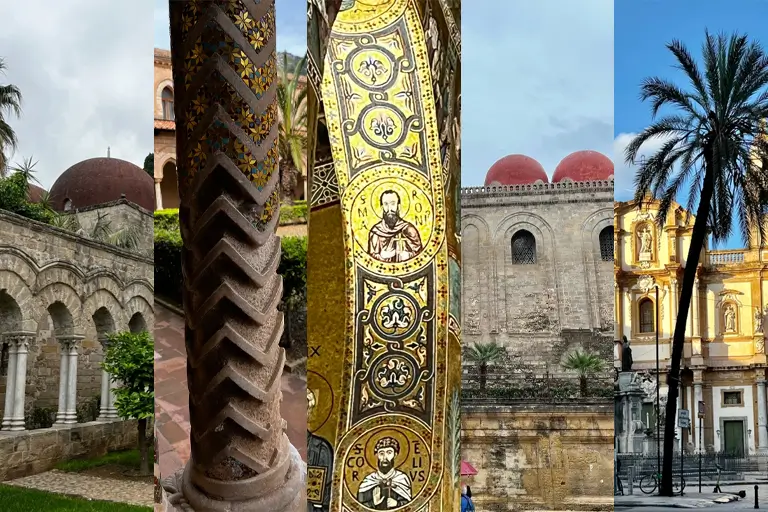
Nestled near the Norman Palace, San Giovanni degli Eremiti is one of Palermo’s most unique churches, instantly recognizable by its bright red domes. This church dates back to the 6th century and was later rebuilt by the Normans in the 12th century. The structure’s Arabic and Norman influences are clear, making it one of the best examples of Arab-Norman architecture in the city, a style that has earned Palermo UNESCO World Heritage status.
Key Highlights:
Red Domes: The five striking red domes of San Giovanni degli Eremiti are a signature feature, showcasing the Islamic influence that still lingers in Sicily’s architecture after centuries of Arab rule.
Cloisters and Garden: One of the most peaceful aspects of San Giovanni is its lovely cloisters and garden, which feature ancient stone arches and lush Mediterranean vegetation. The calm, serene atmosphere makes it a perfect place for contemplation.
Minimalist Interior: The church’s interior is simple, with bare stone walls and minimal decoration. This starkness is a contrast to the opulence found in many other Palermo churches, offering a more reflective and spiritual experience.
Why It’s Important: San Giovanni degli Eremiti is an iconic representation of the Arab-Norman influence in Sicily, a period in which cultures and religions coexisted and influenced each other. Its minimalist design and beautiful gardens provide a tranquil escape from the bustling city, while its historical significance cannot be overstated.
Church of La Martorana (Santa Maria dell’Ammiraglio)
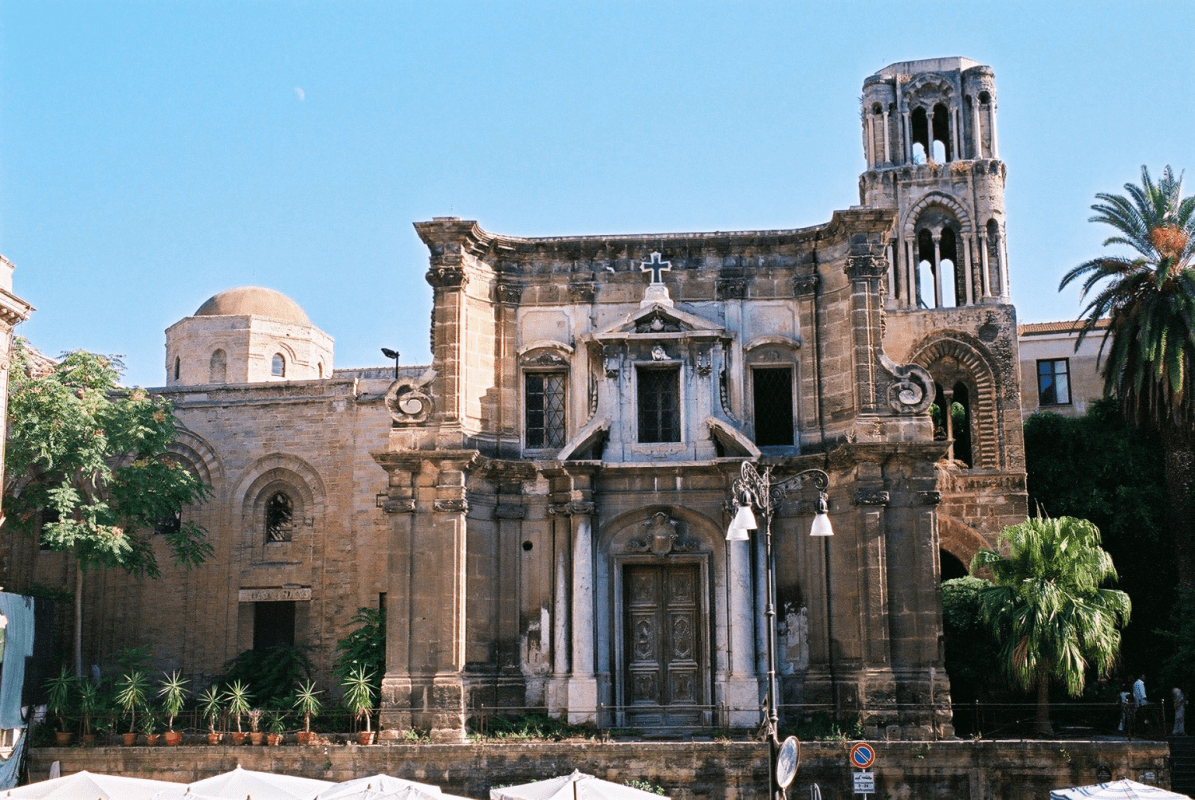
The Church of La Martorana, formally known as Santa Maria dell’Ammiraglio, is one of Palermo’s most celebrated churches due to its stunning Byzantine mosaics. Built in the mid-12th century, La Martorana is a prime example of Arab-Norman-Byzantine architecture, showcasing the influence of the Greek Orthodox Church in Palermo during this period. The church is located in Piazza Bellini, a beautiful square that is also home to other significant churches.
Key Highlights:
Byzantine Mosaics: The highlight of La Martorana is undoubtedly the Byzantine mosaics, which date back to the 12th century. These mosaics depict scenes from the life of Christ, saints, and angels, and are among the best-preserved in Sicily. The intricate details and vibrant gold background give the church an ethereal beauty.
Baroque Alterations: In the 17th century, Baroque elements were added to the church, including a grandiose Baroque façade. The juxtaposition of the Byzantine mosaics with Baroque details makes La Martorana architecturally fascinating.
Bell Tower: The church’s bell tower is another striking feature, offering views over the surrounding piazza and giving visitors a closer look at the architectural fusion.
Why It’s Important: La Martorana stands as a visual testament to Palermo’s multicultural past, where Byzantine, Norman, and Arab influences blended harmoniously. It is also one of the rare places in Sicily where you can still experience original Byzantine art, making it a must-visit for history and art enthusiasts alike.
Palatine Chapel (Cappella Palatina)
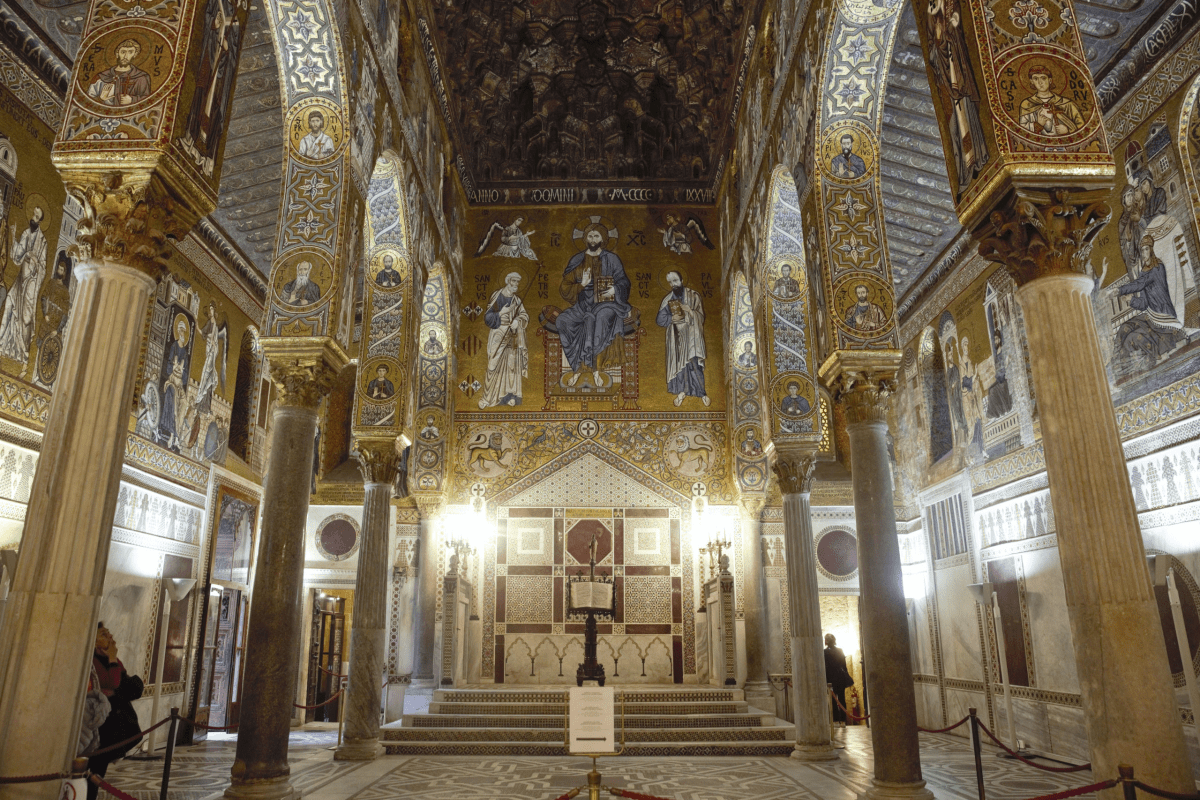
Located within the Palazzo dei Normanni (Norman Palace), the Cappella Palatina is one of the most important religious sites in Palermo and perhaps all of Sicily. This royal chapel was commissioned by Roger II of Sicily in 1132 and is a stunning example of the Arab-Norman-Byzantine style, filled with opulent mosaics, intricate wooden ceilings, and a breathtaking altar.
Key Highlights:
Byzantine Mosaics: The interior of the Palatine Chapel is adorned with some of the most exquisite Byzantine mosaics in the world. The mosaics depict biblical scenes, saints, and angels, with a particular focus on the figure of Christ Pantocrator, who presides over the chapel from the central dome.
Muqarnas Ceiling: The Arab influence is evident in the chapel’s muqarnas ceiling, an extraordinary example of Islamic woodwork. The carved wooden panels are intricately detailed, showcasing scenes of daily life, animals, and geometric patterns.
Royal Connection: The chapel was built as a private place of worship for the Norman kings of Sicily, emphasizing its royal significance. The altar, with its golden mosaics and precious stones, is a reflection of the power and wealth of Roger II and his successors.
Why It’s Important: The Cappella Palatina is one of the most extraordinary examples of multicultural architecture in the world. Combining Norman, Byzantine, and Arab artistry, it serves as a symbol of Sicily’s unique cultural heritage and stands as a masterpiece of religious art.
Church of the Gesù (Chiesa del Gesù)
Located in the Albergheria district, the Church of the Gesù is one of the finest examples of Baroque architecture in Palermo. It was originally built in the late 16th century by the Jesuits and later underwent significant Baroque alterations in the 17th and 18th centuries. Known for its elaborate stucco work and richly decorated interior, the Church of the Gesù is a must-visit for lovers of Baroque art.
Key Highlights:
Baroque Interior: The interior of the Church of the Gesù is a Baroque masterpiece, featuring intricate stucco decorations, gilded altars, and beautiful frescoes. The dramatic use of light and shadow inside the church is characteristic of Baroque art, creating an awe-inspiring atmosphere.
Stucco Work: The stucco decorations, particularly in the chapels and ceiling, are some of the most elaborate in Sicily. Created by artists Giacomo Serpotta and Provenzano, the stucco figures seem to come to life as they adorn the walls and ceilings.
Frescoes: The church is also home to beautiful frescoes, particularly in the apse, where you can admire vibrant depictions of biblical scenes and Jesuit saints.
Why It’s Important: The Church of the Gesù is a prime example of Sicilian Baroque art and a reflection of the Jesuit influence on religious architecture during the Counter-Reformation. Its ornate interior is a visual feast and a testament to the artistry and craftsmanship of the period.
Conclusion Palermo’s churches and cathedrals are more than just places of worship; they are a window into the city’s rich and complex history. From the Byzantine mosaics of La Martorana to the Baroque splendor of the Church of the Gesù, these religious sites offer an unparalleled glimpse into the artistry and multicultural heritage of Sicily. Whether you’re a history lover, art enthusiast, or simply a curious traveler, these five churches and cathedrals are must-see stops on your journey through Palermo.