ZRG Strikes Gold
•
Telenor Microfinance Bank awards ZRG OneView Contact Center System
•
ZRG Receives 5th Consecutive Achievement Gold Award from FPCCI
•
Al Baraka Bank Chooses ZRG OneView CMS Software
•
PSO Awards Contact Center Tender To ZRG
•
ZRG Strikes Gold
•
Telenor Microfinance Bank awards ZRG OneView Contact Center System
•
ZRG Receives 5th Consecutive Achievement Gold Award from FPCCI
•
Al Baraka Bank Chooses ZRG OneView CMS Software
•
PSO Awards Contact Center Tender To ZRG
•
ZRG Strikes Gold
•
Telenor Microfinance Bank awards ZRG OneView Contact Center System
•
ZRG Receives 5th Consecutive Achievement Gold Award from FPCCI
•
Al Baraka Bank Chooses ZRG OneView CMS Software
•
PSO Awards Contact Center Tender To ZRG
•
ZRG Strikes Gold
•
Telenor Microfinance Bank awards ZRG OneView Contact Center System
•
ZRG Receives 5th Consecutive Achievement Gold Award from FPCCI
•
Al Baraka Bank Chooses ZRG OneView CMS Software
•
PSO Awards Contact Center Tender To ZRG
•
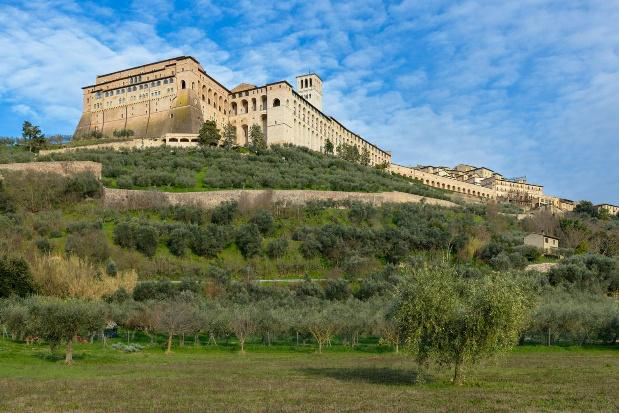
Assisi is one of the most spiritual and beautiful destinations in Italy. Perched on the slopes of Mount Subasio in the heart of Umbria, this medieval hill town is known around the world as the birthplace of Saint Francis and Saint Clare, and as one of Italy’s most important pilgrimage destinations.
But Assisi is much more than a religious site. It is a place of quiet beauty, Roman history, Renaissance art, peaceful streets, and breathtaking views over the Umbrian valley. This guide explores the top things to see in Assisi, the city’s remarkable history, and the best day trips to nearby Umbrian towns like Orvieto, Spoleto, and Spello.
You can also listen to the full story in Episode 10 of the Regional Capitals of Italy Podcast Series, where we explore Assisi’s history, sacred architecture, and the peaceful rhythm of life in Umbria.
Umbria and Assisi
Why Visit Assisi
Assisi feels different from many Italian cities.
There is a stillness here that is hard to describe until you experience it. The stone streets echo softly beneath your footsteps. Bells ring across the valley. Monasteries, churches, and medieval homes blend together in a landscape that has changed very little for centuries.
Unlike Florence or Rome, Assisi does not overwhelm visitors with grand palaces or crowds. Instead, it invites travelers to slow down.
This quiet atmosphere is exactly what has drawn pilgrims here for centuries.
The History of Assisi
Assisi’s story begins long before Saint Francis.
The first settlement was founded by the Umbrians, an ancient Italic people who lived in this region centuries before the rise of Rome. Because of its strategic hilltop location overlooking the Umbrian valley, the site offered protection and sweeping views across the countryside.
In the 3rd century BC, Assisi became part of the Roman Republic and was renamed Asisium. Roman engineers reshaped the town with temples, roads, and public buildings. The most famous Roman structure still standing today is the Temple of Minerva, which continues to dominate Piazza del Comune nearly two thousand years later.
After the fall of the Roman Empire, Assisi became a medieval fortified town and often clashed with neighboring Perugia.
Everything changed in 1181 AD, when a wealthy merchant’s son named Francis of Assisi experienced a spiritual awakening and renounced his wealth.
His message of humility, compassion, and poverty spread across Europe and transformed Assisi into one of Christianity’s most important pilgrimage destinations. Soon after his death in 1226, construction began on the Basilica of San Francesco, forever changing the identity of the city.
Top Things to See in Assisi
Basilica of Santa Chiara
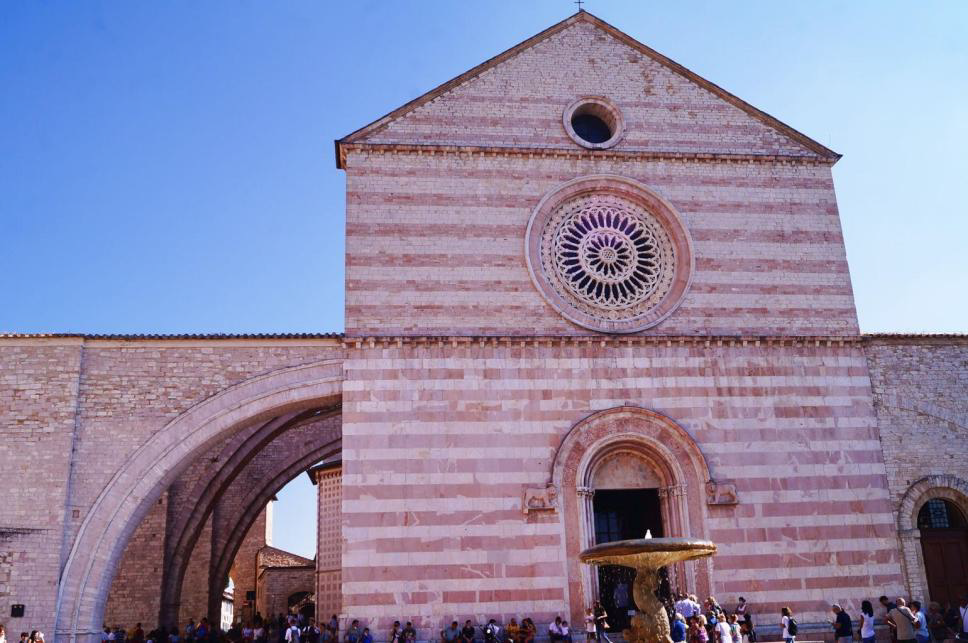
The Basilica of Santa Chiara stands near the western edge of Assisi’s historic center and is immediately recognizable by its pink and white stone façade.
Built in the 13th century, the church honors Saint Clare, the founder of the Poor Clares and one of the most influential spiritual figures of medieval Italy.
Inside, the atmosphere is luminous yet simple. The architecture reflects Clare’s devotion to humility and contemplative prayer.
The most moving space lies beneath the church in the crypt, where Saint Clare’s remains rest in a peaceful and intimate chapel.
Piazza del Comune and the Temple of Minerva
At the center of Assisi lies Piazza del Comune, the historic civic heart of the city.
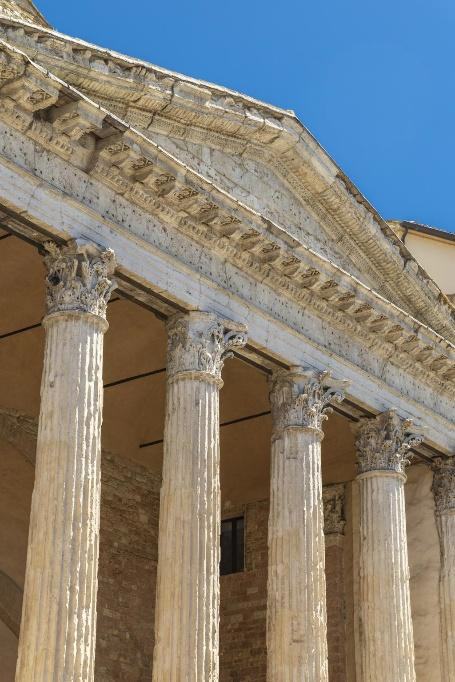
Dominating the square is the Temple of Minerva, a Roman temple built in the first century BC. Its perfectly preserved Corinthian columns remain one of the finest examples of Roman architecture in Umbria.
During the Middle Ages, the temple was converted into a church, creating a remarkable fusion of Roman and Christian history.
The piazza also serves as a lively gathering place surrounded by cafés, historic buildings, and medieval streets.
Cathedral of San Rufino
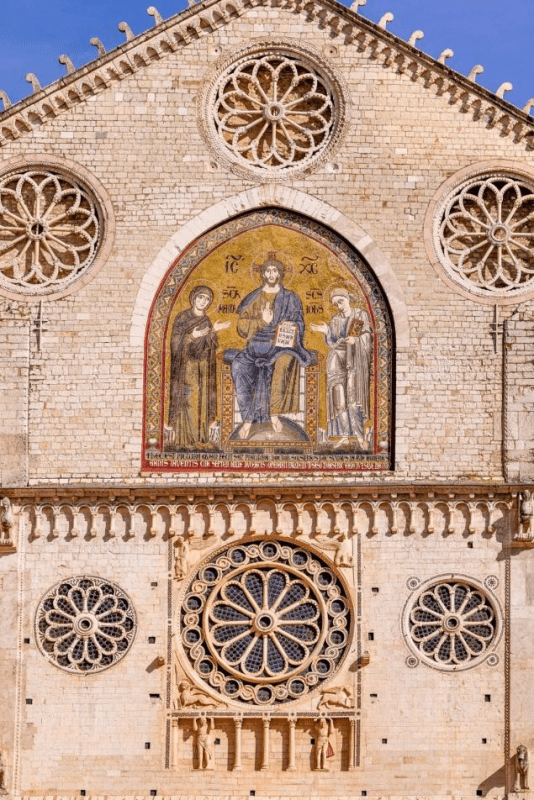
The Cathedral of San Rufino is one of the finest Romanesque churches in Umbria.
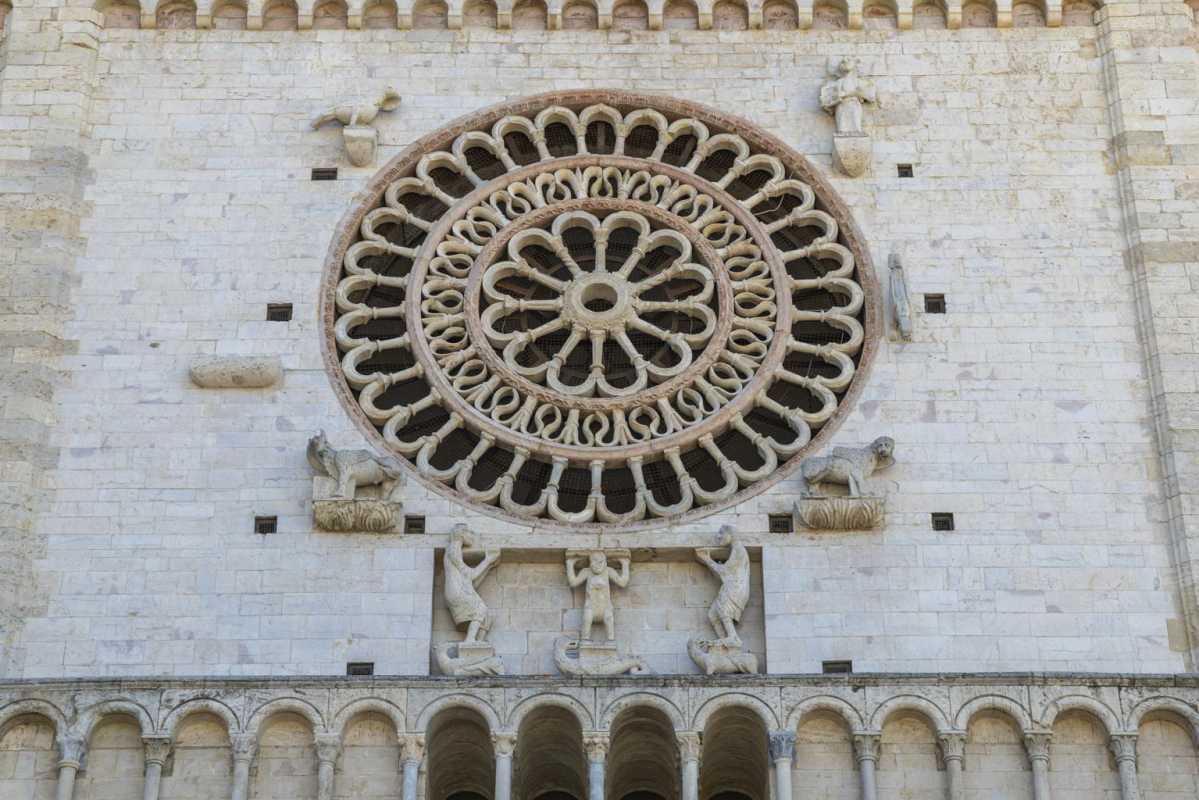
Its stone façade features intricate carvings and three distinctive rose windows. Inside, the cathedral is elegant and balanced, filled with soft light and simple architectural harmony. This cathedral holds special significance in the history of Assisi.
Both Saint Francis and Saint Clare were baptized here, linking the spiritual legacy of the city directly to its cathedral.
Basilica of San Francesco
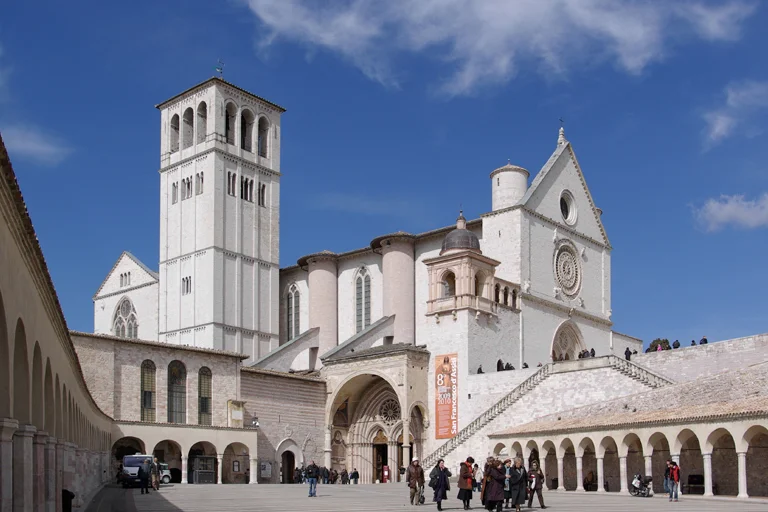
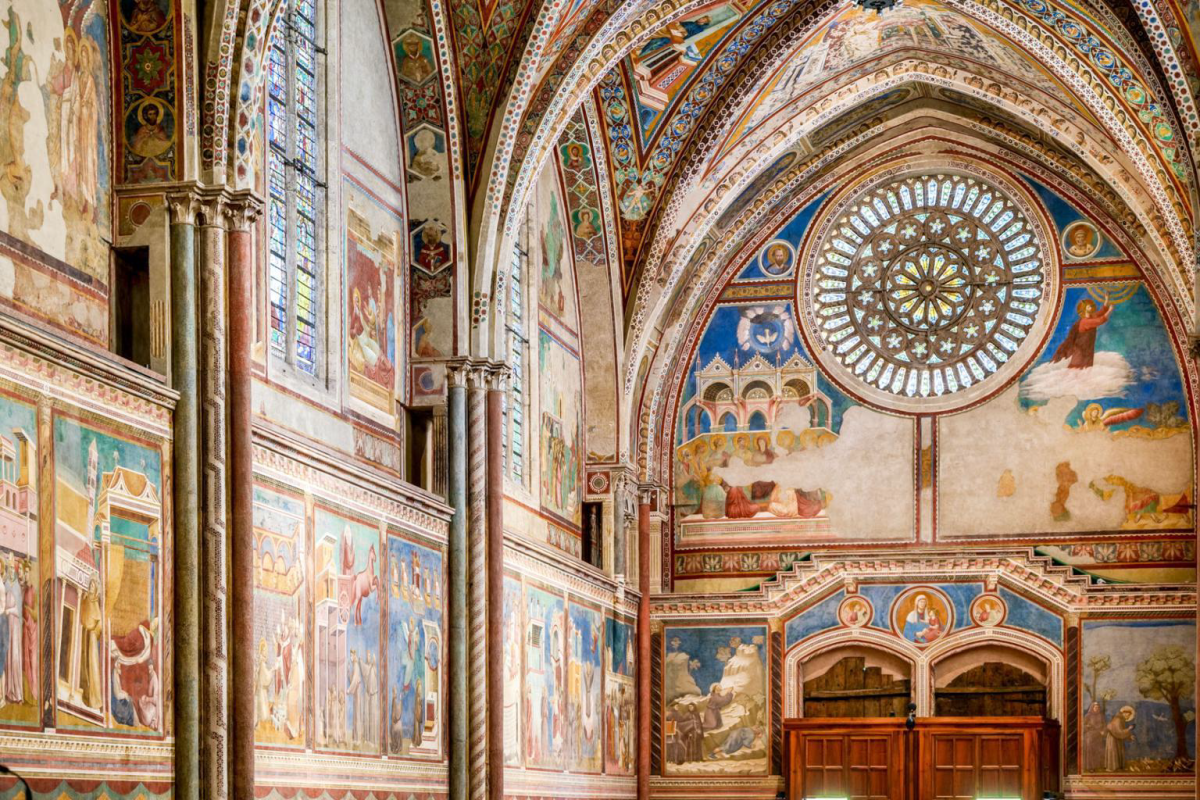
The Basilica of San Francesco is the spiritual heart of Assisi and one of the most important churches in the Christian world. Unlike most churches, the basilica consists of two stacked sanctuaries.
Lower Basilica
The Lower Church is dark, intimate, and contemplative. Its vaulted stone ceilings and dim light create an atmosphere meant for reflection and prayer.
The frescoes here include early masterpieces by Cimabue and Pietro Lorenzetti, marking a turning point in the development of Italian art.
At the center of the church lies the tomb of Saint Francis, a powerful and simple stone crypt visited by pilgrims from around the world.
Upper Basilica
In dramatic contrast, the Upper Church is bright and expansive.
Its walls display the famous fresco cycle depicting the Life of Saint Francis, traditionally attributed to Giotto and his workshop. These paintings revolutionized European art by introducing realism, emotion, and three-dimensional space.
Standing in the Upper Church is like witnessing the birth of the Renaissance.
Best Day Trips from Assisi
Assisi sits at the center of Umbria, making it an excellent base for exploring nearby hill towns.
Orvieto
Located about 1 hour from Assisi, Orvieto rises dramatically from a volcanic plateau.
The town’s most famous landmark is the Duomo di Orvieto, one of the most spectacular cathedrals in Italy.
Its façade glows with golden mosaics depicting scenes from the life of Christ and the Last Judgment.
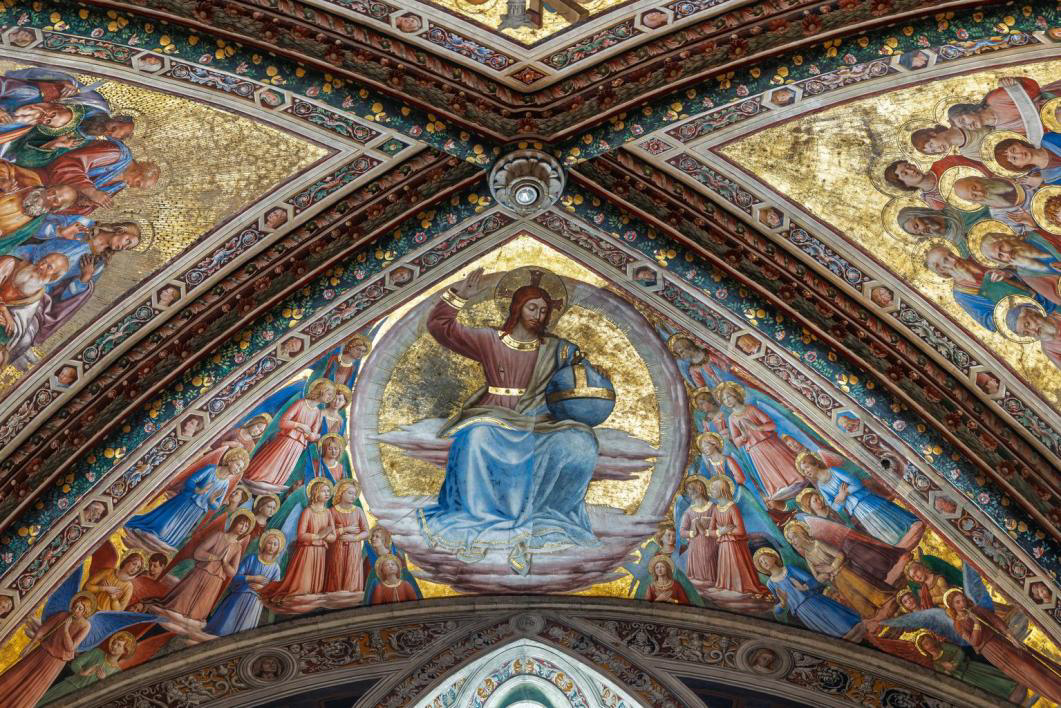
Inside, the cathedral houses the San Brizio Chapel, where Renaissance artist Luca Signorelli painted an intense and powerful series of frescoes depicting the Apocalypse and the Resurrection. Spoleto
About 45 minutes from Assisi, Spoleto is a larger Umbrian town with a dramatic mountain setting.
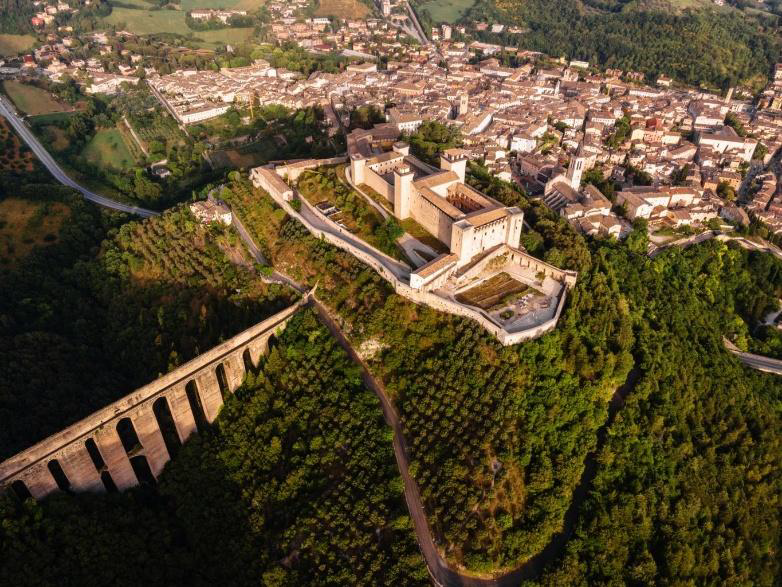
The highlight is the extraordinary Ponte delle Torri, a massive medieval bridge and aqueduct that stretches across a deep wooded gorge.
The town is also home to the Spoleto Cathedral, where visitors can see frescoes painted by Renaissance master Filippo Lippi.
Spoleto blends Roman foundations, medieval architecture, and sweeping landscapes
Spello
Just 15 minutes from Assisi, Spello is one of Umbria’s most charming small towns. Stone houses line quiet streets, and balconies overflow with flowers during the warmer months. The town’s artistic treasure is the Baglioni Chapel in the Church of Santa Maria Maggiore. Here, Renaissance painter Pinturicchio created a luminous fresco cycle filled with rich colors, delicate details, and graceful figures.
Spello’s small scale and peaceful atmosphere make it perfect for a relaxed half-day visit.
Experiences Near Assisi
Deruta Pottery Workshops
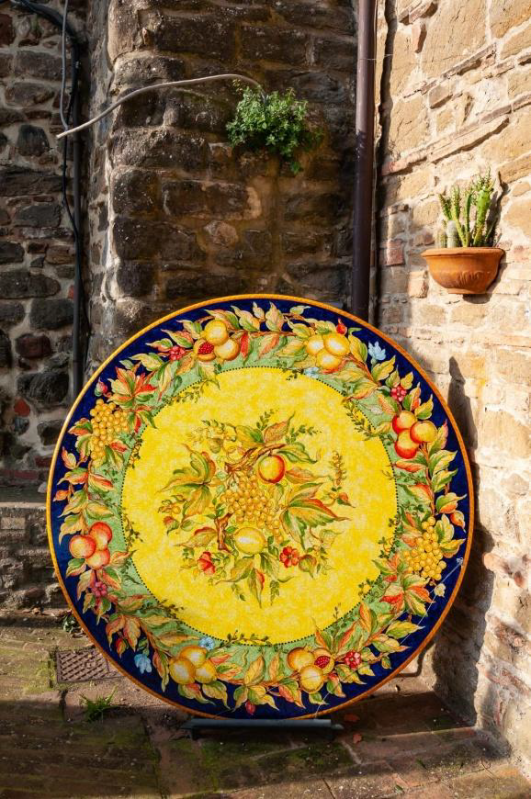
About 30 minutes from Assisi, the town of Deruta is famous for its ceramic traditions dating back to the Middle Ages. Visitors can explore artisan studios and even participate in pottery workshops where local craftsmen teach traditional hand-painting techniques. The bold blues, yellows, and geometric patterns of Deruta ceramics are instantly recognizable.
Walk the Via di Francesco
The Via di Francesco is a pilgrimage route that follows the path of Saint Francis through Umbria and central Italy. Many travelers walk short sections of the trail around Assisi, passing through olive groves, forests, and peaceful countryside. Even a half-day walk offers a powerful way to experience the landscapes that shaped Francis’s life.
Getting to Assisi
The Assisi train station is located in the valley below the historic center near Santa Maria degli Angeli.
To reach the medieval town, you will need to take a local bus or taxi. While trains connect Assisi to cities like Perugia, Florence, and Rome, having a rental car allows greater flexibility for exploring smaller Umbrian towns.
Why Assisi Stays With You
Assisi does not overwhelm visitors with spectacle. Instead, it reveals itself slowly through quiet streets, sacred spaces, and sweeping views across the Umbrian valley.
The experience is less about checking landmarks off a list and more about entering a different rhythm of life. By the time you leave, you realize something subtle has changed.
Assisi does not impress you.
It quiets you.
Listen to the Podcast
This article accompanies Episode 10 of the Regional Capitals of Italy Podcast Series, where we explore Assisi, its history, and the beautiful Umbrian towns surrounding it.
If you are planning a trip to Italy and want deeper cultural insight, festival traditions, and immersive travel experiences, these guides will help you explore Italy beyond the surface.
Sicilia in Festa: Experience the Magic of Sicily’s History, Art and Timeless Cultural Celebrations (English-Italian Dual Language Edition) 🔗 https://amzn.to/4pUxBuP