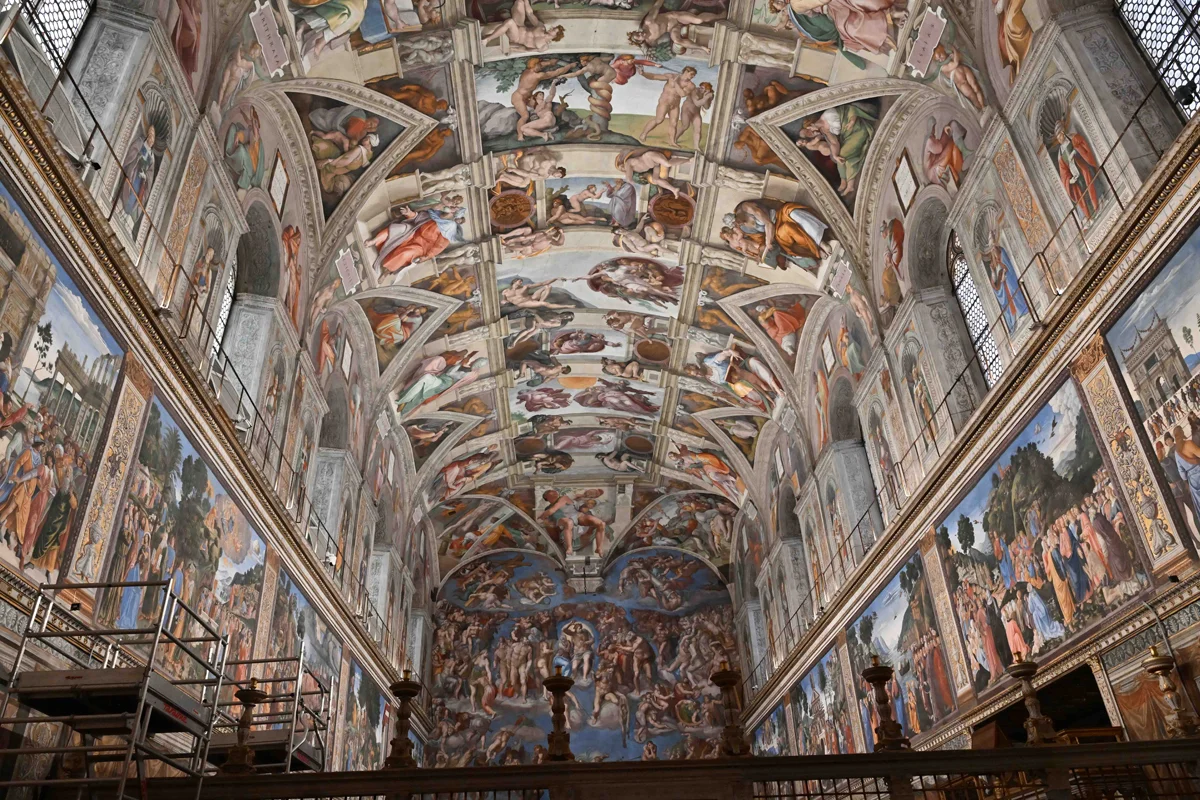
La Cappella Sistina nell’anno giubilare del 1500: un’istantanea dell’arte rinascimentale prima di Michelangelo
As the Jubilee year approaches in Rome, I found myself reflecting on over 700 years of these extraordinary celebrations, each one steeped in history and spiritual significance. My curiosity led me down a fascinating rabbit hole—what was the Sistine Chapel like in the Jubilee of 1500, long before it became famous for Michelangelo’s iconic ceiling? I thought I’d share what I uncovered about the chapel’s state in 1500 and how it fit into the broader narrative of Renaissance Rome.
The Sistine Chapel in 1500: A Private Sanctuary
In the Jubilee year of 1500, Pope Alexander VI reigned, and the Sistine Chapel, much different from today, was the pope’s private chapel—far from the tourist destination it is now. In 1500, the chapel had already secured its place as an important religious and artistic landmark in the Vatican. However, Michelangelo’s famous ceiling frescoes and Last Judgment had yet to grace its walls. The chapel, completed under Pope Sixtus IV in the late 15th century, was adorned with a stunning fresco cycle painted by some of the greatest Florentine and Umbrian artists of the time.
Fresco Cycle in the Sistine Chapel: A Masterpiece in Its Own Right
By the time of the 1500 Jubilee, the Sistine Chapel’s walls were a visual feast of biblical stories and Renaissance artistry. Most of the frescoes had been completed by 1482 and reflected key theological themes, blending art with the Church’s authority.
- South Wall–Life of Moses: This side of the chapel focused on pivotal moments from the Old Testament, detailing Moses’s life and his leadership of the Israelites. Frescoes like The Trials of Moses by Sandro Botticelli and Moses Leaving for Egypt by Pietro Perugino symbolized not only Moses’ leadership but also drew parallels to the pope’s spiritual role within the Church.
- North Wall–Life of Christ: Mirroring the Old Testament scenes, the New Testament cycle on the north wall depicted key moments from the life of Christ. Among the most famous of these frescoes was Perugino’s Delivery of the Keys to St. Peter, symbolically affirming the doctrine of papal authority. This fresco is important, as it visually reinforces the divine legitimacy of the pope, with Christ handing the keys of heaven to St. Peter, the first pope.
- Other Frescoes: Additional frescoes included portraits of various popes in the lunettes above the windows, reminding viewers of the continuity of papal leadership. The vault, before Michelangelo’s transformation, was adorned with a starry sky—a serene celestial design painted by Piero Matteo d’Amelia. While simple compared to the complex frescoes, this starry sky was a powerful symbol of heaven above.
Historical Importance of the Sistine Chapel in 1500
By 1500, the Sistine Chapel was already recognized for its religious and artistic brilliance. The frescoes were more than mere decoration; they were key to conveying the Church’s theological messages. The pairing of Moses’ life and Christ’s life emphasized the continuity of God’s covenant, with the papacy as the rightful heir to this divine mandate.
- Papal Authority: The Delivery of the Keys to St. Peter was a pivotal fresco, as it reinforced the pope’s divine authority, particularly during times of political and religious tension in Europe.
- Renaissance Art: The artists—Botticelli, Ghirlandaio, Perugino, and others—were some of the greatest figures of the early Renaissance. Their mastery of perspective, color, and composition brought humanistic depth to the biblical scenes, portraying figures as relatable and emotionally expressive.
- Florentine Influence: Many of these artists were from Florence, a center of Renaissance humanism. Their approach was revolutionary, depicting sacred figures in ways that connected more deeply with human experiences.
Key Artists and Their Contributions
- Pietro Perugino: Known for The Baptism of Christ and the monumental Delivery of the Keys to St. Peter, Perugino’s work stood out for its clarity of symbolism and elegant composition.
- Sandro Botticelli: Famed for his work in Florence, Botticelli painted expressive scenes like The Trials of Moses and The Temptation of Christ, imbuing them with emotion and grace.
- Domenico Ghirlandaio: His frescoes, including The Calling of Moses and The Calling of the First Disciples, contributed to the rich narrative depth of the chapel’s decorations.
- Cosimo Rosselli: Though less known today, Rosselli painted vibrant works like The Sermon on the Mount and The Crossing of the Red Sea, adding bright colors and intricate landscapes.
The Sistine Chapel’s Ceiling Before Michelangelo
Before Michelangelo transformed the ceiling with his dramatic Creation of Adam and Last Judgment, it was adorned with a simple yet striking starry sky. Painted by Piero Matteo d’Amelia, this starry ceiling provided a celestial backdrop, reminding worshippers to look toward the heavens. This understated design, while beautiful, would soon be replaced by Michelangelo’s groundbreaking work in 1508.
Conclusion: A Chapel Already Steeped in History
By 1500, the Sistine Chapel was a significant center of religious and artistic life. Though Michelangelo’s contributions were yet to come, the frescoes by the great Florentine and Umbrian masters had already established the chapel as a breathtaking symbol of the Church’s authority, theological messages, and Renaissance artistry. As we look toward the next Jubilee, it’s fascinating to consider the legacy of those past celebrations and the role that these early frescoes played in the artistic and spiritual life of Rome.
Have you visited the Sistine Chapel? Let me know your thoughts and if you would like access to my free e-book: Jubilee Journeys: A Pilgrim’s Guide to the 2025 Holy Year in Rome.