ZRG Strikes Gold
•
Telenor Microfinance Bank awards ZRG OneView Contact Center System
•
ZRG Receives 5th Consecutive Achievement Gold Award from FPCCI
•
Al Baraka Bank Chooses ZRG OneView CMS Software
•
PSO Awards Contact Center Tender To ZRG
•
ZRG Strikes Gold
•
Telenor Microfinance Bank awards ZRG OneView Contact Center System
•
ZRG Receives 5th Consecutive Achievement Gold Award from FPCCI
•
Al Baraka Bank Chooses ZRG OneView CMS Software
•
PSO Awards Contact Center Tender To ZRG
•
ZRG Strikes Gold
•
Telenor Microfinance Bank awards ZRG OneView Contact Center System
•
ZRG Receives 5th Consecutive Achievement Gold Award from FPCCI
•
Al Baraka Bank Chooses ZRG OneView CMS Software
•
PSO Awards Contact Center Tender To ZRG
•
ZRG Strikes Gold
•
Telenor Microfinance Bank awards ZRG OneView Contact Center System
•
ZRG Receives 5th Consecutive Achievement Gold Award from FPCCI
•
Al Baraka Bank Chooses ZRG OneView CMS Software
•
PSO Awards Contact Center Tender To ZRG
•
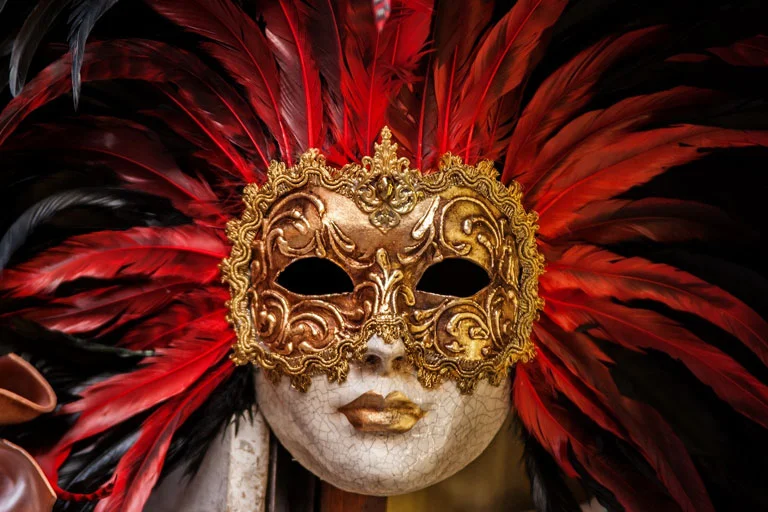
When you think of Italian Carnival, the glittering masks and romantic canals of Venice likely spring to mind. But Italy’s carnival tradition runs deeper and wider than its most famous celebration, with each region adding its own spectacular twist to these pre-Lenten festivities. Join me on a journey through Italy’s most enchanting carnival celebrations, where ancient traditions meet modern spectacle.
Venice: The Grande Dame of Carnival
Venice’s carnival needs little introduction, but its story might surprise you. Born from victory celebrations in 1162, this festival transformed Venice into Europe’s playground during the 18th century. Today, it maintains its reputation as the world’s most elegant masked festival.
Walking through St. Mark’s Square during carnival feels like stepping into a time machine. Elegant figures in full baroque costume glide past, their faces hidden behind intricate masks – the mysterious Bauta, the delicate Colombina, or the haunting Medico della Peste (Plague Doctor). The highlight? The breathtaking Volo dell’Angelo (Flight of the Angel), where a costumed performer descends from St. Mark’s Campanile in a stunning aerial display.
Putignano: Where Tradition Meets Satire
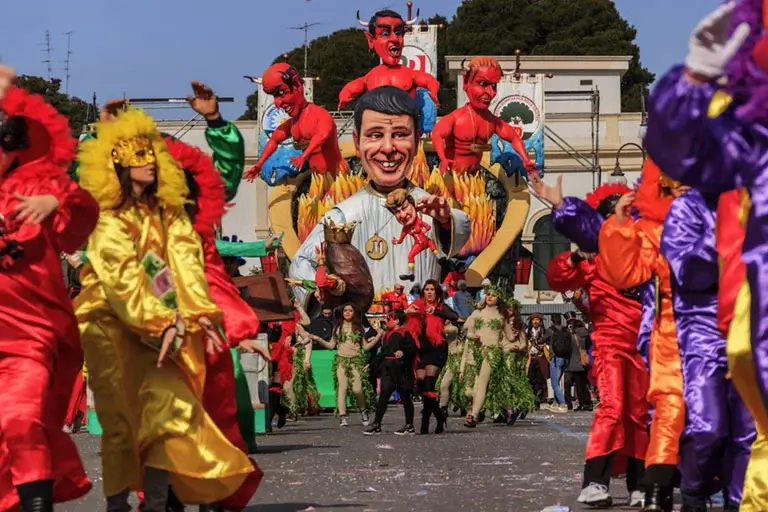
In the heart of Puglia lies Putignano, home to Italy’s oldest and longest-running carnival. Since 1394, this town has been perfecting the art of celebration, and it shows. The carnival’s crown jewels are its massive papier-mâché floats, masterpieces that combine traditional craftsmanship with sharp political satire.
Don’t miss the unique “Propaggini” – local poets who take to the streets, delivering witty rhymes that playfully mock current events. As carnival draws to a close, join locals in the “Campana dei Maccheroni,” a mock funeral where the carnival is “buried” until next year, but not before everyone enjoys one last feast of pasta at the famous Maccheronata.
Ronciglione: Wild Horses Couldn’t Keep Me Away
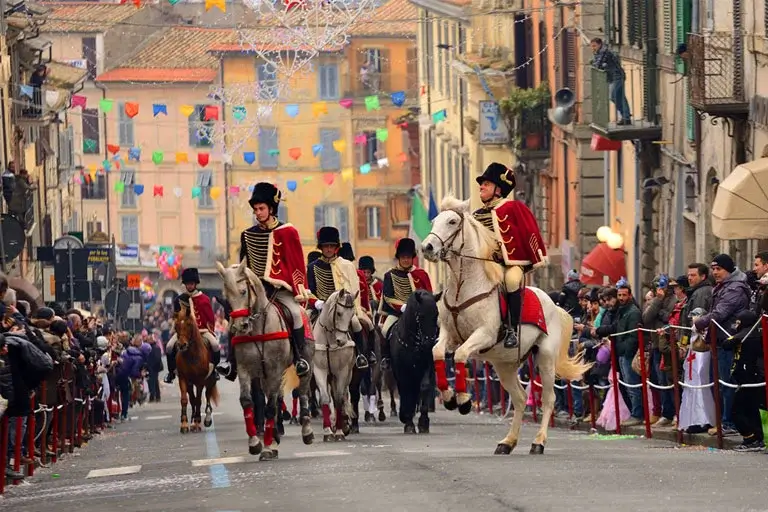
For those seeking something truly unique, Ronciglione’s carnival offers an adrenaline-pumping spectacle. This 16th-century tradition combines Venetian elegance with raw excitement. The highlight? The “Cavalcata degli Ussari,” where masked riders in military uniforms gallop through medieval streets, followed by the heart-stopping “Corse dei Barberi” – a race of riderless horses that echoes ancient Roman traditions.
Beyond the Famous Three: Hidden Carnival Treasures
Let’s explore ten more spectacular carnivals that showcase Italy’s diverse cultural heritage:
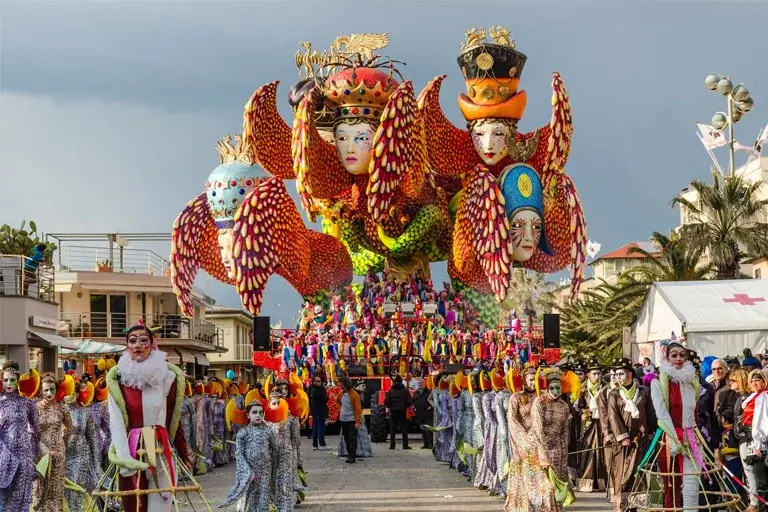
Viareggio: Tuscany’s Giant Spectacle Prepare to be amazed by towering papier-mâché floats that reach heights of over 20 meters. These massive constructions parade along the seaside promenade, offering biting political satire and pop culture commentary that will leave you both laughing and thinking.
Acireale: Sicily’s Flowering Glory In this Sicilian gem, carnival takes on a unique floral twist. Elaborate floats combine traditional papier-mâché with thousands of fresh flowers, creating moving gardens that perfume the streets with their natural beauty.
Fano: The Ancient Celebration Dating back to 1347, Fano hosts Italy’s oldest carnival. Don’t miss the “Getto” tradition, where revelers are showered with sweets and chocolates thrown from passing floats – bring a bag to catch these sweet souvenirs!
Ivrea: The Orange Battle Perhaps Italy’s most unusual carnival, Ivrea’s Battle of the Oranges transforms the city into a citrus-scented battlefield. Thousands of participants divide into teams, pelting each other with oranges in a symbolic recreation of the citizens’ revolt against tyrannical rulers.
Cento: Where Italy Meets Brazil This unique carnival has twinned with Rio de Janeiro, bringing samba rhythms to the heart of Emilia-Romagna. Experience a perfect fusion of Italian craftsmanship and Brazilian carnival energy, complete with elaborate floats that shower the crowd with gifts.
Mamoiada: Sardinia’s Ancient Mystery Step into a world of ancient traditions with the eerily beautiful Mamuthones and Issohadores. Men dressed in dark masks and heavy bells perform ritual dances that echo back to pagan times, creating an unforgettable spectacle.
Oristano: Medieval Thrills The Sartiglia transforms Oristano into a medieval wonderland, where masked knights on horseback attempt to spear a hanging star in a breathtaking display of horsemanship that will keep you on the edge of your seat.
Termoli: Seaside Celebrations This coastal carnival brings maritime traditions to life with sea-themed floats and traditional music. The combination of historical reenactments and modern festivities creates a uniquely Mediterranean carnival experience.
Castrovillari: Southern Traditions One of southern Italy’s oldest carnivals, Castrovillari offers a vibrant mix of folk traditions and masked parades. The highlight is the traditional Tarantella dancing, where locals and visitors alike are swept up in the rhythmic movements.
A Celebration of Regional Identity
What makes Italian carnival truly special is how each celebration reflects its region’s unique character. From the deeply traditional masks of Mamoiada to the Brazilian rhythms of Cento, from the flower-decorated floats of Acireale to the demonic figures of Cagli’s Carnival of the Devil, each festival tells a story of local history, culture, and identity.
These carnivals aren’t just parties – they’re living museums of Italian culture, where centuries-old traditions blend seamlessly with modern celebrations. Whether you’re watching medieval knights joust in Oristano or dodging oranges in Ivrea, you’re participating in traditions that have brought communities together for hundreds of years.
So next time you plan a winter trip to Italy, look beyond Venice. There’s a whole world of carnival celebrations waiting to be discovered, each offering its own unique window into the heart and soul of Italian culture. Just remember to pack a mask – and maybe a raincoat if you’re heading to Ivrea’s orange battle!
Pro Tip: Many of these carnivals take place in the weeks leading up to Lent, but exact dates vary each year. Check local calendars when planning your visit, and book accommodations well in advance – these celebrations draw crowds from across Italy and beyond!