ZRG Strikes Gold
•
Telenor Microfinance Bank awards ZRG OneView Contact Center System
•
ZRG Receives 5th Consecutive Achievement Gold Award from FPCCI
•
Al Baraka Bank Chooses ZRG OneView CMS Software
•
PSO Awards Contact Center Tender To ZRG
•
ZRG Strikes Gold
•
Telenor Microfinance Bank awards ZRG OneView Contact Center System
•
ZRG Receives 5th Consecutive Achievement Gold Award from FPCCI
•
Al Baraka Bank Chooses ZRG OneView CMS Software
•
PSO Awards Contact Center Tender To ZRG
•
ZRG Strikes Gold
•
Telenor Microfinance Bank awards ZRG OneView Contact Center System
•
ZRG Receives 5th Consecutive Achievement Gold Award from FPCCI
•
Al Baraka Bank Chooses ZRG OneView CMS Software
•
PSO Awards Contact Center Tender To ZRG
•
ZRG Strikes Gold
•
Telenor Microfinance Bank awards ZRG OneView Contact Center System
•
ZRG Receives 5th Consecutive Achievement Gold Award from FPCCI
•
Al Baraka Bank Chooses ZRG OneView CMS Software
•
PSO Awards Contact Center Tender To ZRG
•
Founded by Greek settlers in 729 BCE, Catania has survived countless natural disasters and invasions. The city’s relationship with Mount Etna defines its history – while the volcano’s eruptions have repeatedly threatened destruction, its fertile soil has blessed the region with agricultural abundance. The distinctive black lava stone buildings give Catania its unique character, earning it the nickname “The Black City.”
Through Roman, Byzantine, Arab, Norman, and Spanish rules, Catania evolved into a cultural crossroads. The devastating 1693 earthquake led to the city’s baroque rebirth, creating the architectural masterpieces we see today.
The Feast of Sant’Agata
The Martyr’s Story
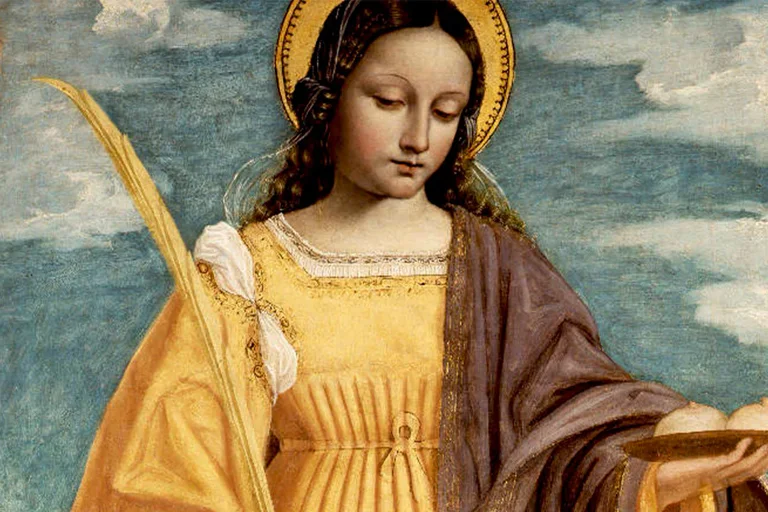
Sant’Agata, martyred in 251 CE during Roman persecution, remains Catania’s most revered patron saint. Born to a noble family, she rejected the advances of Roman consul Quintianus, leading to her torture and death. Her courage and faith made her a symbol of resistance and devotion.
The Festival (February 3-5)
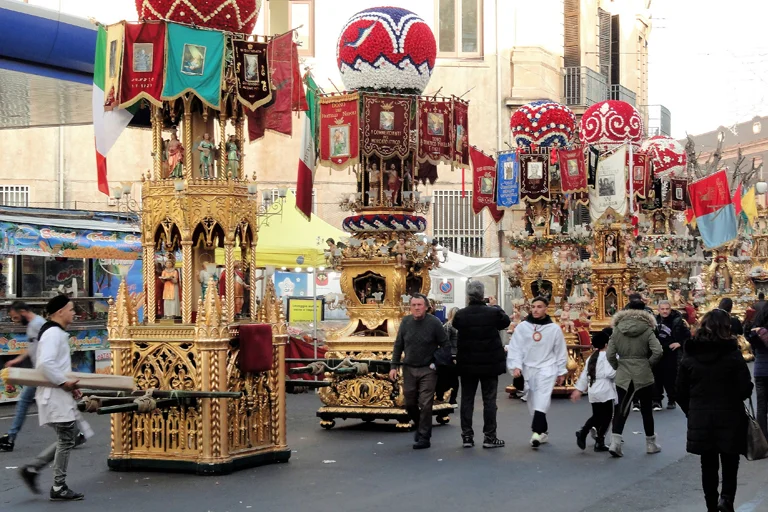
The festival begins on February 3rd with the dawn “A Cera” procession, where thousands of devoted followers carry enormous candles through the streets of Catania. The air fills with the traditional cry “Cittadini, siamo tutti devoti tutti?” (“Citizens, are we all devoted?”), creating an atmosphere of unified devotion. As evening approaches, the first display of the saint’s relics marks a solemn moment in the celebration.
February 4th begins with an early morning Mass at the Cathedral, followed by the procession of the saint’s reliquary bust and relics. The procession winds its way through significant historical sites associated with Sant’Agata’s persecution, culminating in a dramatic night procession along the Via San Giuliano, where countless devotees follow the sacred relics by candlelight.
The third day, February 5th, presents the most challenging and emotionally charged part of the festival – the “Salita dei Cappuccini.” Beginning at dawn, this arduous procession eventually returns to the Cathedral by the fastest route possible, concluding with a spectacular fireworks display that illuminates the evening sky over Catania.
Throughout the celebration, devotees don distinctive attire that includes white tunics known as “Sacco,” black velvet caps, and white gloves. Their passionate cries of “Semu tutti devoti tutti?” echo through the streets, creating a powerful atmosphere of collective devotion. The festival’s sacred objects include the magnificent silver reliquary bust dating from 1376, adorned with a jeweled crown, along with precious relics in ornate containers and ceremonial candles that illuminate the processions.
The festival’s culinary traditions are equally rich, featuring special treats like Cassatelle di Sant’Agata and Olivette di Sant’Agata, alongside traditional bread rolls and an array of street food that feeds the countless participants and spectators throughout the three days.
The Feast of Sant’Agata represents the very essence of Catanian identity, combining profound religious devotion with cultural preservation and community unity. This historical continuity draws over a million visitors annually, making it one of Europe’s most significant religious festivals. Today’s celebration seamlessly blends ancient religious traditions with contemporary elements, including cultural performances, food festivals, art exhibitions, musical events, and stunning light installations that transform the city’s baroque architecture.
For visitors wanting to experience this remarkable festival, the best viewing locations include the magnificent Piazza del Duomo, the bustling Via Etnea, the historic Via San Giuliano, and the spacious Piazza Stesicoro. To fully appreciate the celebration, visitors should plan well in advance by booking accommodation months ahead, arriving early for processions, wearing comfortable shoes for the long hours of standing and walking, and showing appropriate respect for religious customs while following local guidance.
Year-Round Remembrance
Sant’Agata’s presence in Catania extends beyond the festival:
Monthly commemorations
Dedicated chapels
Religious art collections
Cultural programs
Educational initiatives
Legacy and Impact
The Feast of Sant’Agata represents more than religious devotion – it embodies Catania’s resilient spirit. Like the black lava stone buildings that rose from destruction, the festival demonstrates the city’s ability to maintain traditions while embracing change. It remains one of Europe’s largest religious festivals, drawing participants from around the world to experience Catanian faith, culture, and community.
Uncover the best festivals, hidden gems, and must-visit spots across Sicily with the Ultimate Festival & Travel Guide Sicily – your go-to resource for immersive experiences and insider tips!
Newsletter:
Unlock exclusive Italy travel tips, hidden gems, insider festival guides, and secret spots you won’t find in the usual guidebooks!