ZRG Strikes Gold
•
Telenor Microfinance Bank awards ZRG OneView Contact Center System
•
ZRG Receives 5th Consecutive Achievement Gold Award from FPCCI
•
Al Baraka Bank Chooses ZRG OneView CMS Software
•
PSO Awards Contact Center Tender To ZRG
•
ZRG Strikes Gold
•
Telenor Microfinance Bank awards ZRG OneView Contact Center System
•
ZRG Receives 5th Consecutive Achievement Gold Award from FPCCI
•
Al Baraka Bank Chooses ZRG OneView CMS Software
•
PSO Awards Contact Center Tender To ZRG
•
ZRG Strikes Gold
•
Telenor Microfinance Bank awards ZRG OneView Contact Center System
•
ZRG Receives 5th Consecutive Achievement Gold Award from FPCCI
•
Al Baraka Bank Chooses ZRG OneView CMS Software
•
PSO Awards Contact Center Tender To ZRG
•
ZRG Strikes Gold
•
Telenor Microfinance Bank awards ZRG OneView Contact Center System
•
ZRG Receives 5th Consecutive Achievement Gold Award from FPCCI
•
Al Baraka Bank Chooses ZRG OneView CMS Software
•
PSO Awards Contact Center Tender To ZRG
•
Blog 1 of 5 | Immersion Travel Italy Podcast Series
Welcome to the first chapter of my Lago Maggiore journey. This five-part series follows the length of one of Italy’s most captivating lakes, where mountain reflections shimmer on the water and every ferry ride feels like a step through living history. The journey begins here, in the Italian heart of the lake, where the towns of Stresa and Baveno face the legendary Borromean Islands.
Close your eyes for a moment and picture the scene. A wide, mirror-still lake stretches beneath the snow-dusted peaks of the Alps. A soft breeze carries the scent of jasmine and wisteria. Church bells echo faintly from across the water. The air feels clean, bright, alive. Ferries glide toward tiny islands crowned with baroque palaces and cascading gardens. This is Lago Maggiore, a lake that belongs to two countries and countless dreams, half Italian, half Swiss, and entirely enchanting.
When I think of Lago Maggiore, I remember mornings on our balcony in Baveno, coffee in hand, watching ferries drift across the silver water toward the Borromean Islands. It was a moment of perfect stillness, the kind that slows time and fills your soul with quiet joy. Elegant yet effortless, deeply Italian yet distinctly European, the lake invites you to linger.
We arrived after five unforgettable nights in Turin, having explored the Baroque beauty of Piemonte from Alba’s truffle markets and Asti’s sunlit piazzas to the quiet grace of Bra and Alessandria. On the way north, we stopped at the Reggia di Venaria Reale, one of Italy’s grandest royal palaces, and had lunch at its Michelin-starred restaurant perched above the estate. It was the perfect bridge between royal splendor and the calm of the lakes.
From there, we drove about an hour and a half to Baveno and checked into the Hotel Rigoli, our home for four nights. Our corner room had a panoramic balcony overlooking the lake and the Borromean Islands, a view so striking it felt like living inside a painting. Each morning, breakfast on the terrace came with the scent of fresh brioche and the sound of church bells echoing from the town center.
Days unfolded in a rhythm as gentle as the waves. We explored by ferry, visited Isola Bella, Isola Madre, and Isola dei Pescatori on a guided tour, and even sailed out to the Eremo di Santa Caterina del Sasso. One evening, we dined on Isola Bella at Risto Lounge Alvezia, returning to the mainland beneath the stars in a small water taxi that left ripples of gold behind us.
One of the most memorable days was a side trip to Orta San Giulio on nearby Lake Orta, a place of almost mystical serenity. We wandered its cobbled streets, took a small boat to Isola d’Orta, and climbed the Sacro Monte, a UNESCO-listed pilgrimage path of twenty-one chapels dedicated to Saint Francis of Assisi.
On our final day, we crossed into Switzerland to visit Locarno and the Sanctuary of the Madonna del Sasso, where a vision of Mary appeared in 1480. We explored Piazza Grande, sampled Swiss chocolates, and ferried back through Cannobio and Cannero Riviera for aperitivo along the water.
This trip was more than a vacation; it was a journey that shaped the heart of the Immersion Travel Italy Podcast: Lago Maggiore Series. Lago Maggiore is not only breathtakingly beautiful but deeply personal, a place where every ferry, every path, and every lakeside meal tells a story.
You can listen to this episode on Spotify or Apple Podcasts, or watch the video version on the Immersion Travel Italy YouTube Channel. Follow along as we explore Italy’s second-largest lake from north to south, discovering its villas, gardens, and hidden corners that embody the art of slow travel.
Stresa: Elegance on the Lake
At first glance, Stresa could be a dream painted in pastel. Its graceful promenade curves along the water, lined with palm trees and wrought-iron lamps, while grand hotels rise like old aristocrats behind them. The Borromean Islands glimmer just offshore, their palaces and gardens catching the morning light. Yet Stresa’s beauty is not only visual. It is layered with history, art, and the quiet confidence of a town that has charmed travelers for centuries.
Long ago, Stresa was a humble fishing village where life followed the rhythm of the lake. That changed dramatically in the nineteenth century when the town became part of the European Grand Tour. Aristocrats, writers, and artists drawn by the purity of the Alpine air arrived by horse-drawn carriages, sketching and composing as they gazed across the water. Stresa transformed almost overnight into one of Italy’s most refined destinations.
The arrival of the railway from Milan to Domodossola in 1906 turned the dream into a destination. Elegant villas and hotels rose along the shore, each one a masterpiece of Belle Époque architecture. The most famous, the Grand Hotel des Iles Borromées, opened in 1863 and quickly became the symbol of lakefront luxury. Its marble balconies and gilded salons welcomed composers like Franz Liszt, conductors such as Arturo Toscanini, and writers who fell under its spell. Ernest Hemingway stayed here while recovering from wounds in World War I, later immortalizing the hotel and lake in A Farewell to Arms, where his characters find peace on these shores.
A morning walk along Stresa’s promenade still feels like stepping into another time. The water lies perfectly still, reflecting the mountains and pastel villas. Locals stroll with espresso cups in hand, greeting one another with soft “buongiorno.” The scent of gardenias drifts from villa terraces, and the distant chime of a bell marks the hour. Follow the path to Piazza Marconi, where ferries glide in and out, their white hulls shining under the sun. Each ticket to the islands feels like a key unlocking another realm.
Step a few streets away from the waterfront and you discover the true intimacy of Stresa. Narrow lanes twist between stone buildings and tiny shops selling olive-wood crafts, ceramics, and bottles of local Ghemme wine. The church of San Ambrogio anchors the old quarter, and if you pause nearby in the afternoon, you can hear both the sound of its bells and the laughter from cafés serving cappuccinos topped with cocoa hearts.
For many, Stresa is not only a stop but a feeling, a state of elegance mixed with calm. It is the perfect blend of grandeur and serenity, a place that invites you to breathe deeply and understand why northern Italy has inspired dreamers for generations.
Beyond the postcard views, Stresa offers something profound. It teaches the art of slowing down, of noticing the shimmer of light on the water, of savoring a simple gelato while the world drifts by. In that stillness, you sense the same tranquility that captivated artists more than a century ago.
From this lakeside stage, our story naturally drifts toward the jewels shimmering on the horizon. The Borromean Islands appear like a constellation of history and art, each one with a distinct soul.
The Borromean Islands: A Floating Masterpiece
From the dock at Stresa, ferries depart for three small islands that together form one of Italy’s greatest treasures. Known collectively as the Isole Borromee, they embody the vision, devotion, and artistry of the Borromeo family, a powerful Milanese dynasty that shaped the region for over four hundred years.
The first time I saw them from the boat, they looked like three jewels scattered across liquid silver. As we glided closer, the details sharpened: terraces rising from the water, statues gleaming in the sun, white peacocks wandering among citrus trees. We joined a guided tour that began in Stresa, led by a local who had grown up on the lake and spoke of it as though it were family. She told us stories of noble weddings, hidden grottoes, and legends that seemed to float on the water itself.
Isola Bella – The Island of Beauty
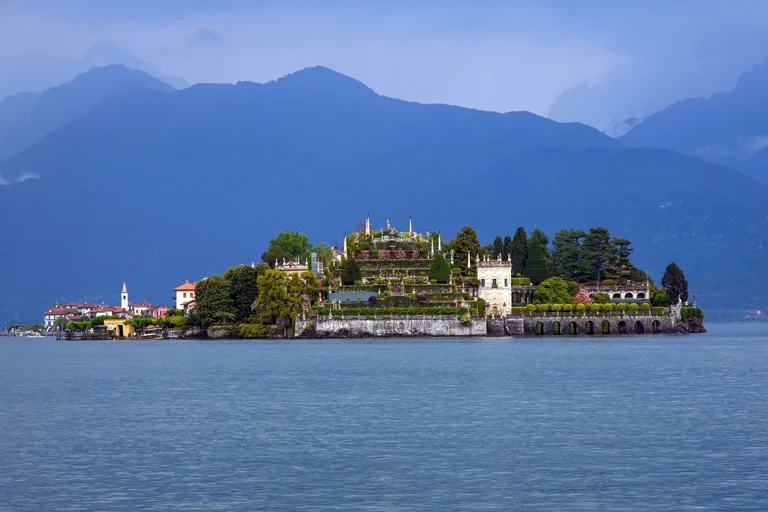
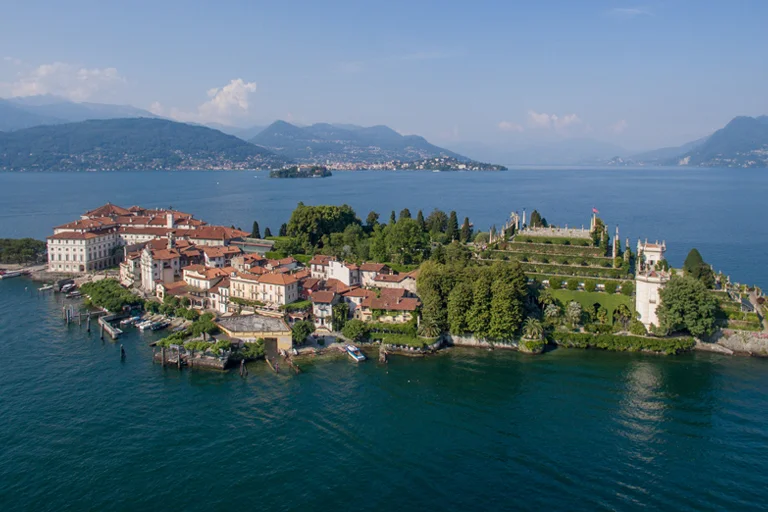
Isola Bella stands like a baroque stage set upon the lake, an island transformed from a barren rock into a paradise of palaces and gardens. In the seventeenth century, Carlo III Borromeo dedicated it to his wife, Isabella D’Adda, and gave it her name. What began as a gesture of love became one of Europe’s most theatrical landscapes.
Entering Palazzo Borromeo feels like stepping inside a living museum. Marble staircases spiral upward beneath frescoed ceilings, mirrors catch the lake’s sunlight, and chandeliers glitter above rooms filled with centuries of art. The Sala di Napoleone, where Napoleon and Josephine once stayed, still holds its original tapestries and furniture. Every room carries the whisper of history, the quiet echo of footsteps from another era.
Below, the palace reveals its secret: a series of cool chambers called the Grotto Rooms. Their walls are covered in shells and stones, creating an underwater illusion that offers relief from the summer heat. The sound of waves drifts in through the windows, mingling with the faint scent of the lake.
Outside, the garden unfolds in terraces that climb toward the sky. Statues of gods and muses stand among fountains and orange trees. Ten layers of perfectly balanced architecture rise above one another until they culminate in a statue of a unicorn, symbol of the Borromeo crest. White peacocks roam freely through the hedges, their feathers gleaming in the sunlight. Every step offers a new composition of color, symmetry, and water.
At the summit, the view is breathtaking. The lake stretches endlessly, framed by the Alps. Across the water, Stresa’s villas glow softly in the afternoon light. Standing there, you understand why generations have called this one of the most beautiful places in Italy.
Before leaving the island, I visited the small chapel of Saint Charles Borromeo, the family’s most venerated ancestor and one of Milan’s greatest reformers. His legacy of faith and compassion still seems to bless the islands that bear his name.
Isola dei Pescatori – The Island of Fishermen
From grandeur, the ferry carries you to simplicity. A short ride away, Isola dei Pescatori welcomes you with washing lines fluttering between houses, narrow lanes paved in stone, and the soft meow of cats sunning themselves on steps. This is the only island inhabited year-round, home to fewer than fifty residents.
Life here moves at a slower rhythm. Fishermen mend their nets along the quay, and the scent of freshly baked focaccia drifts through the air. In the heart of the village stands the Church of San Vittore, dating back nearly a thousand years. Inside, the dim light reveals faded frescoes and the faint aroma of candle wax. Generations have been baptized, married, and farewelled within these walls.
We stopped for lunch at a lakeside trattoria where the house specialty was risotto al pesce persico, a creamy rice dish topped with fillets of perch caught in these same waters. With a crisp white wine from Piedmont and the gentle murmur of conversation all around, it was the kind of meal that defines Italian travel.
Our guide told us that on August 15, during Ferragosto, the entire island transforms for the Festa dell’Assunta. Boats decorated with lights circle the shoreline, fireworks reflect over the lake, and families celebrate with music and joy. The blend of faith and festivity feels timeless, a perfect expression of Italy’s soul.
Isola dei Pescatori reminded me that Lago Maggiore is not only about opulence but about ordinary lives shaped by the lake’s rhythm. Here, beauty lies in the simplicity of everyday moments: a grandmother shelling beans by the doorway, a fisherman waving as he sets out at dawn, a child chasing pigeons near the harbor.
Isola Madre – The Island of Serenity
The last stop on our tour was Isola Madre, the largest and oldest of the three. If Isola Bella dazzles and Pescatori hums with life, Isola Madre whispers. Its gardens are a world of serenity designed in the English landscape style, unfolding like a dream of nature perfected.
Paths wind between camellias, magnolias, and ancient cedars. Bright parrots flash between branches while white peacocks wander gracefully across the lawns. The air smells of citrus and wild roses.
Inside Villa Borromeo, rooms are filled with antique furniture, oil paintings, and a charming collection of eighteenth-century marionettes once used for family theater performances. The villa feels lived-in, not merely preserved. You can almost hear laughter echoing from another century.
Outside, near the lily pond, the stillness is absolute. The only sounds are the rustle of leaves and the soft call of distant birds. If peace had a location, it would be here.
As our ferry returned toward Stresa, the sun lowered behind the mountains, painting the water gold. I thought of how different each island felt — theatrical Isola Bella, humble Pescatori, serene Madre — like three facets of a single soul. Together, they embody the artistry and devotion that define Lago Maggiore.
Baveno: The Quiet Soul of Lago Maggiore
Just five minutes north of Stresa, the lakeside road curves gently toward Baveno, a town that feels like a deep breath. If Stresa glitters with grandeur, Baveno radiates warmth. It is smaller, calmer, and profoundly authentic, the kind of place where you fall into the rhythm of daily Italian life without even realizing it.
We based ourselves in Baveno for five nights, and from the very first morning, I knew we had chosen perfectly. The lake stretched before us like liquid silver, ferries gliding past in the early light. Bells from the church tower marked the hours as locals walked to the market or gathered along the promenade for espresso and quiet conversation.
We stayed at the Hotel Rigoli, a charming, family-run retreat right on the waterfront. From our corner balcony, we could see the Borromean Islands shimmering across the water. Each morning, breakfast on the terrace became a ritual, a moment to listen to the sounds of the lake while enjoying fresh pastries and cappuccinos. It was the kind of simplicity that stays with you long after you return home.
Baveno moves at its own pace. By the second day, familiar faces began to greet us. The shopkeeper arranging flowers near the ferry dock, the waiter at the café who remembered our order, and the elderly couple waving from their balcony every evening. It was a reminder that the most beautiful parts of travel are often the connections we make.
When the crowds left Stresa each afternoon, Baveno remained peaceful. The promenade was filled with locals strolling hand in hand. The air softened with the scent of magnolia blossoms, and the sunlight turned the water into gold. It was a scene of quiet perfection, one that seemed to exist outside of time.
The Story of Pink Granite
Baveno’s history is carved from its hills. Beneath its quiet surface lies the famous pink granite, quarried here for centuries and used in some of Italy’s most iconic structures, including parts of Milan’s Duomo. Standing by the water, it is humbling to imagine that the same stone beneath your feet helped build the cathedral whose spires reach toward heaven.
One morning, we wandered uphill from the lake to see the old quarries. The paths were shaded by pines and dotted with wildflowers, and from the higher terraces, the view opened wide across Lago Maggiore. The islands floated in the distance, and the snow-capped Alps framed the horizon. It was easy to see why artists once came here to find inspiration.
Back in the town center, the Church of Saints Gervasio and Protasio rises as a quiet guardian. Its Romanesque bell tower, dating to the eleventh century, is one of the oldest in the region. Inside, soft light filters through narrow windows, illuminating frescoes that have survived nearly a thousand years. The small baptistery beside it feels untouched by time. Stepping inside, I was struck by a sense of continuity, of faith layered through centuries.
Outside, the piazza comes to life. Families chat on benches. The aroma of fresh focaccia drifts from a bakery. Children ride bicycles around the fountain. Baveno may be small, but its energy feels timeless, a blend of sacred calm and everyday joy.
A Legacy of Music and Villas
A few steps from the church stands Villa Fedora, surrounded by a park shaded by ancient cedars and magnolias. The composer Umberto Giordano once lived here and wrote parts of his opera Andrea Chénier while gazing across the lake. Today, the villa hosts outdoor concerts in summer, where music carries across the water in the warm evening air.
Evening walks became one of our favorite parts of the day. The promenade glowed softly under lamplight, ferries crossed the water like moving stars, and conversations drifted on the breeze. Historic villas peeked through the trees, their façades weathered but graceful, whispering stories of another age.
Dining and Leisure
Baveno’s culinary scene reflects its character: simple, generous, and full of flavor. Our favorite restaurant quickly became Ristorante Posta, right in the heart of town. The staff greeted us as though we were family, and the menu changed with the seasons. The risottos were unforgettable, creamy and fragrant, and the handmade pastas tasted like they came straight from a grandmother’s kitchen.
For an elegant evening, we visited the Granum Lounge & Bar at the Grand Hotel Dino, where the terrace looks directly over the water. It was the perfect place for an aperitivo or a romantic dinner under the stars. Some afternoons, we stayed closer to home, enjoying a simple lunch at Hotel Rigoli’s restaurant with the best view of the lake.
As twilight settled, Baveno seemed to slow even further. The air cooled, the sky turned lavender, and the faint sound of conversation mixed with the soft rhythm of the waves. It was Italy at its most peaceful.
Promenade and Connection to Stresa
One of Baveno’s quiet pleasures is its lakeside promenade, lined with flowers and iron benches. The Borromean Islands appear just offshore, close enough to feel part of the same world yet distant enough to inspire wonder.
We often took the short ferry ride back to Stresa for an hour or two, enjoying its lively streets and cafés, but I always found myself eager to return to Baveno’s calm embrace. The slower rhythm of life here captures what I love most about Italy: mornings of cappuccinos on a terrace, afternoons of exploration, evenings of laughter and wine.
After five nights, Baveno felt less like a stop and more like home.
Travel Tips for Exploring the Lake
Before planning your own Lago Maggiore journey, here are a few insights to make the experience seamless.
Getting There
The most convenient gateway is Milan, just about an hour away by train. From Milano Centrale, regional trains run regularly to Stresa and Baveno before continuing north toward Domodossola near the Swiss border. For those arriving by car, take the A26 Autostrada dei Trafori and exit at either Stresa or Baveno. Parking near the lakefront is easy, and many hotels offer private lots or shuttle service to the docks.
If you are coming from Switzerland, the Centovalli Railway provides one of the most scenic routes in Europe. Known as the “Hundred Valleys” line, it crosses eighty-three bridges and thirty-one tunnels, winding through gorges and waterfalls between Locarno and Domodossola. From there, Stresa is a short local train ride away.
Ferries and Island Access
The best way to explore Lago Maggiore is by ferry. The Navigazione Lago Maggiore service connects the main towns and islands throughout the year, with more frequent routes in spring and summer. A day pass allows unlimited travel, letting you hop between Stresa, Baveno, and the Borromean Islands at your own pace.
Morning ferries offer calm water and clear light for photography, while late afternoon crossings bathe the lake in gold. Private water taxis are also available through hotels or at the docks for those wanting more flexibility and quiet.
Keep in mind that some island attractions close in winter, particularly the palaces and gardens on Isola Bella and Isola Madre, which typically reopen in March and remain accessible through late October.
Best Times to Visit
Lago Maggiore reveals a different personality in every season.
Late April through June brings blooming gardens filled with camellias, azaleas, and wisteria. The air is fresh and the light ideal for exploring.
September and early October offer crystal skies, warm afternoons, and fewer visitors, perfect for quiet reflection and photography.
Winter is hushed but atmospheric. The lake often shimmers under misty mornings, and the mountain peaks sparkle with snow. It is a time to rest, write, or simply breathe in the calm.
Throughout the year, festivals animate the region, from spring flower shows to summer concerts in the villas and the Ferragosto fireworks on Isola dei Pescatori.
Where to Stay
For timeless grandeur, Grand Hotel des Iles Borromées in Stresa remains the icon, a palace of marble halls and frescoed ceilings that has welcomed royalty, artists, and writers for over a century. Nearby, Hotel La Palma offers a rooftop terrace and infinity pool overlooking the lake, ideal for evening aperitivos beneath the stars.
In Baveno, Hotel Rigoli is the definition of quiet charm, while Grand Hotel Dino combines elegance with modern comfort and private pier access. Many travelers choose to base themselves in Baveno for its peaceful nights and easy ferry connections, spending their days exploring the islands or nearby towns.
Dining and Local Flavors
To taste the soul of the lake, order risotto al pesce persico, made with tender perch from Lago Maggiore. Pair it with a chilled glass of Ghemme DOCG or Gattinara, wines from the rolling hills just south of the lake. Finish your meal with hazelnut gelato and espresso along the promenade as the water reflects the evening sky.
Food here is meant to be lingered over. Each course invites conversation and connection. This is the essence of Italian travel: to experience the landscape one plate at a time.
Immersion Travel Tip
Visit the weekly markets to connect with local life. Stresa’s market takes place on Fridays, Baveno’s on Wednesdays. You will find cheeses from the Ossola Valley, jars of golden honey, hand-painted ceramics, and small treasures made by local artisans. Bring a reusable bag and a smile, and you will leave with stories that last longer than any souvenir.
Plan Your Journey and Listen to the Podcast
As the sun sets behind the mountains, Lago Maggiore becomes a mirror of color and calm. The last ferry horn echoes across the water, and the air fills with the sound of distant conversation from a lakeside terrace. It is a moment that captures the lake’s essence, a blend of beauty, peace, and timeless connection.
Lago Maggiore’s Italian heart beats softly in the towns of Stresa and Baveno and on the islands that float between them. To walk along its promenades or stand on its ferries is to experience Italy in its purest form.
You can also discover more inspiration in my Ultimate Festival and Travel Guide series, including volumes dedicated to Sicily, Puglia, and Rome and Beyond, available now on Amazon.
Until next time, keep wandering, keep savoring, and keep immersing yourself in Italy.
Newsletter:
Unlock exclusive Italy travel tips, hidden gems, insider festival guides, and secret spots you won’t find in the usual guidebooks!