ZRG Strikes Gold
•
Telenor Microfinance Bank awards ZRG OneView Contact Center System
•
ZRG Receives 5th Consecutive Achievement Gold Award from FPCCI
•
Al Baraka Bank Chooses ZRG OneView CMS Software
•
PSO Awards Contact Center Tender To ZRG
•
ZRG Strikes Gold
•
Telenor Microfinance Bank awards ZRG OneView Contact Center System
•
ZRG Receives 5th Consecutive Achievement Gold Award from FPCCI
•
Al Baraka Bank Chooses ZRG OneView CMS Software
•
PSO Awards Contact Center Tender To ZRG
•
ZRG Strikes Gold
•
Telenor Microfinance Bank awards ZRG OneView Contact Center System
•
ZRG Receives 5th Consecutive Achievement Gold Award from FPCCI
•
Al Baraka Bank Chooses ZRG OneView CMS Software
•
PSO Awards Contact Center Tender To ZRG
•
ZRG Strikes Gold
•
Telenor Microfinance Bank awards ZRG OneView Contact Center System
•
ZRG Receives 5th Consecutive Achievement Gold Award from FPCCI
•
Al Baraka Bank Chooses ZRG OneView CMS Software
•
PSO Awards Contact Center Tender To ZRG
•
If you are searching for an Italian destination that feels refined, historic, and richly layered without the crowds, Turin and Piedmont may be exactly what you have been looking for. Often overlooked in favor of Rome, Florence, or Venice, Turin rewards travelers who appreciate depth over spectacle, substance over flash, and beauty revealed slowly.
My husband and I have spent meaningful time in Piedmont, most recently during a two-week stay in May 2022, and Turin quickly became one of those cities that quietly wins you over. From the moment we arrived, it felt elegant, calm, and confidently self-assured. At times, the city even felt French in spirit, thanks to its grand piazzas, long arcaded streets, and harmonious architecture. What surprised us most was how uncrowded and clean it felt. It is genuinely a shame that more travelers overlook Turin, because it is a beautiful city with extraordinary depth.
We flew in and out of Turin’s airport, which made the entire experience seamless and stress-free. That convenience alone makes Turin an excellent gateway to northern Italy, whether you plan to stay in the city or explore the surrounding region.
A Capital Designed to Command Respect
Turin’s story begins long before Italy existed as a unified nation. Founded by the Romans as Augusta Taurinorum in the first century BC, the city was laid out on a strict grid that still defines the historic center today. Walking along Via Garibaldi, you are quite literally tracing the lines of an ancient Roman military camp. The order you feel in Turin is not accidental. It is structural.
That sense of order intensified when the House of Savoy made Turin their capital in 1563. Under Savoy rule, the city was transformed into a model capital, redesigned with ceremonial avenues, symmetrical streets, and royal palaces meant to project power and refinement. In 1861, Turin became the first capital of unified Italy. Though this role was brief, it left a lasting imprint. Even after the capital moved on, Turin retained the confidence, discipline, and identity of a former power center.
Piedmont: Strength at the Foot of the Mountains
Turin cannot be separated from Piedmont, a region whose name means “at the foot of the mountains.” The Alps rise dramatically to the north and west, shaping the climate, cuisine, and character of the region. Historically, Piedmont was a land of strategists and diplomats, known for discipline, pragmatism, and ambition.
These qualities helped Piedmont become both a political and industrial powerhouse. In the twentieth century, Turin emerged as Italy’s manufacturing engine, most famously through FIAT. The former Lingotto factory, complete with its rooftop test track, remains one of the most fascinating symbols of this industrial era. Yet unlike many industrial cities, Turin never sacrificed elegance. It simply layered innovation onto its identity.
Wine, Truffles, and the Birthplace of Slow Food
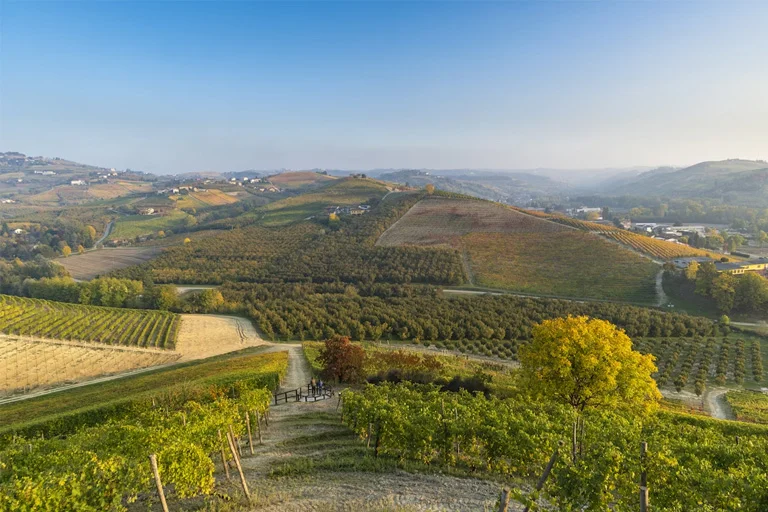
Beyond industry, Piedmont is one of Italy’s most prestigious food and wine regions. The surrounding hills produce legendary wines such as Barolo and Barbaresco, often referred to as the royalty of Italian wine. Food here is never rushed. It is rooted in land, seasonality, and tradition.
Several towns add depth to Piedmont’s culinary reputation:
Alba, famous for white truffles and refined dining
Bra, birthplace of the Slow Food movement
Asti, known for Asti Spumante and noble palazzi
Alessandria, a historic crossroads of trade and military strategy
Together, these towns create a region where food is not simply consumed, but respected.
What to See in Turin: Icons That Define the City
Mole Antonelliana
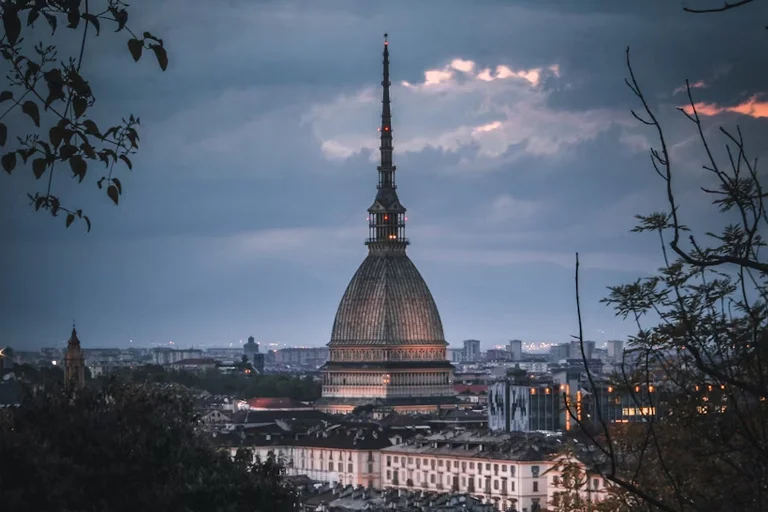
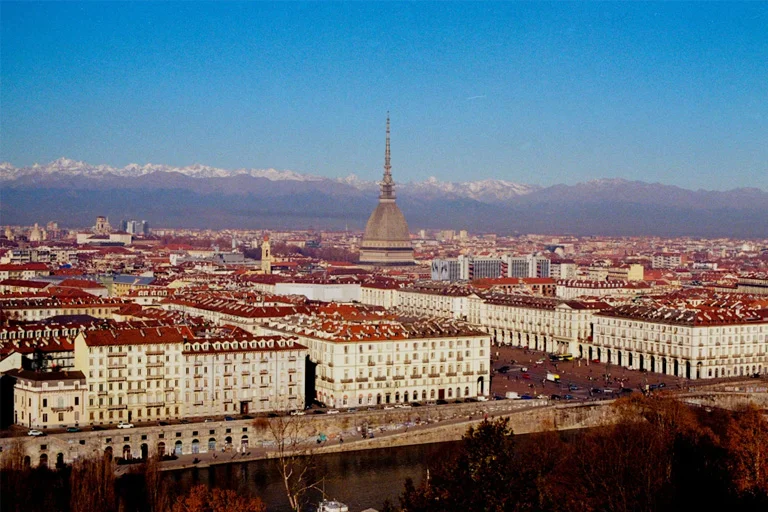
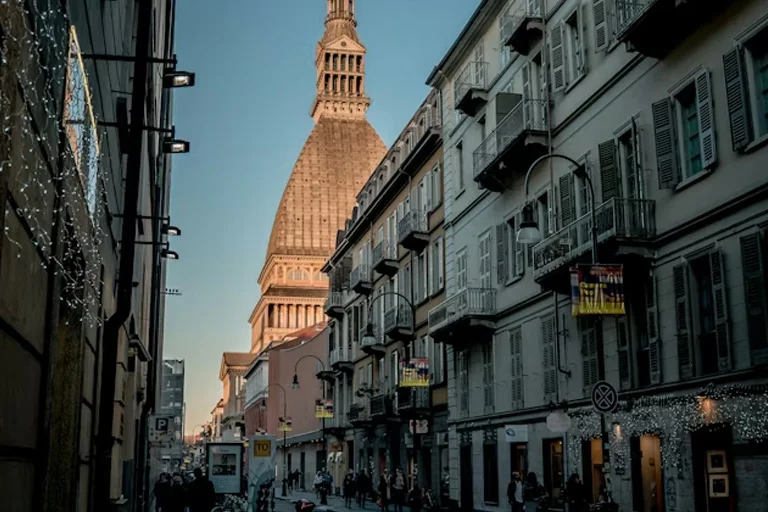
No image defines Turin more clearly than the Mole Antonelliana. Originally conceived as a synagogue, it now houses the National Cinema Museum. Riding the glass elevator to the top offers sweeping views across the city and out to the Alps, providing an instant understanding of Piedmont’s geography. Each November, the Mole becomes symbolic of Turin’s creative side during the Torino Film Festival, which celebrates independent cinema and thoughtful storytelling.
Piazza Castello and the Royal Core
At the heart of the city lies Piazza Castello, a grand square designed to project authority. For centuries, this was the stage for royal ceremonies, political life, and civic celebrations. Anchoring the square is the Palazzo Reale di Torino, the former Savoy residence, whose restrained exterior conceals gilded salons, throne rooms, and one of Europe’s finest royal armories.
Nearby stands Palazzo Madama, a building that visually tells Turin’s entire story. Roman gate, medieval fortress, and Baroque palace merge into a single structure that encapsulates the city’s layered history.
Each June, Piazza Castello comes alive during the Festa di San Giovanni, Turin’s most important civic celebration, culminating in fireworks over the Po River. It is one of the best moments to witness the city’s shared identity.
Turin Cathedral and the Shroud
The Duomo di San Giovanni Battista is Turin’s spiritual center and home to the Shroud of Turin. Even when the Shroud is not on display, the cathedral offers a quiet counterbalance to the grandeur of the surrounding palaces.
Chocolate Capital of Italy
Turin’s chocolate tradition was born of necessity during the Napoleonic era, when cocoa shortages led chocolatiers to blend chocolate with local hazelnuts, creating gianduja. From this innovation came gianduiotti and cremini, now inseparable from the city’s identity.
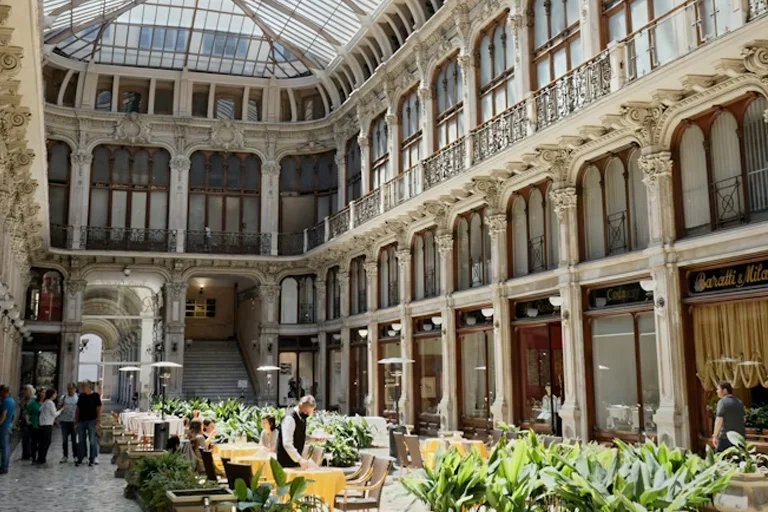
One of our favorite daily rituals was stopping at Baratti & Milano, founded in 1873 and once an official supplier to the Savoy court. Sitting inside its Belle Époque interior with a pastry or chocolate felt like stepping into Turin’s past, and it quickly became a place we returned to again and again.
Faith and Ritual: The Consolata and Bicerin
The Santuario della Consolata reveals Turin’s spiritual heart. Filled with ex-votos left by generations of worshippers, it is a living church deeply woven into daily life. Just outside stands Caffè Al Bicerin, founded in 1763, where the city’s signature drink was born. Enjoying a bicerin here after visiting the Consolata feels less like sightseeing and more like participating in a centuries-old ritual.
Beyond the City: The Reggia di Venaria Reale
A short trip north of Turin brings you to the Reggia di Venaria Reale, a vast Savoy palace designed to rival Versailles. Its monumental halls, restored gardens, and elegant layout invite unhurried exploration. One of the highlights of our visit was lunch at the Michelin-starred restaurant within the palace complex, an experience that felt like a continuation of royal life.
Turin as a Gateway to Piedmont and Lago Maggiore
Turin was also our gateway to the wider region. After spending time in the city, we continued on to Lago Maggiore, a journey of roughly 120 kilometers or about 75 miles. The transition from refined urban elegance to lakeside calm was seamless, and it remains one of our favorite northern Italy combinations.
I explore Lago Maggiore in depth in a dedicated five-part video series and podcast episodes, breaking down the lake town by town for travelers who want to slow down and experience it fully.
Why Turin and Piedmont Belong on Your Italy Itinerary
Turin does not compete for attention. It rewards curiosity. This is a place where royal ambition, industrial innovation, deep faith, and culinary excellence coexist in quiet balance. Walk its arcades, linger in its cafés, explore its palaces, and venture into the surrounding towns, and you will discover an Italy that feels authentic, intellectual, and deeply satisfying.
For travelers who love cities with substance, stories, and soul, Turin and Piedmont leave a lasting impression.