ZRG Strikes Gold
•
Telenor Microfinance Bank awards ZRG OneView Contact Center System
•
ZRG Receives 5th Consecutive Achievement Gold Award from FPCCI
•
Al Baraka Bank Chooses ZRG OneView CMS Software
•
PSO Awards Contact Center Tender To ZRG
•
ZRG Strikes Gold
•
Telenor Microfinance Bank awards ZRG OneView Contact Center System
•
ZRG Receives 5th Consecutive Achievement Gold Award from FPCCI
•
Al Baraka Bank Chooses ZRG OneView CMS Software
•
PSO Awards Contact Center Tender To ZRG
•
ZRG Strikes Gold
•
Telenor Microfinance Bank awards ZRG OneView Contact Center System
•
ZRG Receives 5th Consecutive Achievement Gold Award from FPCCI
•
Al Baraka Bank Chooses ZRG OneView CMS Software
•
PSO Awards Contact Center Tender To ZRG
•
ZRG Strikes Gold
•
Telenor Microfinance Bank awards ZRG OneView Contact Center System
•
ZRG Receives 5th Consecutive Achievement Gold Award from FPCCI
•
Al Baraka Bank Chooses ZRG OneView CMS Software
•
PSO Awards Contact Center Tender To ZRG
•
Bologna does not try to impress. It does not curate itself for visitors. It simply works, studies, eats well, and continues doing what it has done for centuries.
That is exactly why it stays with you.
Known as La Dotta, La Grassa, and La Rossa, Bologna is one of Italy’s most intellectually alive and culturally grounded cities. It is home to the oldest university in the Western world, a food culture governed by tradition rather than trends, and an urban rhythm built around daily life, not spectacle.
This is not a city for rushing. It is a city for understanding.
Bologna’s Deep Historical Roots
Bologna has been continuously inhabited for more than 3,000 years. The Etruscans founded it as Felsina around 1000 BC. When Rome conquered the region in 189 BC, the city was rebuilt as Bononia and placed directly on the Via Aemilia.
That Roman road still defines Bologna today. Unlike many Italian cities, where ancient layers are buried, Bologna kept using the same grid. The Via Aemilia became the main commercial artery and remains so now, shaping everything that followed.
By the time Bologna founded the University of Bologna in 1088, it was already an ancient city with a strong tradition of self-governance.
The University That Changed Europe
The University of Bologna was not founded by a king or a pope. It grew organically from groups of law students who came here to study Roman law. Students organized themselves into guilds, hired their own professors, and controlled their education.
This model spread across Europe.
By the fourteenth century, Bologna had more than 10,000 students in a city of 50,000 people. The economy bent around learning. Bookshops multiplied. Boarding houses are filled. Taverns became places of debate.
Women taught here centuries before they were allowed elsewhere. Bettisia Gozzadini, Novella d’Andrea, and later Laura Bassi all lectured publicly. In Bologna, merit mattered more than convention.
That intellectual energy still defines the city.
The Porticoes
Architecture as Daily Life
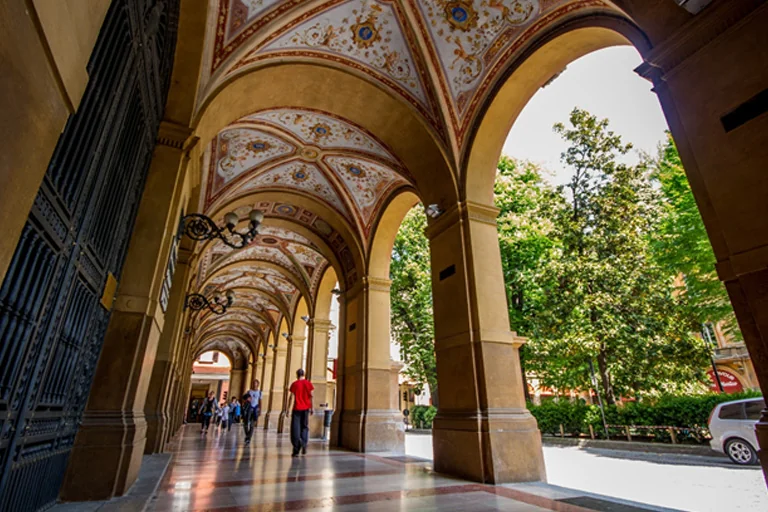
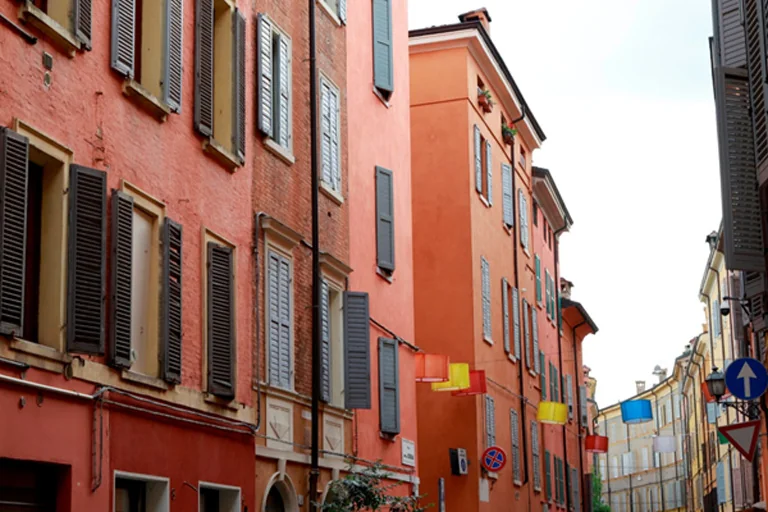
Bologna has more than 62 kilometers of porticoes. These covered walkways define how the city moves, gathers, and lives.
They began as practical solutions when the growing university population pushed buildings outward over sidewalks. The city required columns underneath, preserving public access. What started as improvisation became identity.
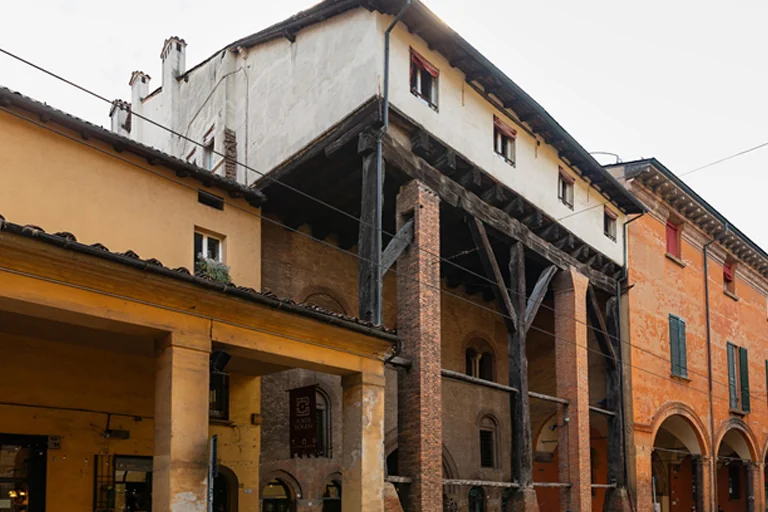
Some porticoes are medieval wood. Others are Renaissance stone or Baroque brick. No two are the same. They cool the city in summer, shelter it in winter, and frame daily life year-round.
The longest portico in the world leads to San Luca. Nearly four kilometers. Six hundred sixty-six arches. Built so processions could climb the hill in all weather.
UNESCO recognized them in 2021. Bologna had been living under them for eight centuries already.
A Daily Ritual
Breakfast at Gamberini
Every morning in Bologna, we went to Gamberini.
It is a classic Bolognese café on Via Ugo Bassi. Elegant but not formal. Busy but precise. Locals order without looking at the menu because they already know.
The pastries are layered, balanced, and never overly sweet. The cappuccino is exactly what coffee should be in Italy. Standing at the counter, watching the staff move with speed and focus, became part of our rhythm.
Breakfast here is not rushed. People pause. They read. They ease into the day.
That is Bologna.
Piazza Maggiore
A Civic Square, Not a Stage
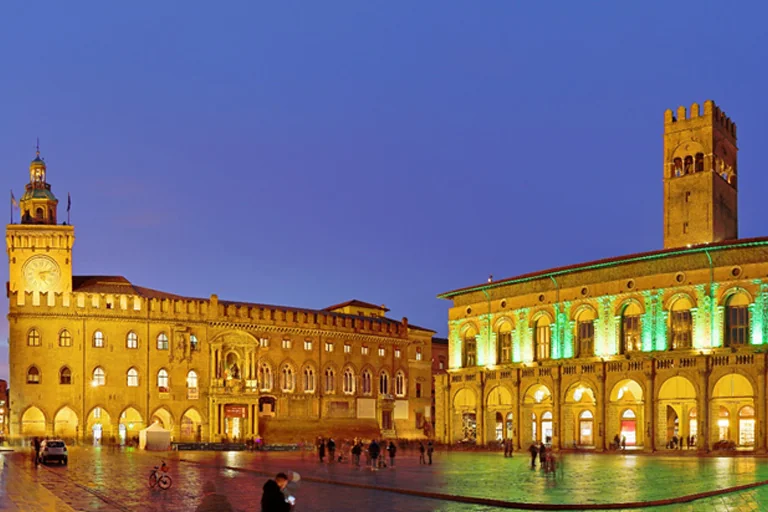
At the heart of the city is Piazza Maggiore, one of Italy’s most authentic public squares.
This was never a royal piazza. It was built for citizens. Children play here. Students study on the steps. Locals meet without occasion.
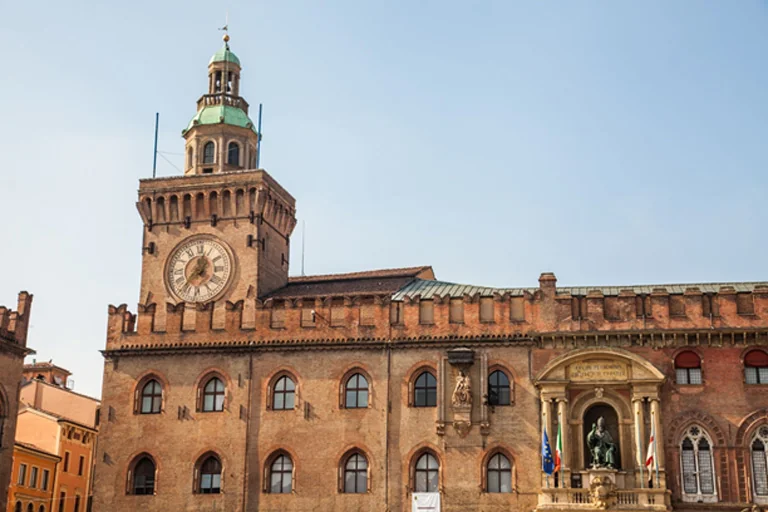
Surrounding the square are the institutions of civic life. Palazzo Comunale. Palazzo del Podestà. Palazzo d’Accursio. Power here was shared, debated, and negotiated.
Basilica of San Petronio
Ambition and Unfinished Grandeur
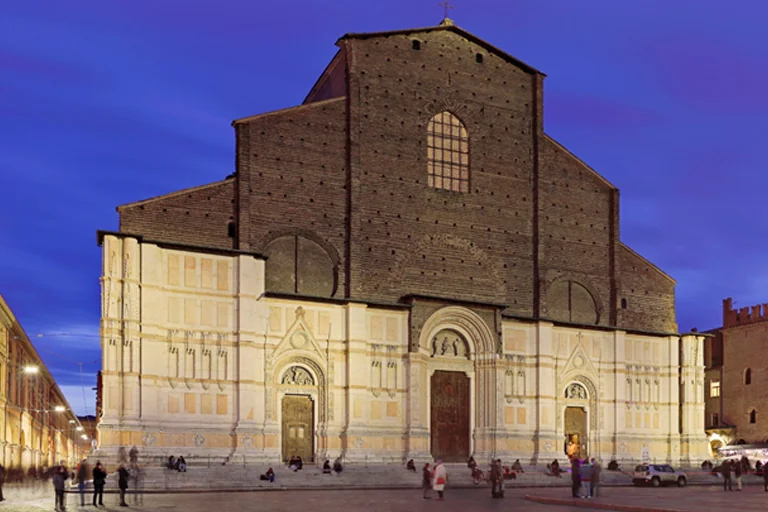
Anchoring the square is the vast Basilica di San Petronio, begun in 1390 and funded by the people of Bologna.
It was conceived as a civic church, not a papal one. Plans called for it to surpass St Peter’s in Rome. That ambition brought consequences. Papal intervention curtailed construction. The façade was never completed.
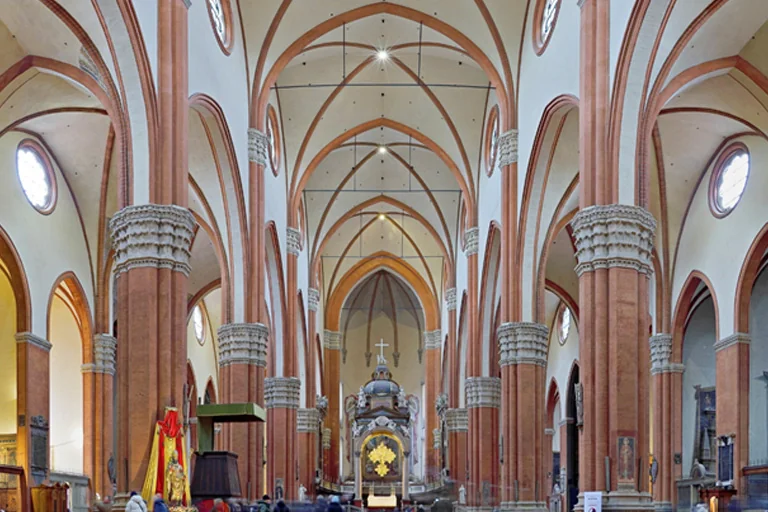
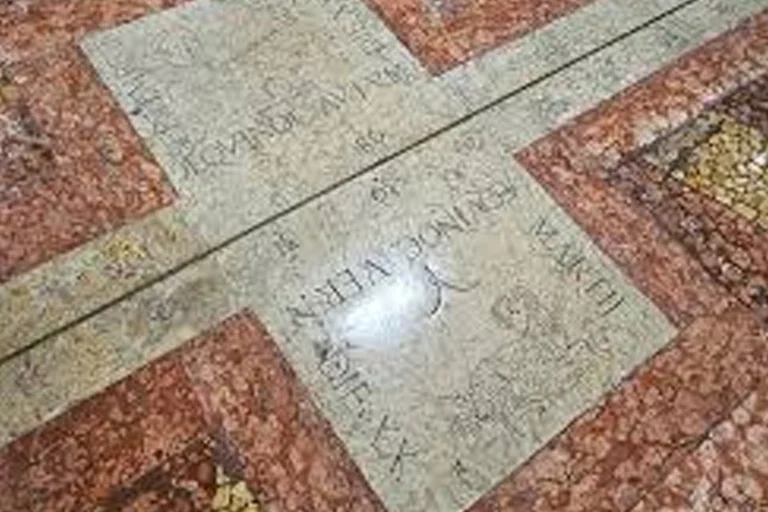
Inside, Bologna’s intellectual soul is visible. A seventeenth-century meridian line installed by Giovanni Domenico Cassini tracks the movement of the sun. Science and faith coexist here without conflict.
The church reflects Bologna itself. Always reaching. Never polished for effect.
The Two Towers
Power and Perspective
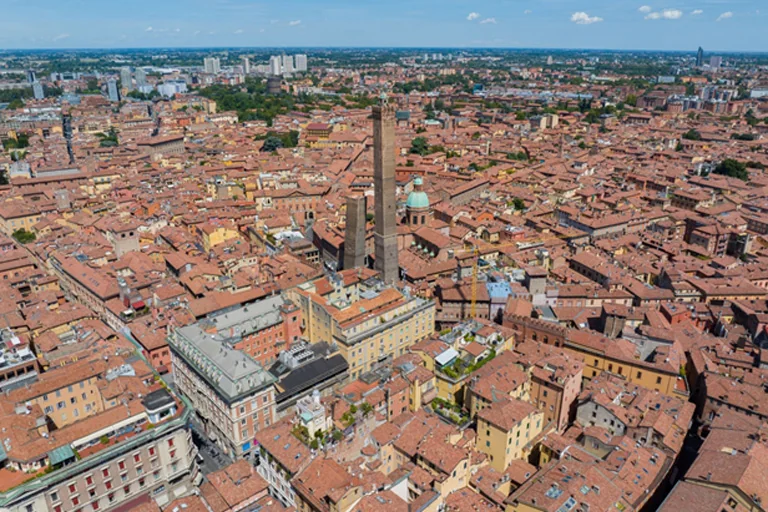
The skyline is defined by the Due Torri.
In the Middle Ages, more than one hundred towers rose above Bologna. They were declarations of power built by rival families. Height meant influence.
The Asinelli Tower still stands nearly 100 meters tall. The Garisenda leans dramatically after being partially dismantled for safety. Dante referenced it in The Divine Comedy as a symbol of instability.
Climbing the Asinelli is demanding. Nearly 500 steps. No shortcuts. The reward is clarity. From above, Bologna makes sense. Porticoes become a system. Streets reveal their logic. The city earns its respect.
Bologna’s Hidden Canals
The City Beneath the City
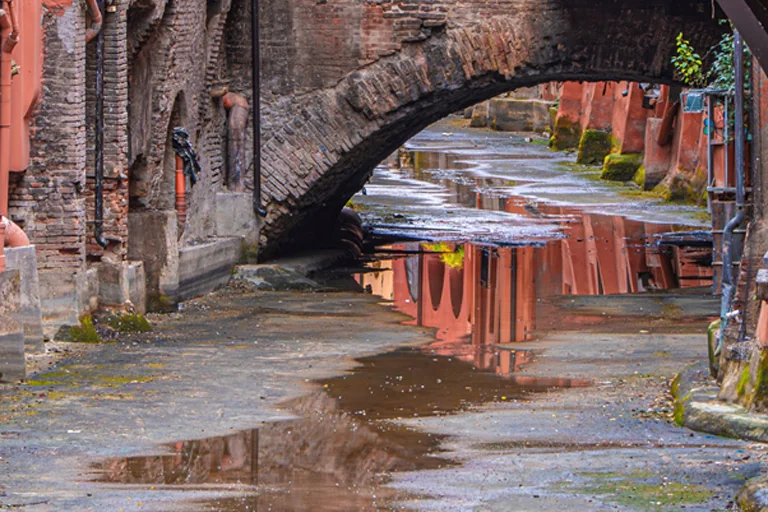
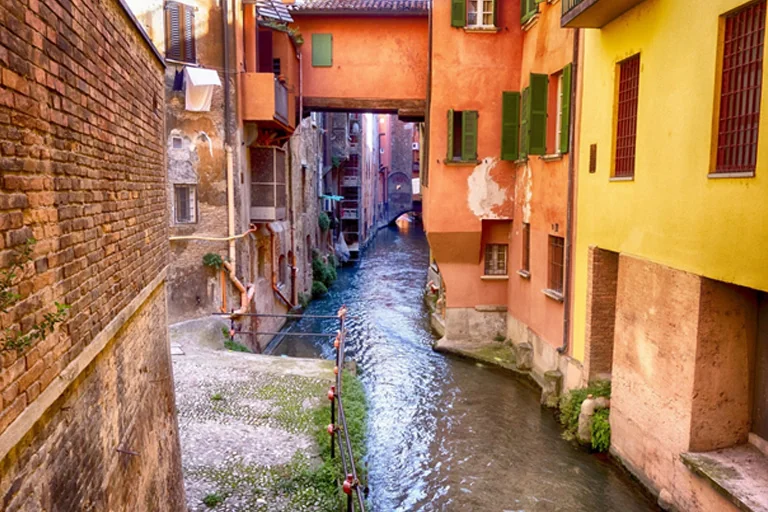
Beneath Bologna flows a medieval canal system that once powered silk mills and industry. Water was diverted from nearby rivers and regulated with precision.
As the city modernized, many canals were covered. They were hidden, not erased.
A small window on Via Piella reveals one of these waterways. It feels like discovering a secret. That is Bologna. Complexity without advertisement.
Where Bologna Eats
Food as Identity
Bologna is Italy’s culinary authority, not because of innovation, but because of rigor.
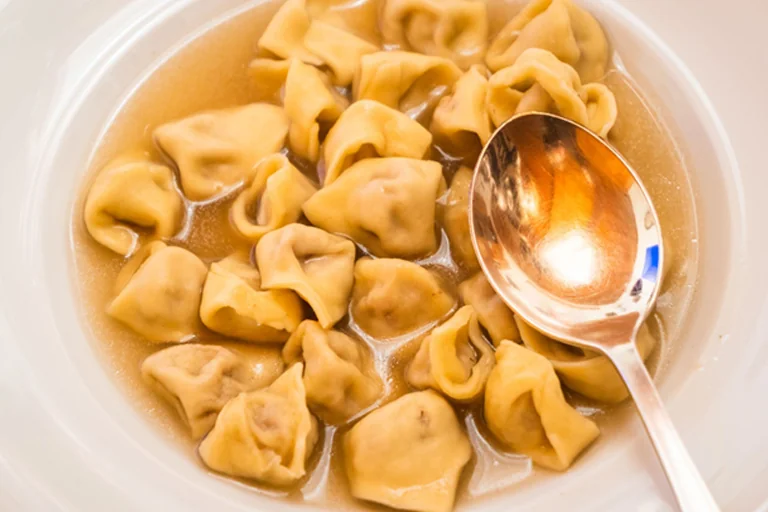
Tagliatelle al ragù, never spaghetti. Tortellini in brodo, never cream sauce. Mortadellais protected by law.
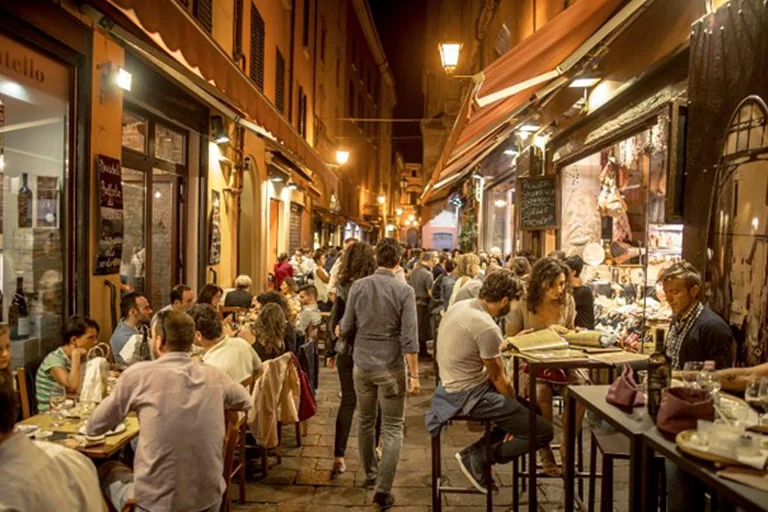
In the Quadrilatero market, food is treated as civic heritage. Pasta is rolled by hand. Recipes are regulated. Standards matter.
Eating here is not an indulgence. It is participation.
Sacred and Scholarly Bologna
Archiginnasio of Bologna Home to the Anatomical Theatre, where public dissections were conducted in the seventeenth century.
Basilica di San Domenico Housing the tomb of Saint Dominic with sculptural contributions by Michelangelo.
Santo Stefano A medieval recreation of Jerusalem’s Holy Sepulchre and one of Bologna’s most atmospheric sites.
Bologna as a Base
The Best Day Trips in Emilia-Romagna
Bologna is one of Italy’s best transport hubs.
Modena Ducal history, Ferrari heritage, and traditional balsamic vinegar.
Parma Romanesque architecture, opera, Parmigiano Reggiano, and refined elegance.
Imola Medieval fortresses and the iconic Formula One circuit.
Ravenna Imperial history, UNESCO mosaics, and the tomb of Dante.
All are reachable within an hour.
Why Bologna Stays With You
Bologna does not overwhelm. It teaches.
It teaches you to walk under porticoes. To eat slowly. To respect continuity. To value substance over performance.
It does not ask for your attention. It earns your respect.
Listen and Read More
This article accompanies the Immersion Travel Italy podcast episode on Bologna, where I walk you through the city with history, personal experience, and practical travel insight.
Visit katerinaferrara.com for the full blog, podcast episodes, and travel guides. Questions or suggestions are always welcome.
Bologna is not a checklist destination. It is an education.