ZRG Strikes Gold
•
Telenor Microfinance Bank awards ZRG OneView Contact Center System
•
ZRG Receives 5th Consecutive Achievement Gold Award from FPCCI
•
Al Baraka Bank Chooses ZRG OneView CMS Software
•
PSO Awards Contact Center Tender To ZRG
•
ZRG Strikes Gold
•
Telenor Microfinance Bank awards ZRG OneView Contact Center System
•
ZRG Receives 5th Consecutive Achievement Gold Award from FPCCI
•
Al Baraka Bank Chooses ZRG OneView CMS Software
•
PSO Awards Contact Center Tender To ZRG
•
ZRG Strikes Gold
•
Telenor Microfinance Bank awards ZRG OneView Contact Center System
•
ZRG Receives 5th Consecutive Achievement Gold Award from FPCCI
•
Al Baraka Bank Chooses ZRG OneView CMS Software
•
PSO Awards Contact Center Tender To ZRG
•
ZRG Strikes Gold
•
Telenor Microfinance Bank awards ZRG OneView Contact Center System
•
ZRG Receives 5th Consecutive Achievement Gold Award from FPCCI
•
Al Baraka Bank Chooses ZRG OneView CMS Software
•
PSO Awards Contact Center Tender To ZRG
•
A Deep Travel Guide to Trentino Alto Adige’s Overlooked Capital
Tucked into the Adige Valley and framed by the Alps, Trento is one of Italy’s most quietly powerful cities. It does not announce itself with spectacle. It does not compete with Florence, Milan, or Venice. Instead, Trento rewards travelers who slow down, observe, and listen.
This is a city shaped by geography more than ambition, by negotiation more than conquest, and by ideas more than display. For centuries, Trento stood between worlds. Italian and German. Imperial and papal. Mountain and valley. That balancing act shaped everything you see today.
If you are searching for an Italian city that feels authentic, intellectually rich, deeply historical, and surrounded by extraordinary nature, Trento deserves a place on your itinerary.
Why Trento Matters in Italian History
Long before it became a regional capital, Trento was Tridentum, a Roman stronghold guarding one of the most important Alpine corridors in Europe. The Adige Valley functioned as a natural passageway through the Alps, and whoever controlled it controlled trade, armies, and ideas moving between northern Europe and the Italian peninsula.
That role never disappeared.
Beneath the modern city, remnants of Roman walls, roads, and foundations remain visible, especially near Piazza Cesare Battisti. The logic of the Roman grid still defines how Trento moves today. This is not a city that reinvented itself every century. It adapted, but it never lost its purpose.
The Prince Bishops and Eight Centuries of Power
From 1027 until the early 1800s, Trento was ruled by prince bishops, an unusual political structure that gave religious leaders full secular authority. These men governed territory, collected tolls, minted coins, and maintained armies, all while nominally answering to the Holy Roman Emperor.
This arrangement was not accidental. Bishops could not pass power to heirs, making them ideal guardians of volatile border territory. Trento’s independence depended on balance, restraint, and diplomacy. The city learned to survive not by dominance, but by precision.
That mindset still defines Trento today.
The Council of Trent and Catholic Europe
Trento’s most consequential moment came between 1545 and 1563, when it hosted the Council of Trent, the Catholic Church’s response to the Protestant Reformation.
Why Trento?
Because it was neutral ground. Close enough to Protestant territories to be accessible, Catholic enough to feel secure, and stable enough to host Europe’s most intense theological debate.
The decisions made here reshaped Catholic doctrine, liturgy, education, and governance for centuries.
You can still stand where it happened.
Key Council Sites
Duomo di San Vigilio: Where the Council formally opened
Santa Maria Maggiore: Where many working sessions took place
Museo Diocesano Tridentino: Context, documents, art, and material culture of the Council era
This is not theatrical history. It is deliberate, structured, and deeply influential.
Walking Trento: A City Best Explored on Foot
Trento’s historic center is compact, readable, and calm. Streets invite observation rather than urgency.
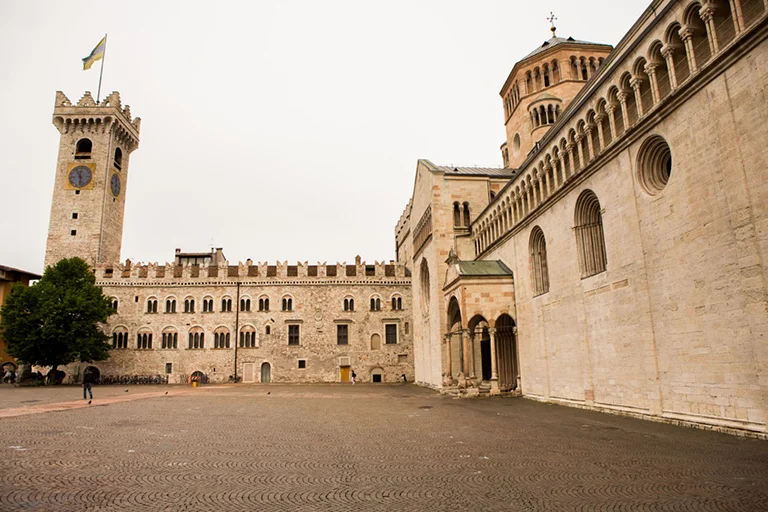
Piazza Duomo
The city’s anchor. Not a museum square, but a living one. Locals pass through, students sit on the steps, cafés function exactly as they should.
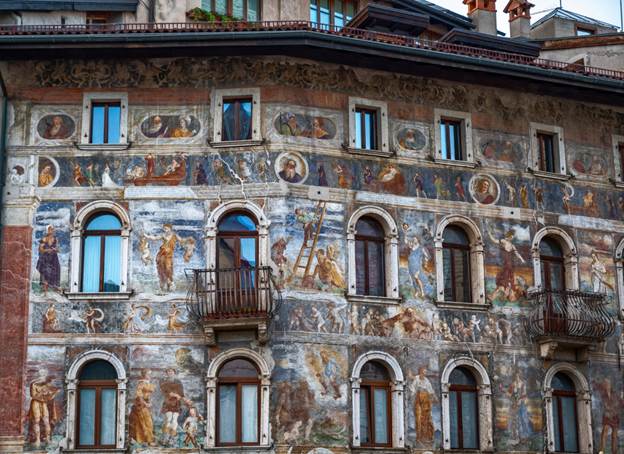
Via Belenzani
One of northern Italy’s most beautiful Renaissance streets, lined with frescoed palazzi that once signaled wealth, education, and cultural legitimacy during the Council era.
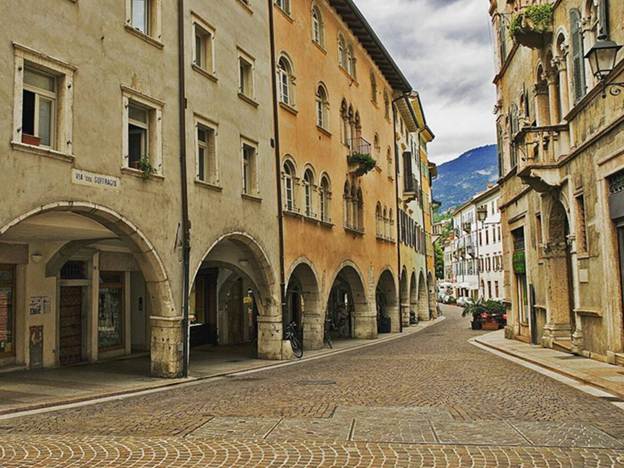
Via Suffragio
Formerly known as the German Quarter, this medieval street with porticoes tells the story of Trento’s role as a commercial gateway between worlds.
Medieval Towers
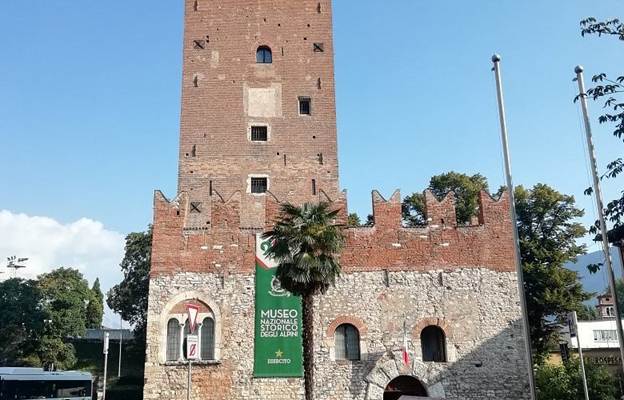
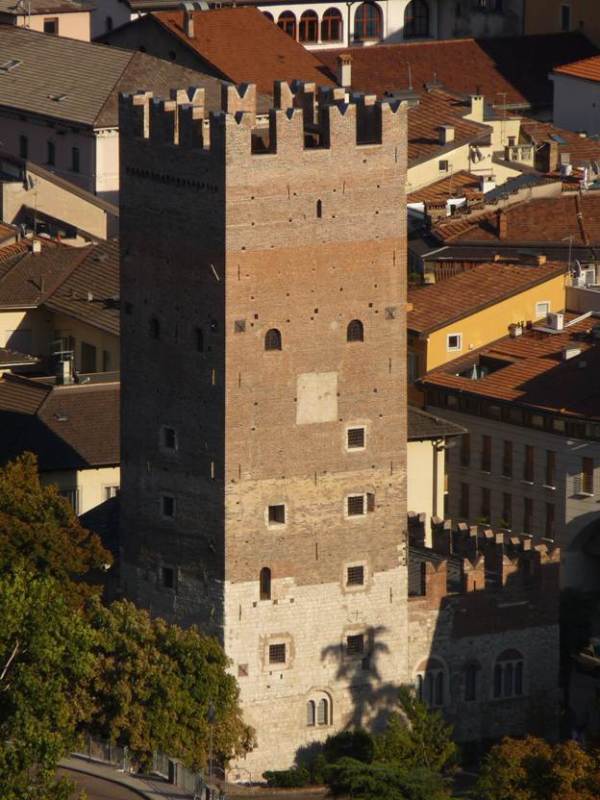
Torre Vanga and Torre Verde punctuate the skyline, reminders of a city that always had to watch its borders.
Castello del Buonconsiglio: Power with Perspective
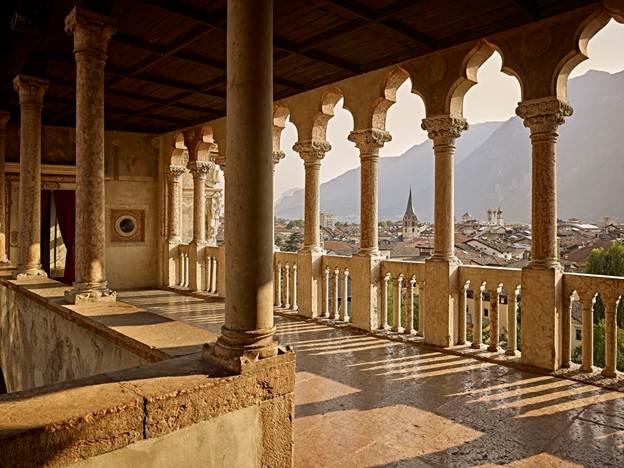
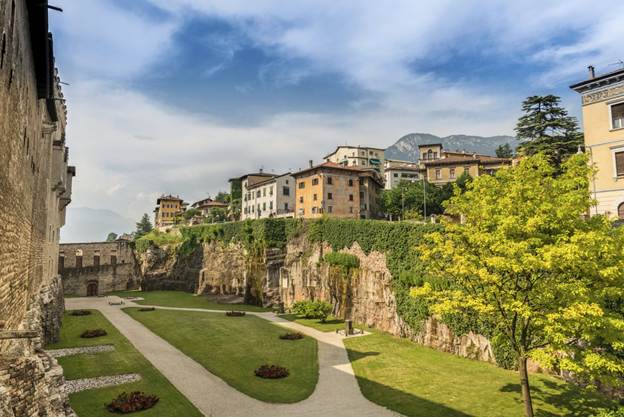
Rising above the city, Castello del Buonconsiglio was the seat of Trento’s prince-bishops for centuries. Defensive yet refined, the castle reflects authority exercised through diplomacy rather than force.
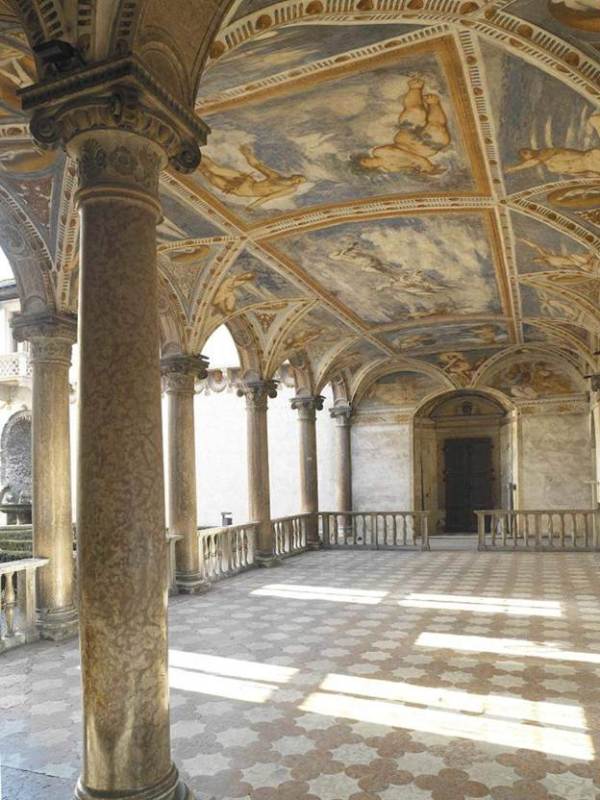
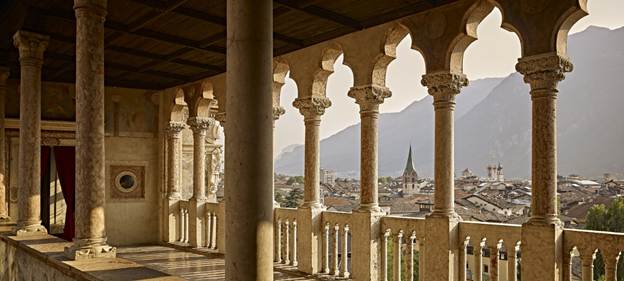
Inside, frescoes emphasize order, legitimacy, and continuity rather than conquest. From the loggias, views open across the city and valley, making Trento’s strategic role instantly clear.
Power here was never blind. It required perspective.
Food in Trento: Mountain Ingredients, Italian Precision
Trentino cuisine sits at the crossroads of Alpine practicality and Italian refinement.
What to Eat
Canederli (Knödel): Bread dumplings with speck or cheese, served in broth or with butter and sage
Polenta, speck, and hearty mountain dishes
Trentingrana DOP and Puzzone di Moena DOP, two distinctive regional cheeses
What to Drink
Trentodoc sparkling wine, made using the metodo classico, crisp and disciplined, much like the city itself
This is food shaped by altitude and climate, refined over generations rather than reinvented.
Festivals That Define Trento
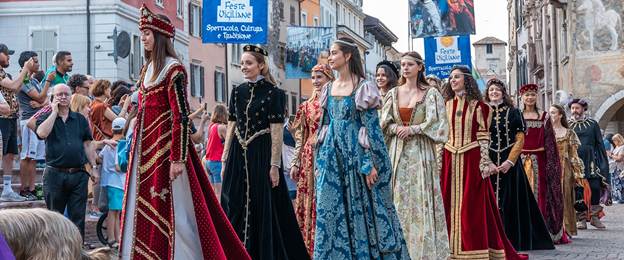
Le Feste Vigiliane (June)
Trento’s most important civic celebration honoring San Vigilio. Includes processions, historical reenactments, and the Palio dell’Oca rowing race on the Adige River.
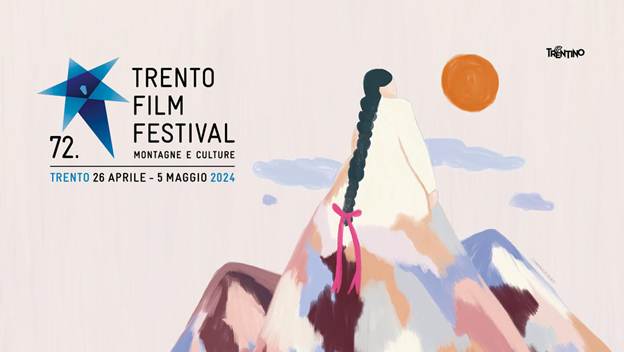
Trento Film Festival (Spring)
Founded in 1952, the world’s oldest mountain film festival. A celebration of exploration, environmental awareness, and humanity’s relationship with nature.
Mercatino di Natale di Trento (December)
An atmospheric Christmas market in Piazza Duomo, blending Italian warmth with Alpine tradition.
Outdoor Activities: Where the City Meets the Alps
Trento does not separate urban life from nature.
Monte Bondone: Hiking, skiing, snowshoeing, and panoramic views minutes from the center
Adige Valley Cycling Path: Flat, scenic route connecting Trento to Bolzano and Verona
Via Ferrata: Protected climbing routes rooted in Alpine tradition
Paragliding: Launch points above the valley offer an unmatched perspective
Kayaking and rafting: Available on stretches of the Adige outside the city
Nature here is not an excursion. It is infrastructure.
Easy Day Trips from Trento by Train
Bolzano
A bilingual Alpine city where German dominates daily life. Markets, arcades, Ötzi the Iceman, and a strong Tyrolean identity.
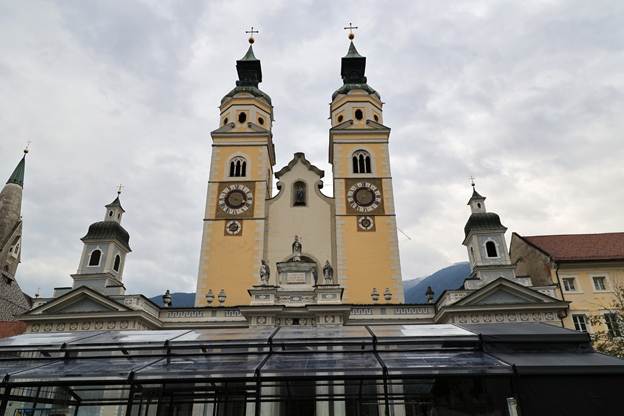
Bressanone
Former prince bishop seat where German culture fully prevails. Romanesque Baroque cathedral, frescoed cloister, and direct access to Plose mountain.
Rovereto
Home to the MART Museum of Modern and Contemporary Art and the Bell of the Fallen, reflecting on war, memory, and peace.
Verona
Roman power, medieval towers, and theatrical scale. A striking contrast to Trento’s restraint.
Why Trento Belongs on Your Italy Itinerary
Trento never needed to dominate. It shaped history through position, balance, and trust. It hosted debate rather than drama. It refined ideas rather than staging them.
Today, that equilibrium remains visible in its streets, institutions, food, and relationship with the Alps.
If you are looking for an Italy that feels intelligent, grounded, uncrowded, and deeply connected to place, Trento is not optional. It is essential.
🎧 Listen to the full Immersion Travel Italy podcast episode on Trento for extended storytelling and historical depth. 📖 Read more companion articles and immersive guides atkaterinaferrara.com ✉️ Have a suggestion for a future episode or questions about traveling in Italy? Email katerina@katerinaferrara.com
Immersion Travel Italy: Where history, culture, and place come together.