ZRG Strikes Gold
•
Telenor Microfinance Bank awards ZRG OneView Contact Center System
•
ZRG Receives 5th Consecutive Achievement Gold Award from FPCCI
•
Al Baraka Bank Chooses ZRG OneView CMS Software
•
PSO Awards Contact Center Tender To ZRG
•
ZRG Strikes Gold
•
Telenor Microfinance Bank awards ZRG OneView Contact Center System
•
ZRG Receives 5th Consecutive Achievement Gold Award from FPCCI
•
Al Baraka Bank Chooses ZRG OneView CMS Software
•
PSO Awards Contact Center Tender To ZRG
•
ZRG Strikes Gold
•
Telenor Microfinance Bank awards ZRG OneView Contact Center System
•
ZRG Receives 5th Consecutive Achievement Gold Award from FPCCI
•
Al Baraka Bank Chooses ZRG OneView CMS Software
•
PSO Awards Contact Center Tender To ZRG
•
ZRG Strikes Gold
•
Telenor Microfinance Bank awards ZRG OneView Contact Center System
•
ZRG Receives 5th Consecutive Achievement Gold Award from FPCCI
•
Al Baraka Bank Chooses ZRG OneView CMS Software
•
PSO Awards Contact Center Tender To ZRG
•
Discover Tuscany’s Ancient Hilltop City Where the Renaissance Began
Thousands of visitors admire Florence each day without realizing that the city’s story actually began on the hill above it.
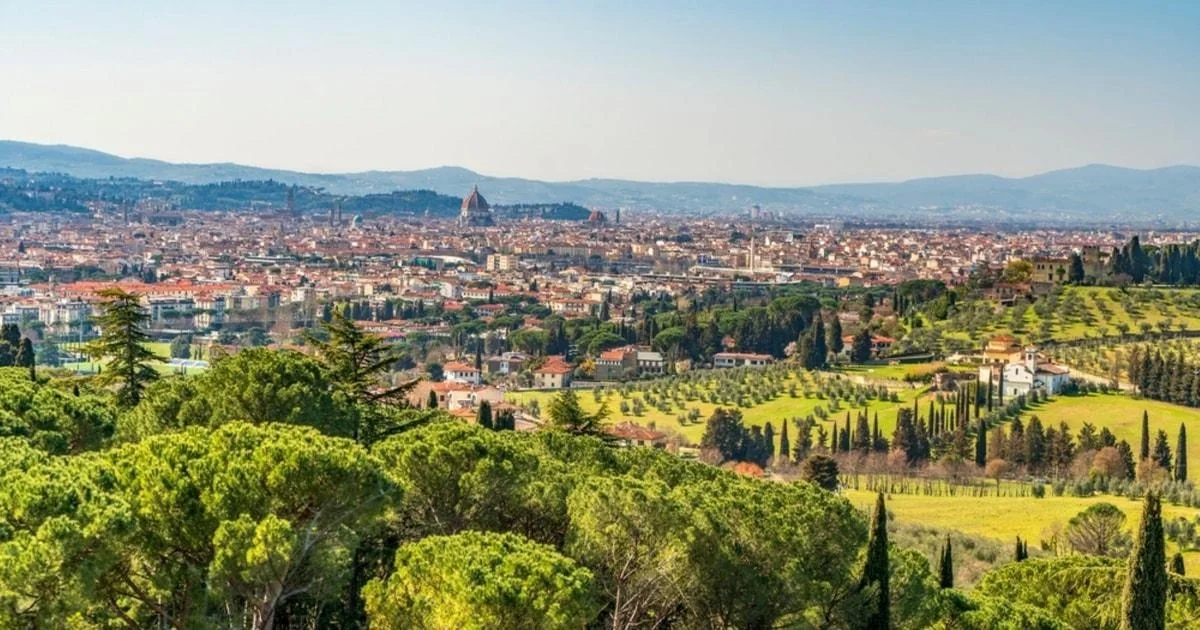
Just twenty minutes north of Florence sits Fiesole, one of Tuscany’s oldest communities and one of Italy’s most overlooked masterpieces. Long before Brunelleschi designed Florence’s magnificent dome, before Michelangelo sculpted David, and before the Medici family transformed Florence into the cradle of the Renaissance, the Etruscans built a thriving city here overlooking the Arno Valley.
Today, Fiesole offers breathtaking panoramas, remarkably preserved Roman ruins, elegant Renaissance villas, and a peaceful atmosphere that feels worlds away from the crowds below.
If you’re looking for one of Tuscany’s best half day excursions, Fiesole deserves a place at the top of your itinerary.
Older Than Florence
Perched nearly 300 meters (1,000 feet) above the Arno Valley, Fiesole has watched over Tuscany for nearly three thousand years.
Archaeological evidence shows people settled here as early as the 9th century BC, and by the 7th century BC it had become one of the principal cities of the Etruscan civilization.
Its location offered everything an ancient settlement needed:
Natural defenses
Control of important trade routes
Views across the fertile Arno Valley
Easy access to the Apennine Mountains
Long before Latin became the language of Italy, the Etruscans were building sophisticated cities, engineering impressive stone walls, and trading throughout the Mediterranean.
Much of that remarkable history can still be explored today.
How Fiesole Gave Birth to Florence
Everything changed in 59 BC.
Julius Caesar established the Roman colony of Florentia on the flat land beside the Arno River below Fiesole.
Why leave the hilltop?
While Fiesole offered excellent protection, the valley provided room for something much larger.
Rome could build straight streets, bridges, markets, and an organized city designed for commerce and expansion.
For centuries, the two communities existed side by side.
Fiesole remained the ancient hill town while Florence gradually became the commercial powerhouse that would eventually dominate Tuscany.
Ironically, understanding Florence begins with understanding Fiesole.
Walk Through Ancient Rome
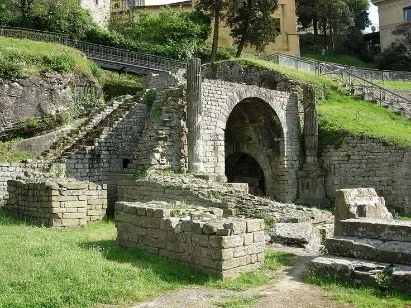
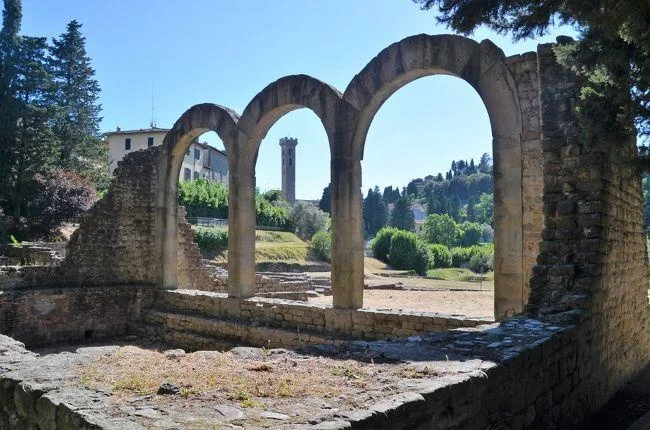
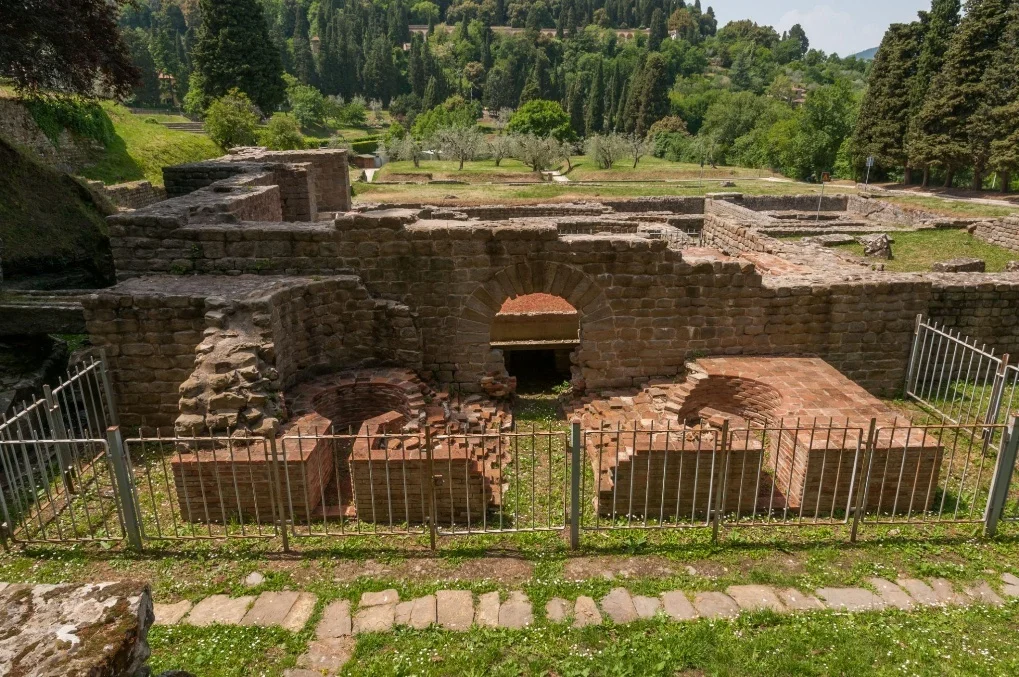
The archaeological area is one of Fiesole’s greatest surprises.
Within a single site you’ll discover layers of history stretching from the Etruscans through the Roman Empire and into the Middle Ages.
Roman Theater
Built during the 1st century BC, the remarkably preserved theater once seated nearly 3,000 spectators.
Even more impressive, it still serves its original purpose today.
Each summer the Estate Fiesolana Festival, first established in 1911, fills the ancient stone seats with concerts, theatrical performances, ballet, and cultural events.
Very few Roman theaters anywhere in Europe remain active after nearly two thousand years.
Nearby you’ll also find:
Roman Baths
Ancient Forum
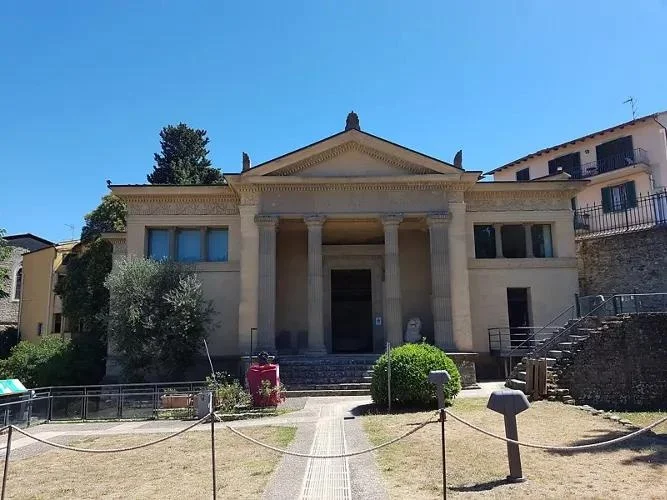
Archaeological Museum
Etruscan foundations beneath Roman streets
The Medici’s Favorite Retreat
By the fifteenth century, Florence had become one of Europe’s wealthiest cities.
The Medici family, however, preferred escaping the crowded streets during the summer.
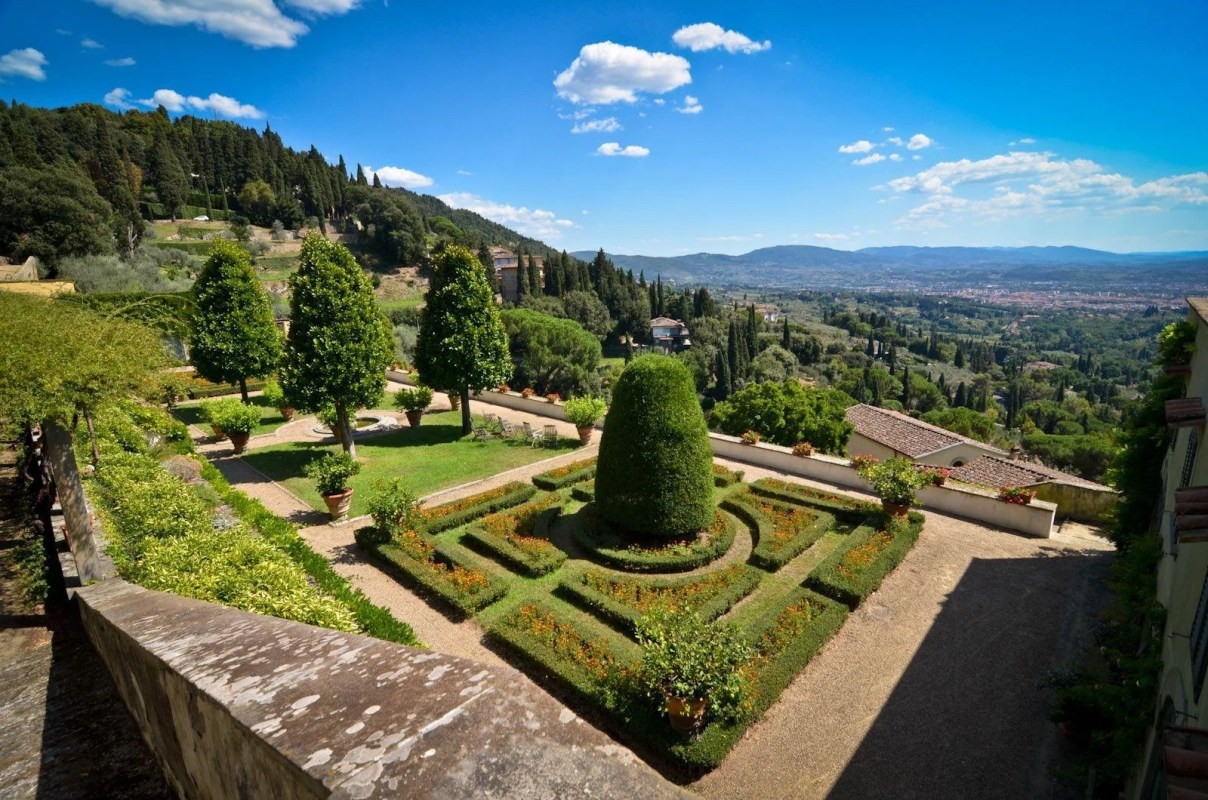
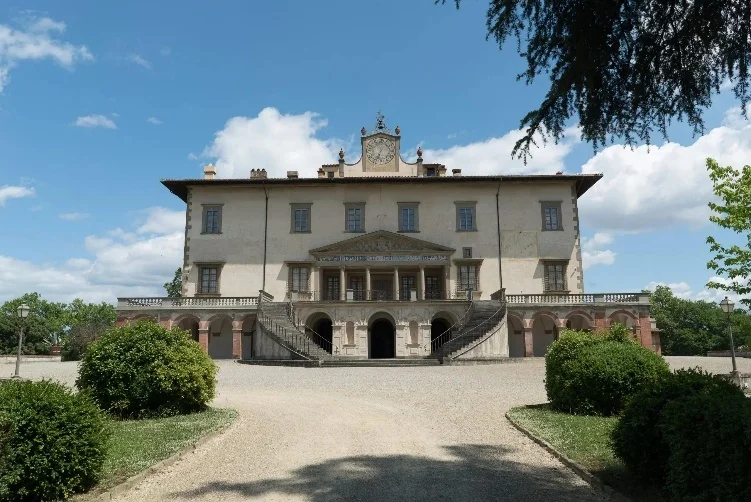
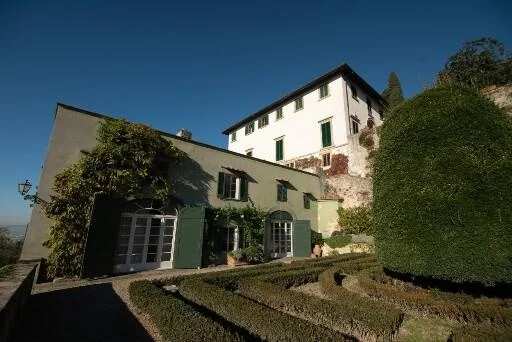
Around 1451, Cosimo de’ Medici the Elder commissioned Villa Medici di Fiesole, one of the earliest true Renaissance villas.
Unlike medieval castles built for defense, this villa celebrated beauty, comfort, learning, and harmony with nature.
Here, philosophers, artists, poets, scholars, and church leaders gathered to discuss literature, science, politics, and classical philosophy.
Many historians believe these conversations helped shape the Renaissance itself.
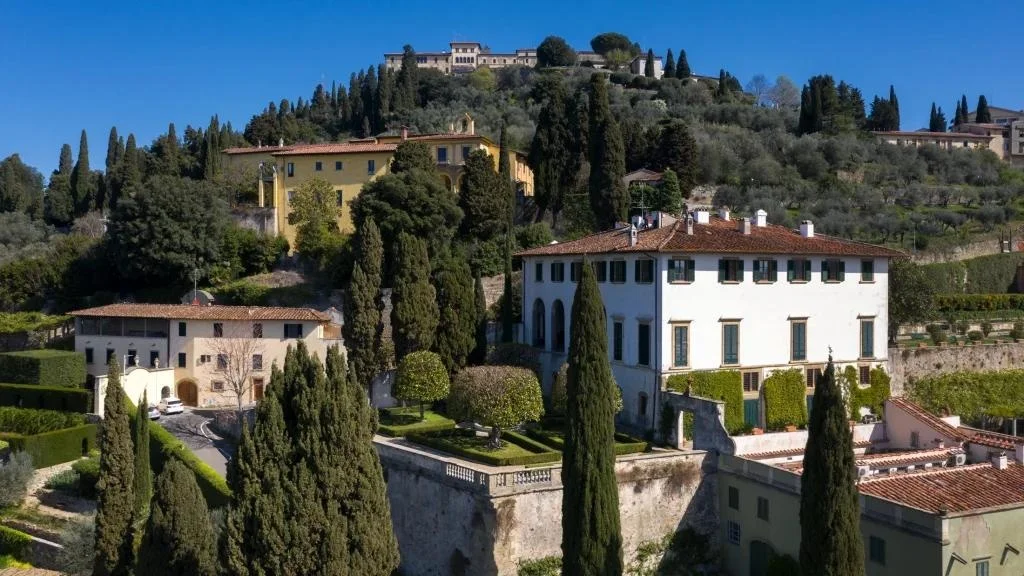
Although the villa remains privately owned today, its beautiful gardens occasionally open by reservation, and numerous historic villas continue to grace the surrounding hillsides.
The Best View in Tuscany
Many visitors come to Fiesole for one reason.
The view.
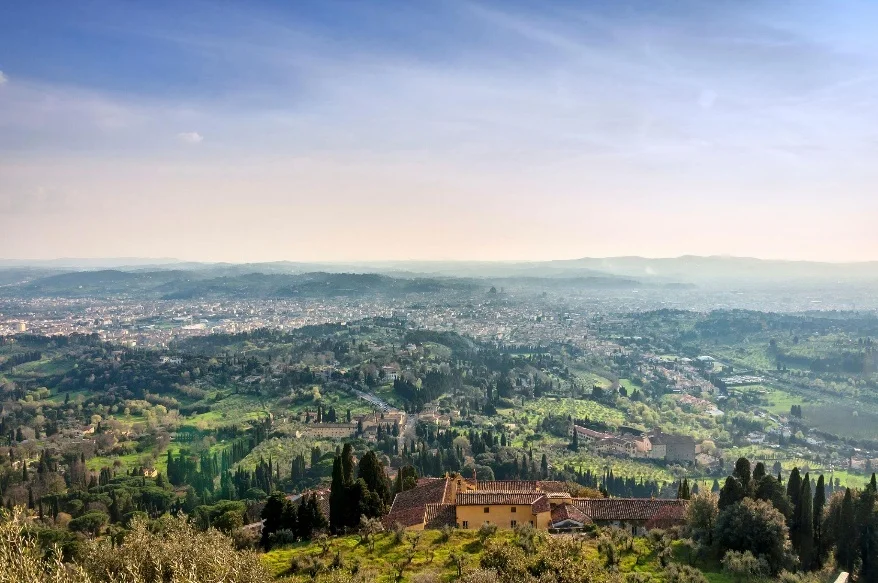
Walk to the Convent of San Francesco, founded in 1399, and step onto the terrace overlooking Florence.
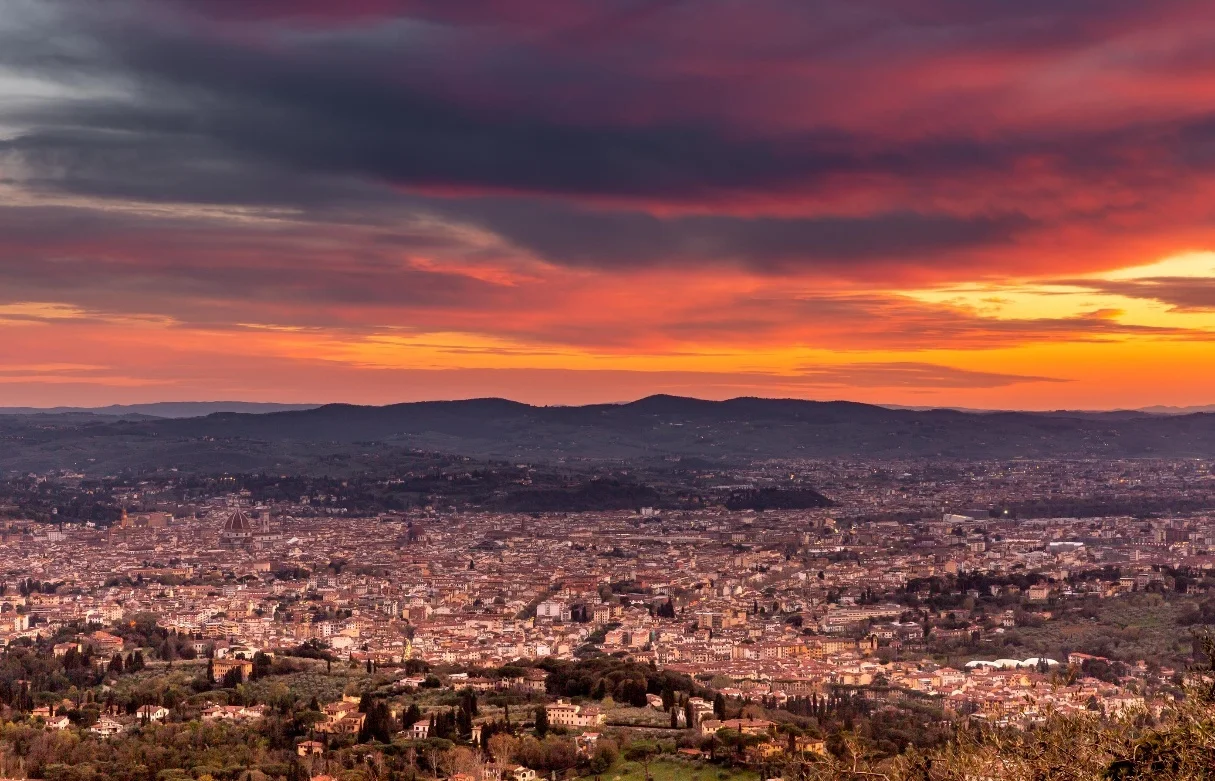
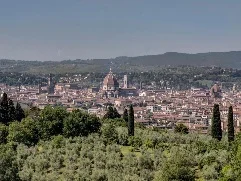
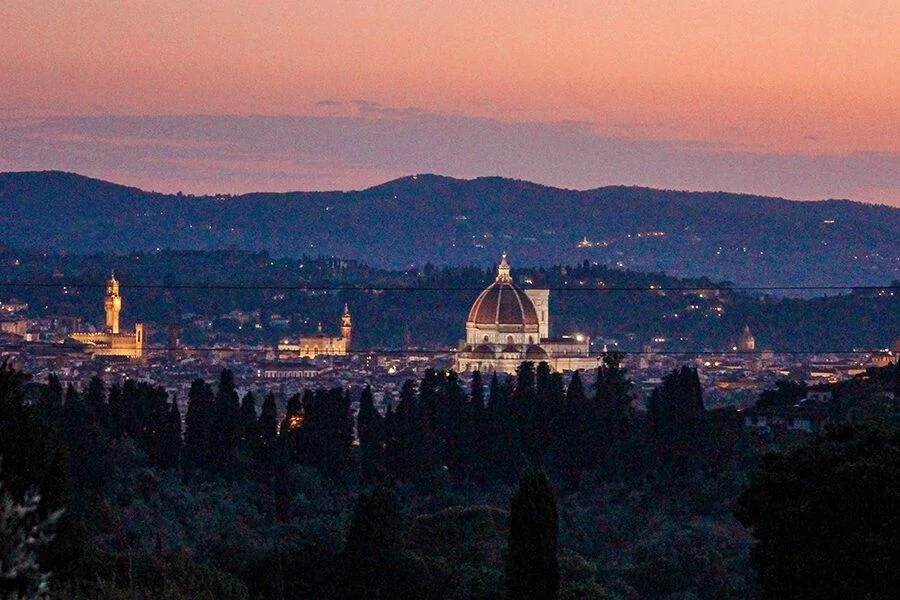
From here you’ll enjoy one of Italy’s most spectacular panoramas.
Brunelleschi’s dome dominates the skyline while Giotto’s bell tower rises beside it. Beyond the city stretch vineyards, olive groves, and rolling Tuscan hills.
Arrive late in the afternoon for unforgettable golden light across Florence.
A Perfect Day Trip from Florence
One of the best things about Fiesole is how easy it is to visit.
The ATAF Bus 7 departs regularly from Piazza della Libertà in Florence and reaches Fiesole in about 20 minutes.
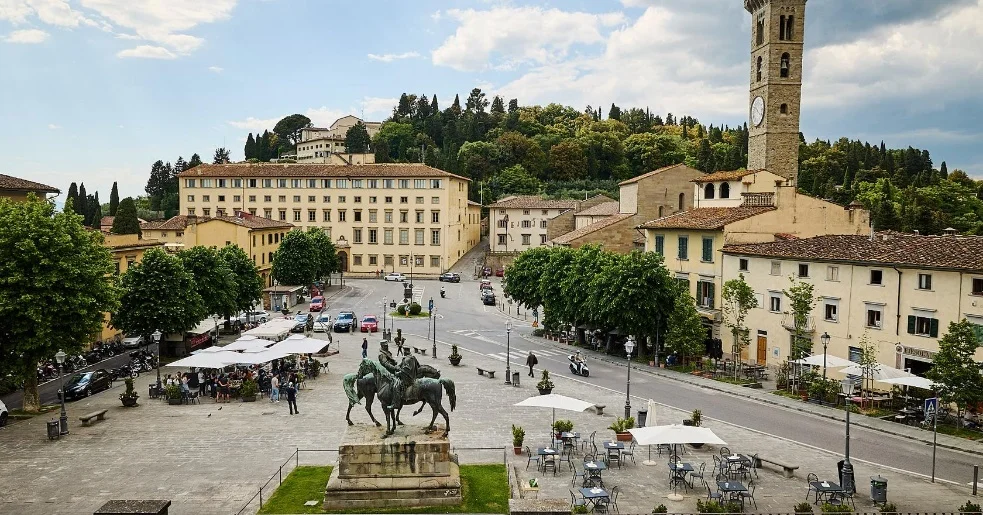
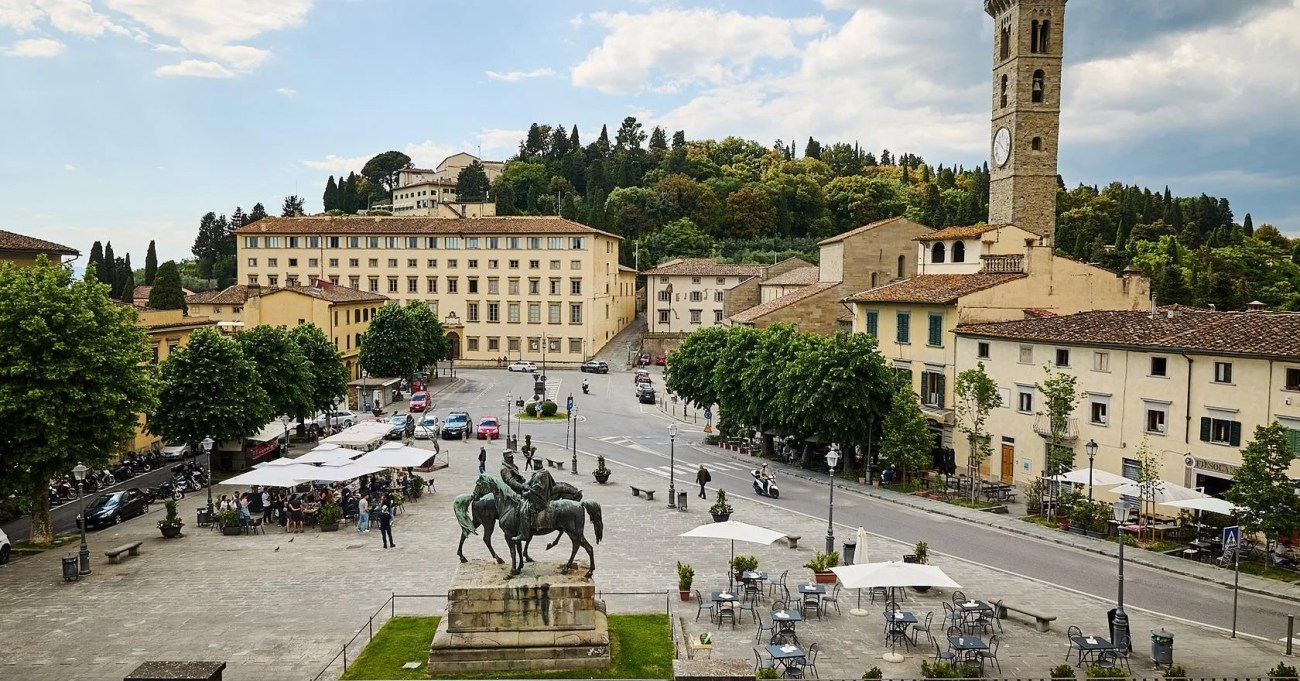
Begin your visit in Piazza Mino da Fiesole, where cafés surround the historic square.
Breakfast
Start with a cappuccino and freshly baked cornetto at Bar Pasticceria Alcedo, a longtime neighborhood favorite.
Lunch
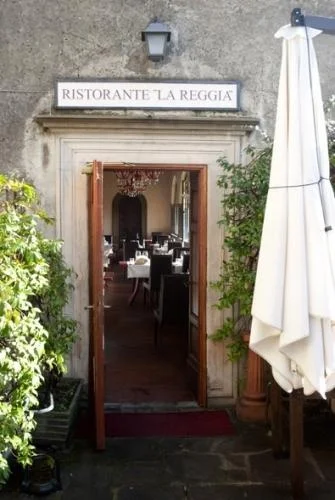
For an unforgettable Tuscan meal, reserve a table at La Reggia degli Etruschi, known for handmade pappardelle, porcini mushrooms, bistecca alla Fiorentina, and panoramic views across the valley.
Annual Festivals
Fiesole celebrates its remarkable heritage throughout the year.
Estate Fiesolana (Summer) transforms the Roman Theater into one of Europe’s oldest continuously operating outdoor performance venues.
Festa di San Romolo (July 6) honors the city’s patron saint with religious celebrations, concerts, and community events.
European Market (Spring) brings artisans and specialty foods from across Europe.
Christmas in Fiesole (December) fills the historic center with festive decorations beginning around the Feast of the Immaculate Conception on December 8.
Planning Your Visit
Allow at least a half day, although history lovers could easily spend a full day exploring.
Don’t miss:
Piazza Mino da Fiesole
Cathedral of San Romolo
Roman Theater
Roman Baths
Archaeological Museum
Convent of San Francesco
Panoramic terrace
Villa Medici (gardens by reservation)
Comfortable walking shoes are recommended since several streets climb gently through the historic center.
Listen to the Full Podcast Episode
Want to hear the complete story of Fiesole’s Etruscan origins, Roman history, Medici villas, Renaissance connections, hidden viewpoints, practical travel advice, and local recommendations?
Listen to Italy Masterpiece Series Episode 3 on the Immersion Travel Italy Podcast.
If you love discovering Italy through its history, festivals, culture, and hidden destinations, my travel guides will help you experience the country far beyond the typical tourist itinerary.
Sicilia in Festa: Experience the Magic of Sicily’s History, Art and Timeless Cultural Celebrations (English and Italian Dual Language Edition) https://amzn.to/4pUxBuP
Have you visited Fiesole? Share your favorite viewpoint or hidden discovery in the comments below. I’d love to hear what made this remarkable hill town special for you!