ZRG Strikes Gold
•
Telenor Microfinance Bank awards ZRG OneView Contact Center System
•
ZRG Receives 5th Consecutive Achievement Gold Award from FPCCI
•
Al Baraka Bank Chooses ZRG OneView CMS Software
•
PSO Awards Contact Center Tender To ZRG
•
ZRG Strikes Gold
•
Telenor Microfinance Bank awards ZRG OneView Contact Center System
•
ZRG Receives 5th Consecutive Achievement Gold Award from FPCCI
•
Al Baraka Bank Chooses ZRG OneView CMS Software
•
PSO Awards Contact Center Tender To ZRG
•
ZRG Strikes Gold
•
Telenor Microfinance Bank awards ZRG OneView Contact Center System
•
ZRG Receives 5th Consecutive Achievement Gold Award from FPCCI
•
Al Baraka Bank Chooses ZRG OneView CMS Software
•
PSO Awards Contact Center Tender To ZRG
•
ZRG Strikes Gold
•
Telenor Microfinance Bank awards ZRG OneView Contact Center System
•
ZRG Receives 5th Consecutive Achievement Gold Award from FPCCI
•
Al Baraka Bank Chooses ZRG OneView CMS Software
•
PSO Awards Contact Center Tender To ZRG
•
Aquileia: The Forgotten Roman City That Once Rivaled Rome
Discover Italy’s Hidden UNESCO Treasure in Friuli Venezia Giulia
Most travelers driving between Venice and Trieste never realize they are passing one of the greatest cities of the ancient Roman world.
Today, Aquileia is a peaceful town of fewer than 3,000 residents in the beautiful region of Friuli Venezia Giulia. Quiet streets, green countryside, and a magnificent basilica hardly hint that this was once one of the largest and wealthiest cities in the Roman Empire.
Founded in 181 BC, Aquileia became Rome’s gateway to Central Europe. Merchants arrived from across the Mediterranean carrying wine, olive oil, spices, glass, and luxury goods. Amber traveled thousands of miles from the Baltic Sea before reaching its bustling markets. Roman soldiers marched through its gates while emperors used the city as a military headquarters during times of crisis.
Today, much of that ancient city still lies buried beneath the surrounding fields, making Aquileia one of the world’s most fascinating archaeological treasures.
If you enjoy Roman history, archaeology, UNESCO World Heritage Sites, or discovering places far from the tourist crowds, Aquileia deserves a place on your Italy itinerary.
Why Aquileia Changed History
Aquileia was established by the Roman Republic as a military colony protecting Italy’s northeastern frontier. Its location near the head of the Adriatic Sea made it one of Rome’s most strategic commercial centers.
By the second century AD, the city may have approached 100,000 inhabitants, placing it among the largest cities in the Roman Empire.
Its importance extended beyond commerce.
Emperor Marcus Aurelius based military operations here during the Marcomannic Wars, while Emperor Maximinus Thrax famously laid siege to the city in AD 238 before being assassinated by his own soldiers outside its walls.
Following Emperor Constantine’s legalization of Christianity in AD 313, Aquileia became one of the earliest and most influential Christian centers in Europe. Missionaries carried the Christian faith northward into what are now Austria, Slovenia, Croatia, and other parts of Central Europe.
The Basilica That Preserved Early Christianity
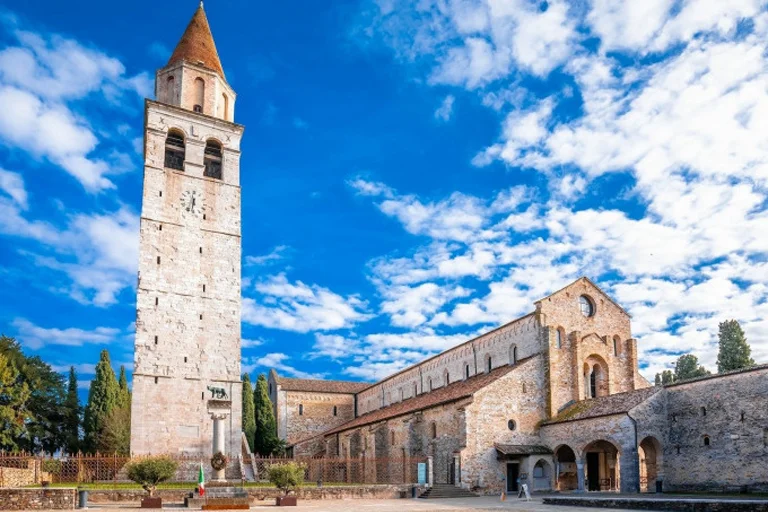
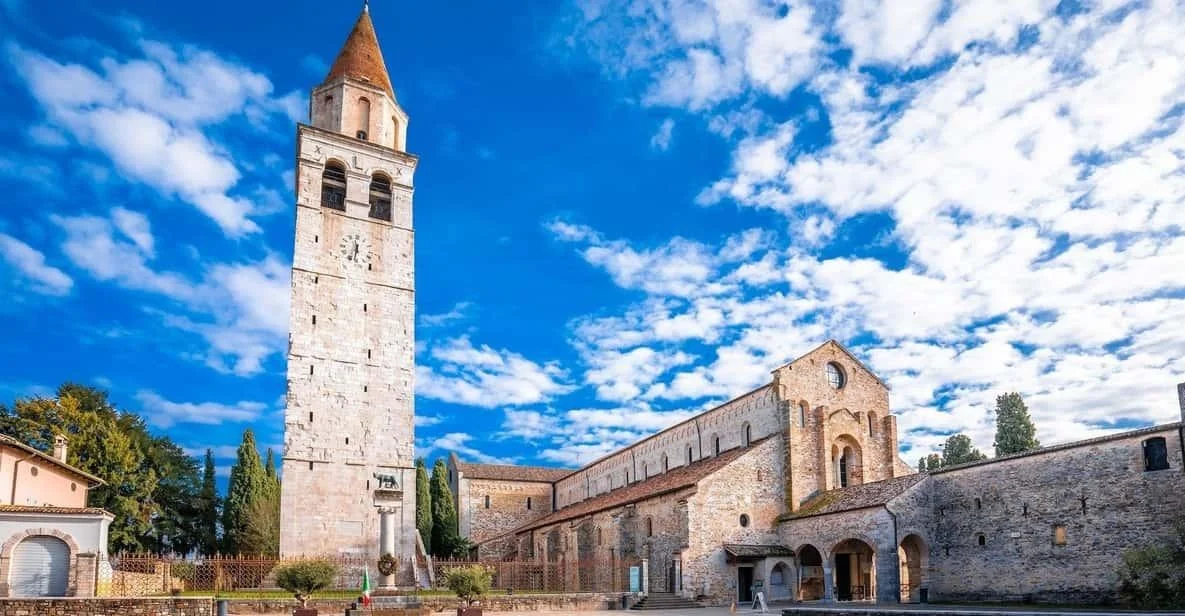
The highlight of every visit is undoubtedly the Patriarchal Basilica of Santa Maria Assunta.
Although much of today’s church dates to the eleventh century, Christians have worshipped on this site since the early fourth century.
Its greatest treasure lies beneath your feet.
Stretching across nearly 750 square meters, the basilica contains the largest surviving Early Christian mosaic floor in the world. Elevated walkways allow visitors to admire intricate artwork created shortly after Christianity became legal throughout the Roman Empire.
Unlike later Christian art, these mosaics combine biblical symbolism with familiar Roman imagery.
You’ll discover:
Fish representing Christ
Shepherds symbolizing spiritual guidance
Birds and vines expressing eternal life
Sea creatures inspired by the Roman world
The famous rooster battling a tortoise, symbolizing the triumph of light over darkness
Even more remarkable, these mosaics survived because medieval builders unknowingly protected them beneath a newer church floor for centuries.
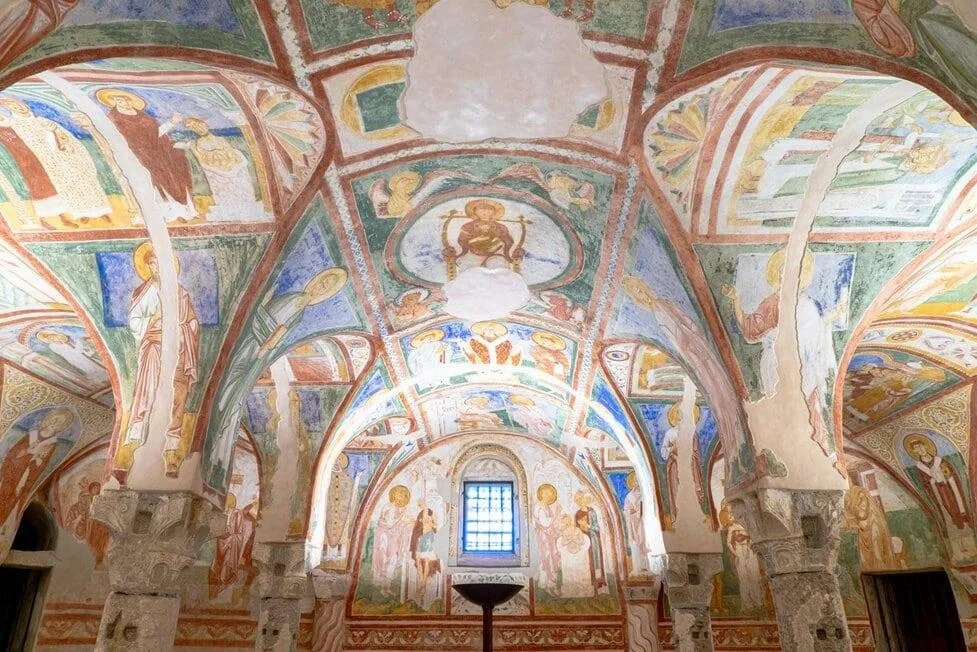
Don’t miss the beautifully preserved crypts, the fourth century baptistry, and the elegant Romanesque bell tower that together create one of Europe’s finest surviving early Christian complexes.
Walk Through an Ancient Roman City
Unlike Pompeii, Aquileia requires a little imagination.
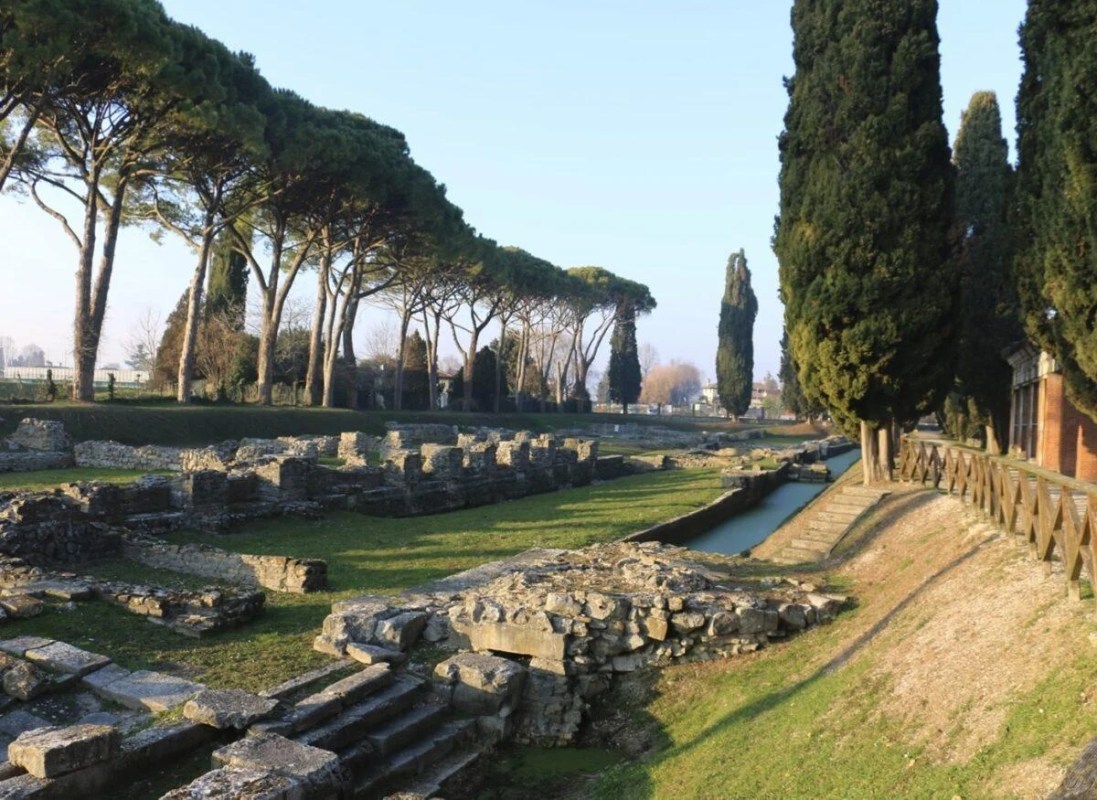
Foundations reveal where elegant homes, workshops, warehouses, baths, and temples once stood.
Among the highlights are:
Roman Forum
The political and commercial heart of ancient Aquileia where citizens gathered for commerce, government, and public ceremonies.
Ancient River Port
Perhaps the most fascinating stop in town, the preserved stone quays allow you to picture merchant ships unloading cargo from every corner of the Roman Empire.
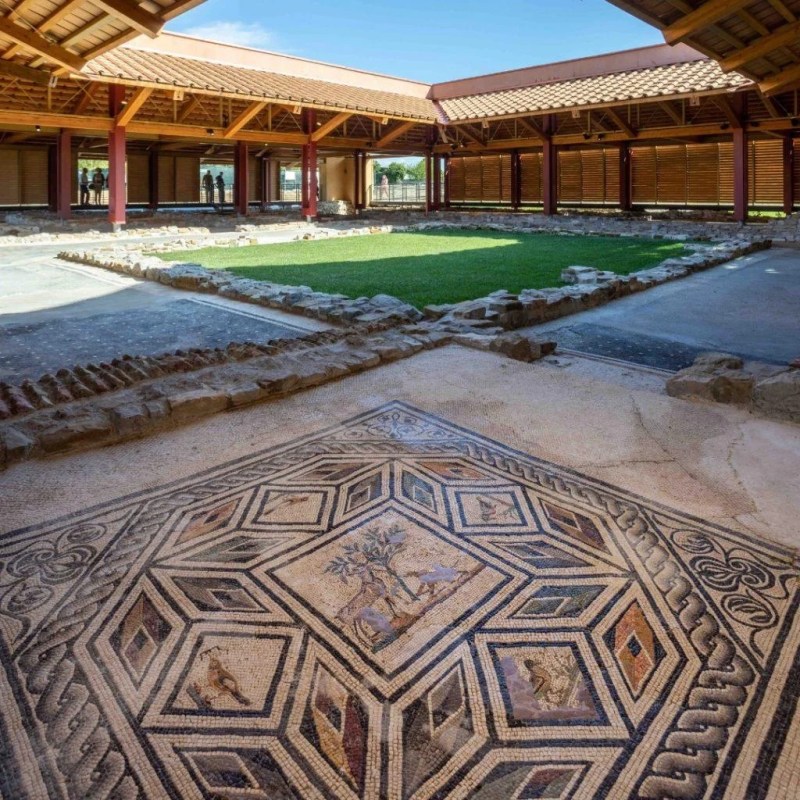
House of Titus Macro
One of the largest Roman homes ever excavated in northern Italy, covering nearly 1,700 square meters, it provides an extraordinary glimpse into the lives of Aquileia’s wealthiest citizens.
National Archaeological Museum
Don’t skip the museum. Sculptures, inscriptions, jewelry, amber, coins, medical instruments, and glassware help bring the ancient city vividly to life.
Local Food Worth Trying
After exploring the archaeological park, stop for an espresso and pastry at Pasticceria Mosaico, a local favorite located just steps from the basilica.
Be sure to try the Dolce Aquileia, a pastry inspired by the town’s Roman and Christian heritage.
For lunch or dinner, Antica Aquileia Ristorante Pizzeria serves traditional Friulian specialties alongside homemade pasta, pizza, and regional wines.
Annual Festivals
Aquileia also hosts several fascinating annual events.
European Archaeology Film Festival (late July to early August) brings archaeologists, historians, filmmakers, and researchers together for open air screenings focused on ancient civilizations.
European Archaeology Days (June) celebrate archaeological discoveries through special tours and educational events.
Festival dei Cammini (April) highlights pilgrimage routes leading into Aquileia through guided walks, concerts, and cultural programs.
Feast of Saints Hermagoras and Fortunatus (July 12) honors the city’s patron saints with religious celebrations centered around the basilica.
Planning Your Visit
Aquileia is an ideal half day excursion, although history enthusiasts could easily spend a full day exploring.
A combined admission ticket includes:
Basilica
Mosaic floor
Crypts
Baptistry
Archaeological museum
Wear comfortable walking shoes since much of the archaeological park consists of uneven Roman stone, gravel paths, and grassy areas.
If you’re driving between Venice and Trieste, Aquileia makes one of the best historical stops in northern Italy.
For those wishing to spend the night, consider staying just ten minutes away in the beautiful seaside town of Grado, where you can combine Roman history with beaches, seafood restaurants, and charming pedestrian streets.
Listen to the Full Podcast Episode
Discover even more stories about Aquileia’s Roman emperors, early Christianity, archaeological discoveries, practical travel advice, and hidden history in Italy Masterpiece Series Episode 2 of the Immersion Travel Italy Podcast.
If you enjoy discovering authentic Italy through history, festivals, culture, and immersive travel experiences, my travel guides are designed to help you experience Italy like a local.
Sicilia in Festa: Experience the Magic of Sicily’s History, Art and Timeless Cultural Celebrations (English and Italian Dual Language Edition) https://amzn.to/4pUxBuP
Have you visited Aquileia? I’d love to hear what surprised you most about this remarkable ancient city. Leave a comment below and share your experience!