ZRG Strikes Gold
•
Telenor Microfinance Bank awards ZRG OneView Contact Center System
•
ZRG Receives 5th Consecutive Achievement Gold Award from FPCCI
•
Al Baraka Bank Chooses ZRG OneView CMS Software
•
PSO Awards Contact Center Tender To ZRG
•
ZRG Strikes Gold
•
Telenor Microfinance Bank awards ZRG OneView Contact Center System
•
ZRG Receives 5th Consecutive Achievement Gold Award from FPCCI
•
Al Baraka Bank Chooses ZRG OneView CMS Software
•
PSO Awards Contact Center Tender To ZRG
•
ZRG Strikes Gold
•
Telenor Microfinance Bank awards ZRG OneView Contact Center System
•
ZRG Receives 5th Consecutive Achievement Gold Award from FPCCI
•
Al Baraka Bank Chooses ZRG OneView CMS Software
•
PSO Awards Contact Center Tender To ZRG
•
ZRG Strikes Gold
•
Telenor Microfinance Bank awards ZRG OneView Contact Center System
•
ZRG Receives 5th Consecutive Achievement Gold Award from FPCCI
•
Al Baraka Bank Chooses ZRG OneView CMS Software
•
PSO Awards Contact Center Tender To ZRG
•
Few films have left such a lasting cultural impact as The Godfather. Directed by Francis Ford Coppola and based on Mario Puzo’s best-selling novel, this epic saga of the Corleone family is as much about its characters as it is about the evocative landscapes that serve as a backdrop to their story. While much of the movie is set in New York, Sicily plays a pivotal role in the narrative, especially in The Godfather and The Godfather Part II.
Sicily, with its rugged landscapes, historic architecture, and deep cultural roots, provides the perfect setting for key scenes in the films. For many fans, visiting these locations is not just about seeing where the magic happened but immersing themselves in the world of The Godfather and discovering the island’s unique charm.
Let’s take a detailed tour of the most significant Godfather filming locations in Sicily, uncovering the stories behind each place and their connections to the iconic film.
1. Savoca: The Quintessential Sicilian Village
Scenes filmed: Michael Corleone’s Sicilian exile and wedding to Apollonia.
Famous locations: Bar Vitelli and the Church of San Nicolò.
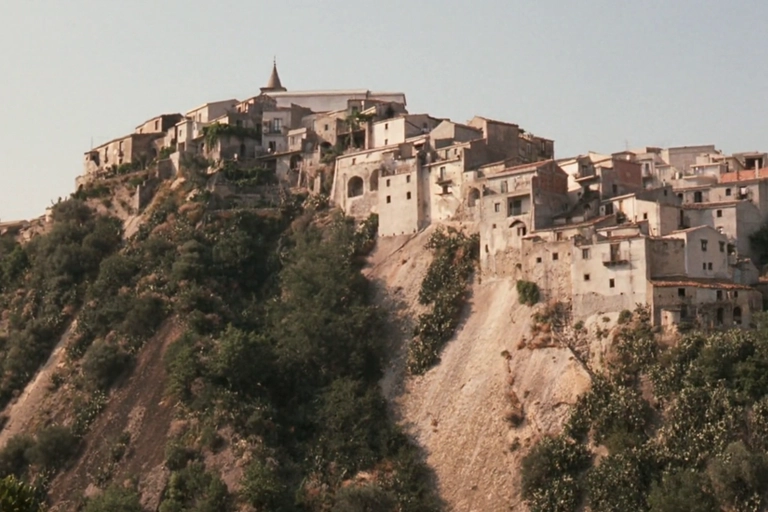
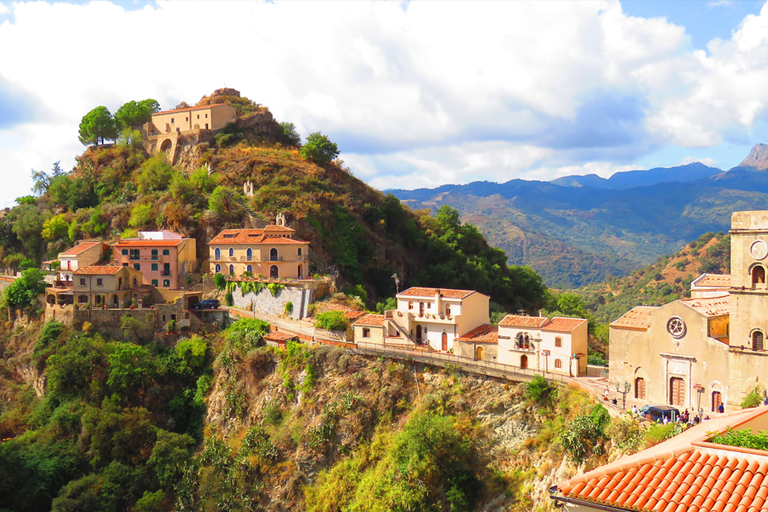
Savoca, a small town located about an hour from Messina, stands in for the fictional town of Corleone in The Godfather. Despite the town of Corleone being a real location, Coppola chose Savoca for its more authentic, untouched charm, free from the modernity that could disrupt the timeless feel of the film.
Bar Vitelli, where Michael Corleone first speaks to Apollonia’s father to ask for her hand in marriage, still stands today and looks remarkably similar to how it did in the film. The bar has since become a pilgrimage site for fans. Inside, visitors can see photos of the filming and enjoy a traditional Sicilian meal while imagining the very scene that unfolded there.
A short walk from the bar is the Church of San Nicolò, where Michael and Apollonia are married. Perched on a hill, the church offers stunning views of the surrounding countryside, embodying the peaceful yet dramatic scenery that so perfectly mirrors Michael’s journey in the film.
Savoca’s charm lies in its authenticity; it feels as if time has stood still here, allowing fans to truly step into the world of The Godfather.
2. Forza d’Agrò: A Picturesque Cliffside Town
Scenes filmed: Various establishing shots and scenes from the wedding procession.
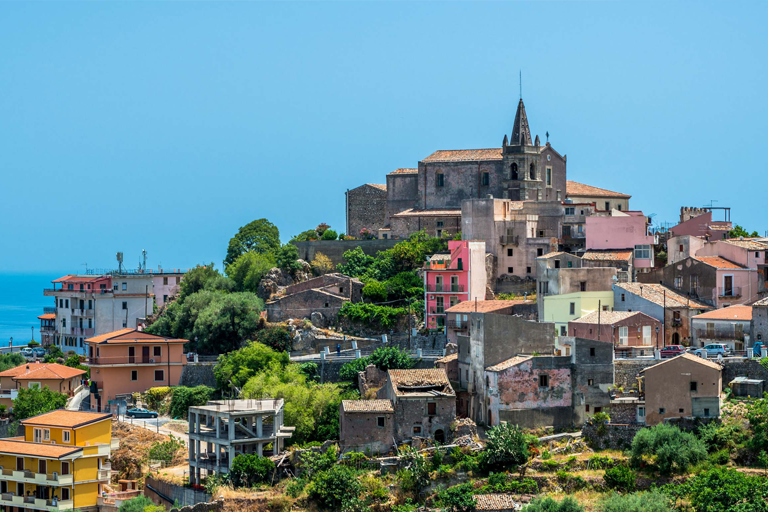
Located not far from Savoca, Forza d’Agrò is another small Sicilian village used in several scenes throughout The Godfather trilogy. This town provided the perfect backdrop for scenes set in rural Sicily, with its panoramic views and medieval architecture.
The Church of Sant’Agostino and the narrow, winding streets surrounding it are featured prominently in several scenes. The visual appeal of Forza d’Agrò lies in its dramatic setting, perched high above the Ionian Sea, offering spectacular views of both the coastline and the mountains.
In The Godfather Part II, Forza d’Agrò is used in scenes depicting the young Vito Corleone’s early life in Sicily. The village’s centuries-old buildings and stone-paved streets provided the perfect atmosphere for the film’s historical sequences, giving viewers a sense of stepping back in time.
3. Fiumefreddo di Sicilia: The Stunning Villa of Don Tommasino
Scenes filmed: Michael’s refuge in Sicily and his reunion with Don Tommasino.
In the film, the character Don Tommasino provides a safe haven for Michael Corleone during his time in Sicily. The villa used for these scenes is located in Fiumefreddo di Sicilia, a small town near Taormina.
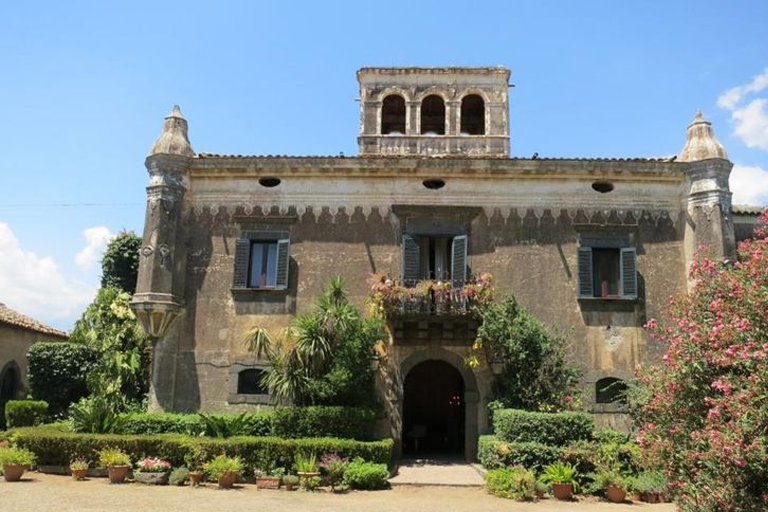
The villa, known as Castello degli Schiavi, is one of the most iconic locations in the film. Not only does it serve as Michael’s hideout, but it’s also the location of some of the most dramatic moments, including Apollonia’s tragic death in a car explosion.
Castello degli Schiavi remains privately owned but has become a major destination for Godfather fans. Tours can be arranged, allowing visitors to walk through the rooms where Michael and Apollonia’s love blossomed and where key scenes were filmed.
The villa’s baroque architecture and expansive gardens provide a picturesque setting and standing in its courtyards, one can almost hear the echo of Michael’s anguished cry when he learns of Apollonia’s fate.
4. The Real Corleone: A Name Steeped in History
Connection to the film: The name of the Corleone family.
While the town of Corleone is not heavily featured in the film, its name is deeply associated with The Godfather. Located in the province of Palermo, Corleone was chosen by Mario Puzo as the birthplace of Vito Corleone because of its historical connection to the Sicilian Mafia.
In reality, Corleone has a complex history intertwined with organized crime, which made it a fitting choice for the fictional mafia family. Although Coppola chose to film in other Sicilian towns, Corleone remains an important part of the lore surrounding The Godfather.
Today, visitors to Corleone can explore the C.I.D.M.A. (Centro Internazionale di Documentazione sulla Mafia e del Movimento Antimafia), a museum dedicated to educating people about the history of the Mafia and the fight against organized crime. For fans of The Godfather, a visit to Corleone provides a deeper understanding of the historical context behind the film’s fictional narrative.
5. Taormina: The Jewel of Eastern Sicily
Connection to the film: A base for cast and crew during filming.
While Taormina itself doesn’t feature prominently in The Godfather, it served as a base for the cast and crew during the filming in nearby locations like Savoca and Forza d’Agrò. The luxurious hotels and stunning views made it an ideal place for the production team to relax between shoots.
Taormina is one of Sicily’s most beautiful towns, known for its ancient Greek theater, breathtaking views of Mount Etna, and its vibrant atmosphere. For Godfather fans, a visit to Taormina offers a chance to enjoy the same breathtaking vistas that might have inspired the film’s unforgettable Sicilian scenery.
6. Palermo: The Capital of Sicily
Connection to the film: The setting for many scenes in The Godfather Part III.
In The Godfather Part III, several key scenes are filmed in Palermo, Sicily’s capital. The city’s rich history and stunning architecture provide the backdrop for Michael Corleone’s return to Sicily as he attempts to sever his ties with the Mafia.
Palermo’s most iconic location in the film is the Teatro Massimo, the largest opera house in Italy, where the film’s dramatic climax takes place. The scene where Michael’s daughter Mary is tragically killed on the steps of the opera house is one of the most powerful moments in the entire trilogy.
Visitors to Palermo can explore the Teatro Massimo and other historic sites featured in the film, such as the Palazzo dei Normanni and the Church of San Domenico.
7. Bagheria: Don Ciccio’s Villa
Scenes filmed: Vito Corleone’s revenge in The Godfather Part II.
In The Godfather Part II, Bagheria, a town near Palermo, is used as the setting for the villa of Don Ciccio, the man responsible for the murder of Vito Corleone’s family. In the film, a grown Vito returns to Sicily to take revenge on Don Ciccio, solidifying his rise in the Mafia.
The villa used for these scenes is the Villa Palagonia, also known as the “Villa of Monsters” due to the grotesque statues that adorn its gardens. The villa’s eerie and imposing architecture made it the perfect setting for this dramatic confrontation.
Bagheria is also home to several other historic villas, making it a popular destination for those interested in architecture and history.
Conclusion: A Timeless Journey Through Sicily
Sicily’s landscapes, architecture, and rich cultural history play an integral role in the legacy of The Godfather. Visiting these iconic filming locations allows fans to step into the world of the Corleone family while also discovering the timeless beauty of the island.
Whether walking the quiet streets of Savoca, exploring the grandeur of Palermo’s Teatro Massimo, or taking in the views from Forza d’Agrò, a journey through The Godfather’s Sicilian filming locations is a journey through cinema history and the soul of Sicily itself.
For any fan of the films or traveler seeking a unique and immersive experience, these locations offer a chance to connect with both the fictional world of The Godfather and the real-world beauty and history of Sicily.